

Cryo T-Shock for Cellulite in The Woodlands: Safety and Treatment
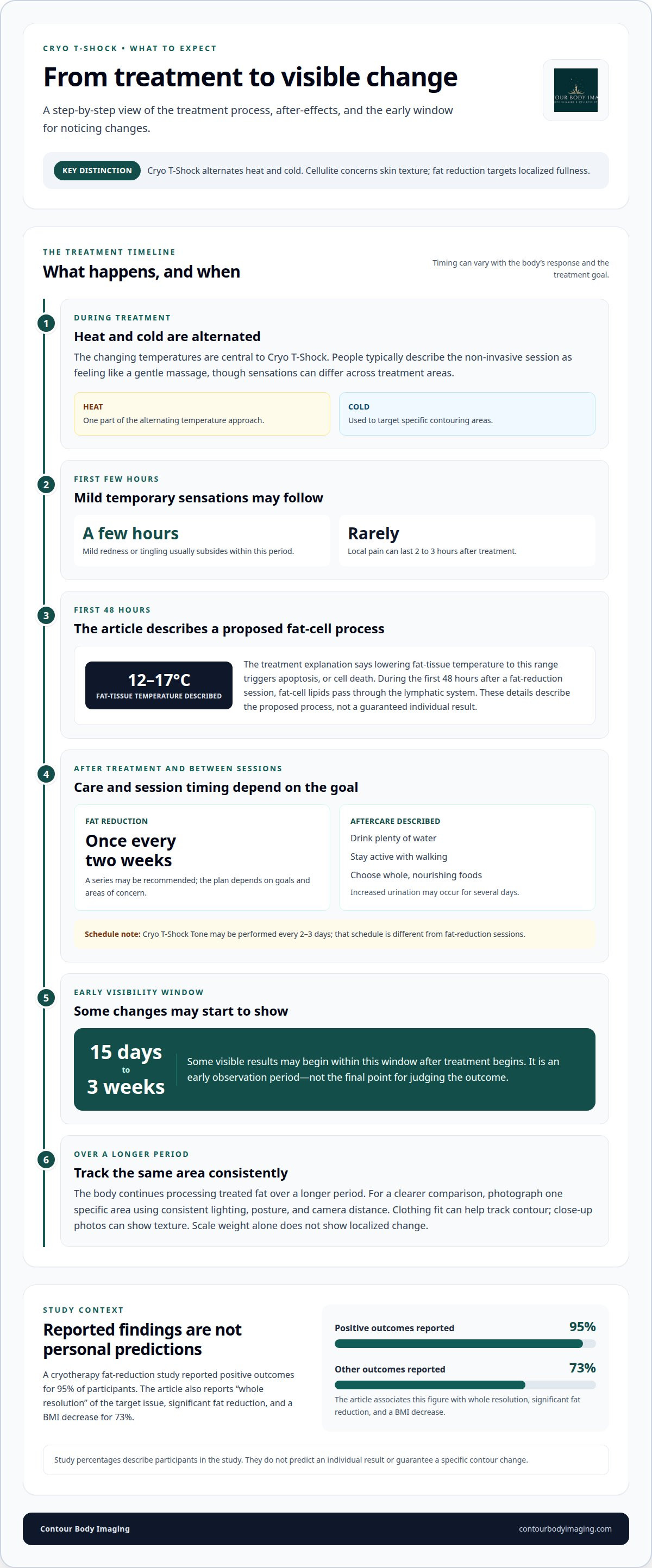
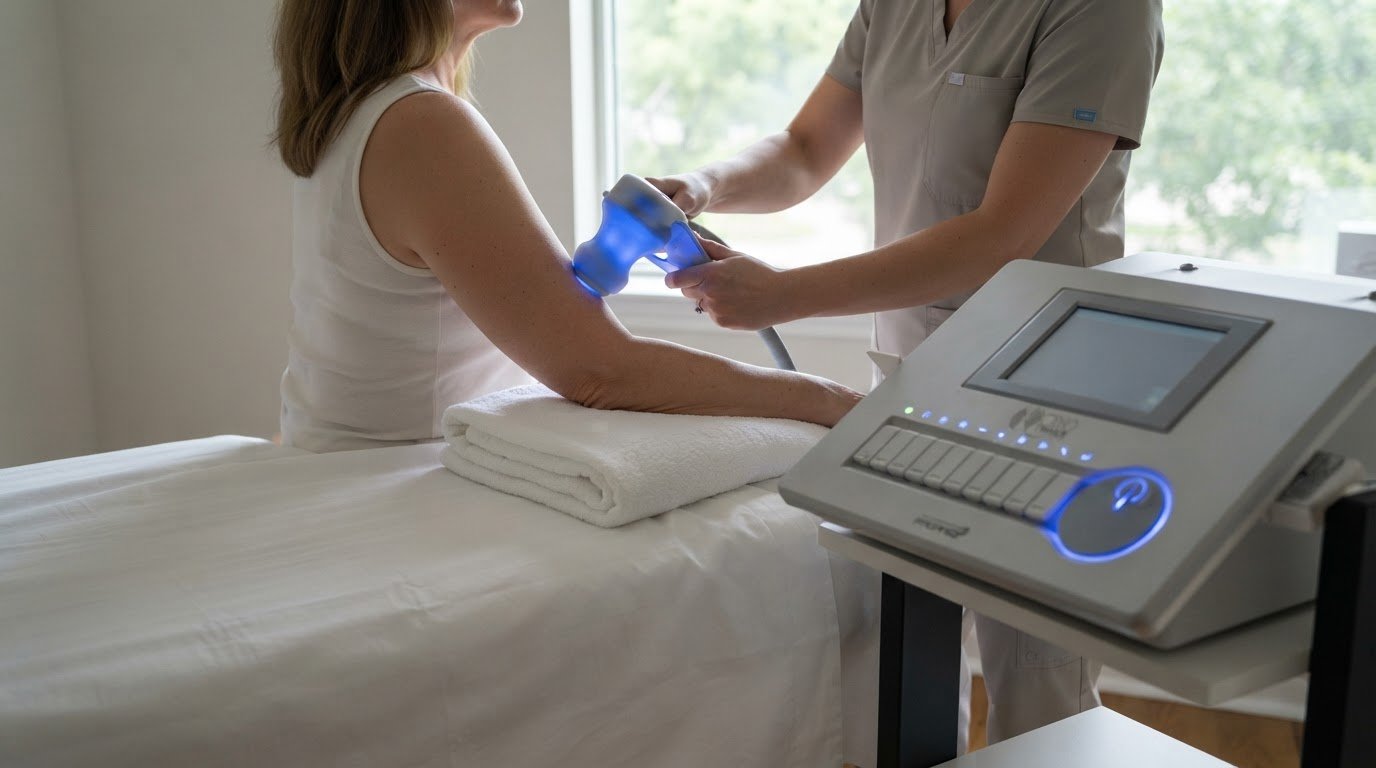
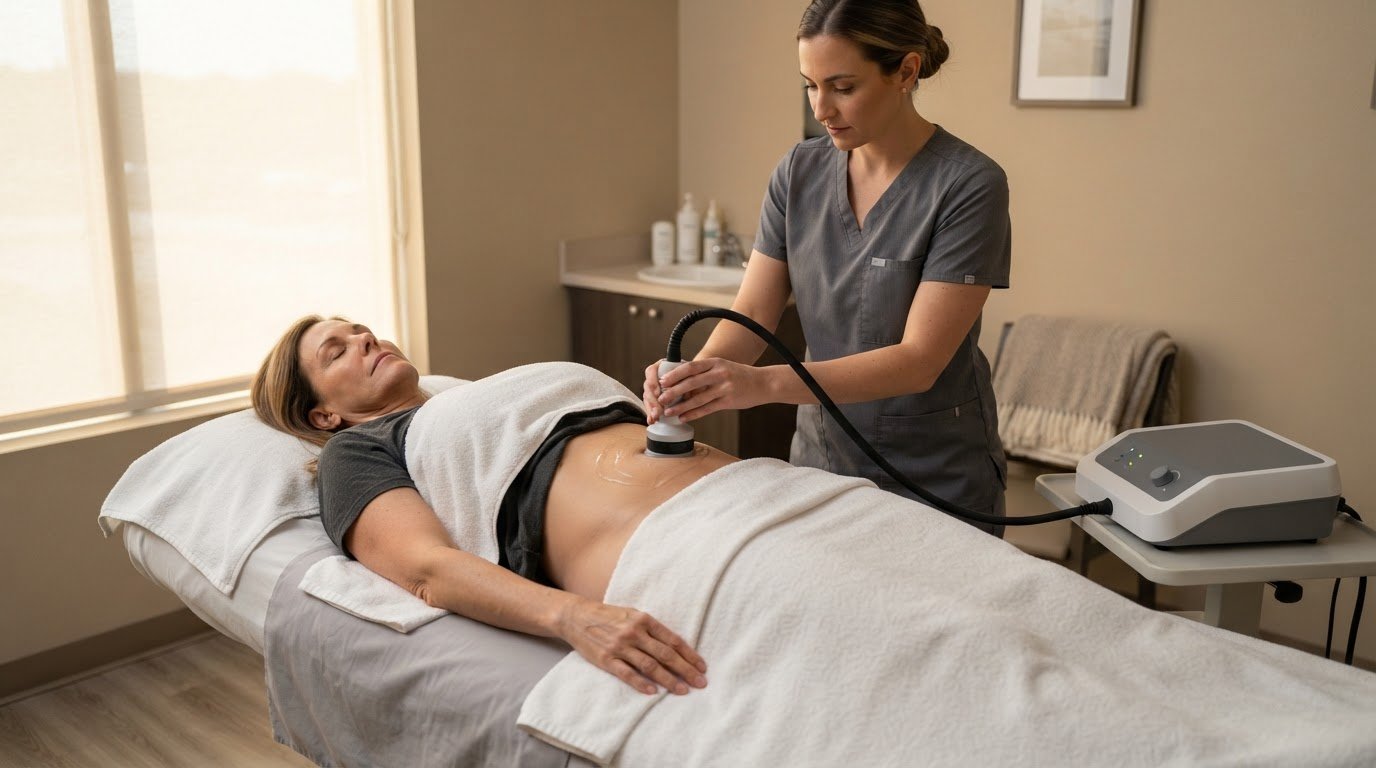
Cryo T-Shock for cellulite in The Woodlands uses alternating heat and cold, rather than cold alone. The non-invasive treatment doesn’t require surgery or downtime, and people typically describe the sensation as a gentle massage. Mild redness or tingling may follow and usually subsides within a few hours.
It’s understandable to wonder whether a treatment involving cold will feel uncomfortable during or after a session. The changing temperatures are central to Cryo T-Shock, and knowing what to expect can help you decide whether it fits your goals.
This guide explains how heat and cold are applied, what to expect during and after a session, and what research has reported about cellulite outcomes. You’ll also learn when changes may become visible and what can shape a treatment plan, so you can make a decision with realistic expectations.
Table of Contents
Is Cryo T-Shock Safe & Does It Hurt?
Cryo T-Shock is a non-invasive body-contouring treatment, so it doesn’t require surgery or downtime. People typically describe a session as feeling like a gentle massage, though cold and heat can feel different across treatment areas. Mild redness or tingling may occur afterward and usually fades within a few hours. Rarely, local pain can last 2 to 3 hours after treatment.
For cellulite, the goal is to improve the appearance of the treated area, not to promise weight loss or muscle building. Cellulite treatment and fat reduction are related but distinct: cellulite concerns skin texture, while fat reduction targets localized fullness. Clarify whether your goal is smoother-looking skin, a contour change, or both.
Fat-reduction sessions are performed once every two weeks. A series may be recommended, with the treatment plan shaped by your goals and areas of concern. Cryo T-Shock Tone uses a different schedule, with treatments possible every 2-3 days; don’t confuse that schedule with fat-reduction sessions. After treatment, drink plenty of water, stay active with walking, and choose whole, nourishing foods. Increased urination may occur for several days following treatment.
Pricing and packages depend on the case, including the treatment area, goals, and number of sessions; pricing is provided after a quote request. Before choosing a package, compare what it includes, how sessions are scheduled, and whether it matches your treatment goal. A package should describe the planned treatment clearly, not imply a guaranteed reduction or weight-loss result.
How does Cryo T-Shock compare with other cellulite treatments available in The Woodlands? Its distinguishing feature is the use of alternating heat and cold. That describes its approach, not proof that it works better than every alternative. Methods differ, so don’t assume Cryo T-Shock is interchangeable with other body-contouring treatments.
How can you verify a local provider’s credentials and whether Cryo T-Shock is FDA-cleared? Ask for the practitioner’s credential and the device’s exact name and model, then compare them with official Texas licensing and FDA device records. A clinic listing or general “cryotherapy” description alone doesn’t establish either detail.
Which clinics in The Woodlands, TX offer Cryo T-Shock cellulite treatments? Contour Body Imaging offers Cryo T-Shock Body Contouring for people interested in addressing specific areas. Cellulite concerns skin texture, while fat reduction targets localized fullness, so discuss which outcome matters to you. Reviews and photos reflect individual experiences, not a predictable result.
Cryo T-Shock body sculpting and fat reduction
Cryo T-Shock body sculpting uses a heat-and-cold sequence to target specific contouring areas. Understanding the difference between fat reduction, weight loss, muscle tone, and cellulite helps you set a clear goal.
Slimming and Fat-Cell Reduction
“Slimming” describes a contouring aim, not a promise of overall weight loss or increased muscle. Cryo T-Shock uses cold to target fat cells in a specific area, such as the thighs, rather than changing the whole body at once.
In the treatment explanation, lowering fat-tissue temperature to between 12 and 17 C triggers apoptosis, the process of cell death. During the first 48 hours after a fat-reduction session, fat-cell lipids pass through the lymphatic system. These details describe the proposed process; they don’t mean the treatment replaces nutrition, movement, or a broader weight-management plan.
A cryotherapy fat-reduction study reported positive outcomes for 95% of participants. It also reported “whole resolution” of the target issue, significant fat reduction, and a BMI decrease for 73%. Those findings concern study participants, not a specific individual. They offer context for evaluating claims, rather than a prediction of how one person’s contour will change.
Cellulite Reduction and Skin Smoothing
Cellulite concerns skin texture, while localized fat reduction focuses on contour. Both may be concerns in the same area, including the thighs, but they are different treatment goals. Clarify whether your priority is smoother-looking skin, reduced fullness, or both.
Collagen and elastin support skin structure, but a fat-cell treatment should not automatically be described as increasing their production. When comparing claims, ask what the treatment targets and what visible change it aims to address. This distinction helps separate a skin-texture goal from a fat-reduction claim.
For a practical comparison, record the same area before treatment and review it afterward under consistent lighting, posture, and camera distance. Clothing fit can help you track contour changes, while close-up photos show texture more clearly. Keep the measures separate: scale weight alone does not show localized change, and smoother-looking skin does not establish muscle gain.
Use study findings as evidence of reported outcomes, then consider what a treatment plan is designed to address. A clear goal, such as reducing fullness in one thigh area, makes it easier to assess whether the approach matches your priorities.
Expected timeline for results
Visible changes after Cryo T-Shock don’t appear on a single schedule. For fat reduction and cellulite goals, early changes may begin within a few weeks after treatment, while the body continues processing treated fat over a longer period.
Some visible results may start 15 days to 3 weeks after treatment begins. This early window can help you notice changes in the treated area, but it isn’t the final point for judging the outcome. Track one specific area, such as a thigh, using consistent lighting, posture, and camera distance. Comparing photographs taken under different conditions can make subtle changes harder to assess.
For fat reduction, most affected fat cells are eliminated within 2 to 3 weeks following the session. The body flushes out fat cells over the course of a few months after treatment, so the process continues beyond the first visible change. Results typically peak 3 to 6 months post-treatment. These are distinct stages: initial visibility, continued processing, and the later peak.
Skin-focused changes follow a different timeline. A youthful appearance may follow a Cryo T-Shock skin-rejuvenation service in the next 1-3 days following a service. That timing relates to skin rejuvenation, not the slower progression described for fat reduction. Wrinkles and cellulite also describe different concerns, so note whether you’re tracking skin appearance, dimpling, or localized fullness.
Keep a simple record after each session to make comparisons more useful:
Choose the same treatment area and keep your stance consistent.
Take progress photos in similar lighting and from the same distance.
Record the session date and the change you’re watching, such as thigh texture or contour.
Compare observations over weeks and months, not only the day after treatment.
A series of sessions can shape the timeline because the treatment plan depends on goals and areas of concern. Cryo T-Shock fat-reduction sessions are performed once every two weeks, while results may continue developing for a few months after treatment. Keep the session schedule separate from the result timeline: one describes when treatments occur, the other describes how changes unfold.
Results can extend for several months after treatment ends, while their duration varies with the individual, lifestyle, and diet. That makes a single early check-in an incomplete measure. For example, a photo taken within the first few weeks can show an early stage, while later comparisons help capture the months-long progression. Cryo T-Shock facial results are described as more profound after 4-8 sessions, a separate timeline from body fat reduction.
Clinical study results for cellulite
A cellulite pilot study conducted in Italy reported improvement in the treated area for 94% of participants. The same study reported “very good” results for 72%. These figures offer a snapshot of reported outcomes, not a promise that every person will experience the same change.
The two percentages describe different reported categories. “Improvement” is broader than “very good” improvement, so the figures should not be added together as separate groups. Nor do they show how much an individual’s skin texture changed. A participant counted as improved may have noticed a different degree of change from someone whose result was rated very good.
Keep the study’s scope in view. It was a pilot study, useful as an early look at cellulite treatment outcomes, not a complete answer for every person or treatment setting. The reported percentages do not establish how long results lasted, how participants’ starting cellulite differed, or whether the same response occurs with every device and treatment plan.
Cellulite appearance, fat cells, skin firmness, and sagging are related concerns, but they are not interchangeable outcomes. A reported improvement in cellulite does not automatically prove fat reduction, increased collagen production, or skin toning. When reviewing a treatment claim, identify the target first: does the evidence measure surface dimpling, contour, firmness, or another change?
Use the Italian pilot findings as one evidence point, then compare them with the details a treatment description provides. A helpful review asks:
Does the reported result measure cellulite specifically, or another outcome such as fat reduction?
Does “improvement” describe a participant rating, an image comparison, or a measured change?
Does the report explain the treatment area and the device or therapy used?
Are the stated results tied to a particular follow-up point?
Those questions matter because a broad result label can hide meaningful differences in how outcomes were assessed. For instance, a change in thigh dimpling is not the same endpoint as a change in overall contour. The 94% improvement figure and 72% “very good” figure should therefore be read with their specific descriptions intact, rather than as a single success rate.
For a personal comparison, choose one target area and document it consistently. Match the camera angle, posture, distance, and lighting in each image, and note the date and treatment stage. This makes visible texture changes easier to compare than relying on memory. Study results provide context, while consistent records help you assess changes in your own treated area.
How alternating hot and cold temperatures are applied
Cryo T-Shock uses alternating cycles of heat and cold, not one continuous temperature. The treatment sequence starts with 2 minutes of heat, continues with 22-26 minutes of cold, then finishes with another 2-3 minutes of heat. That order is the practical detail to understand when comparing treatment descriptions.
The opening heat phase prepares the sequence before the cold phase. Cold is applied to the selected area, such as the thighs or abdomen, before heat returns at the end. These phases describe how treatment progresses; they do not establish a specific change in weight, skin appearance, or cellulite for every person.
Why alternate temperatures? Thermal contrast is the treatment approach. Cryo T-Shock uses heat-and-cold cycles to address body-contouring concerns, while cellulite care focuses on skin texture. The sequence itself is not proof that loose skin will tighten or that the treated area will become smooth.
The lymphatic system is relevant to how the treatment is described after fat reduction. Fat-cell lipids are described as passing through the lymphatic system during the first 48 hours after a session. That process is separate from the heat-and-cold sequence, which happens during treatment. Keeping those stages distinct helps explain why the session’s temperature pattern and later body processing aren’t the same event.
Before a session, clarify the target area and goal. A plan focused on thigh dimpling addresses appearance differently from one focused on localized fullness. Also clarify whether you want to address skin texture, contour, or both. These distinctions help you assess whether the treatment approach matches your concern.
A simple way to understand the session is to follow its three phases:
Heat begins the sequence for 2 minutes.
Cold follows for 22-26 minutes, forming its longest phase.
Heat returns for another 2-3 minutes to complete the sequence.
Those durations describe the sequence, not the full appointment length or a guaranteed result. A treatment lasting through all three phases still needs to be judged by its stated goal. For example, a smoother-looking surface and reduced localized fullness are different outcomes, even when addressed in the same area.
The heat-cold-heat order is a useful point of comparison when reviewing treatment details. It explains what distinguishes this approach, while the target concern, area, and intended outcome remain central to deciding whether it suits your priorities.
Contour Body Imaging: Cryo T-Shock Body Contouring
Contour Body Imaging offers Cryo T-Shock Body Contouring for people considering a non-invasive approach to specific areas. If cellulite is your main concern, discuss the treatment area and whether your goal is smoother-looking skin, a contour change, or both. The clinic offers consultations to help shape an individualized plan.
Consider how your priorities fit the treatment’s heat-and-cold approach and the gradual timeline described above. If you’re still weighing options, take time to review the process and decide whether it feels appropriate for your goals. The next step can be a conversation focused on the area you want to address and what you hope to learn.
Contact Contour Body Imaging or visit its website to explore Cryo T-Shock Body Contouring.
Choose a Next Step That Fits Your Goals
Deciding whether to pursue Cryo T-Shock for cellulite in The Woodlands starts with defining what you want to address. Is your priority the appearance of dimpling, a localized contour concern, or understanding how the treatment feels? A clear goal gives you a more useful starting point for discussing a personalized plan.
Individual responses vary, so no treatment can promise a particular change. Consider how comfortable you feel with the approach, which area you want to focus on, and how you’ll assess progress. These preferences can guide a thoughtful conversation about whether body contouring suits your needs.
Contact Contour Body Imaging to discuss your goals and book a consultation for Cryo T-Shock Body Contouring.
Move forward at your own pace, with your priorities guiding the decision.
Frequently Asked Questions
When Will I See Results?
Visible changes may begin 15 days to 3 weeks after treatment begins, while results typically peak 3 to 6 months post-treatment. For people considering Cryo T-Shock for cellulite in The Woodlands, these are different stages, not one fixed result date. Track the same area with photos taken in similar lighting and posture, and note when each image was taken to make comparisons more useful.
Does Body Contouring Work?
Body contouring targets specific areas rather than overall weight loss. Cryo T-Shock may address localized fullness, such as around the abdomen, while cellulite concerns skin texture. These goals are related but distinct. Before treatment, decide which change matters most, then track that area and concern rather than relying on scale weight alone.
Cryotherapy for Cellulite & Fat Loss: How Does it Work?
Cryo T-Shock applies alternating heat and cold as a non-invasive body-contouring approach. The described mechanism links cooling fat tissue to apoptosis, or fat-cell death, at temperatures between 12 and 17 C. That process relates to fat reduction, not proof that cellulite improvement and fat-cell reduction are the same outcome. Identify whether you’re focused on dimpling, localized fullness, or both.
FREQUENCY OF TREATMENTS?
Fat-reduction sessions are performed once every two weeks, while Cryo T-Shock Tone treatments can be performed every 2-3 days. These schedules relate to different goals, so the Tone interval shouldn’t be applied to fat reduction. For example, a plan focused on localized fullness in the abdomen follows the fat-reduction schedule. Keep the target and treatment type clear when considering session timing.
HOW DOES THIS HELP WITH CELLULITE?
Cryo T-Shock for cellulite in The Woodlands uses alternating temperatures as a non-invasive approach to body contouring. Cellulite treatment focuses on the appearance of dimpling in a target area, such as the thighs, rather than overall weight. Compare photos of the same area in consistent lighting, posture, and camera distance to assess skin texture over time.
How Many Sessions Will I Need?
A series is recommended for contouring and cellulite goals, but the number depends on the treatment area and desired outcome. For slimming, a course may involve 5 or more sessions over several months. That example isn’t a universal session count. If your priority is thigh dimpling rather than localized fullness, make sure the planned series addresses the concern you want to track.
POSSIBLE SIDE EFFECTS?
Mild redness or tingling may occur after treatment and usually subsides within a few hours. Rarely, local pain may last 2 to 3 hours after treatment, and increased urination may occur for several days following treatment. Cryo T-Shock is non-invasive and requires no downtime, so regular activities can resume immediately. Keep these possible short-term effects in mind when planning a session.
WHAT ARE THE BENEFITS?
Cryo T-Shock offers a non-invasive option for specific contouring areas, with no downtime required. It may suit someone focused on localized concerns, such as fullness around the abdomen or cellulite appearance on the thighs, rather than overall weight loss. Choosing one clear goal helps you assess whether the treatment fits what you want to address.

Comments