

Endosphere Therapy for Face Reviews: Results and Downtime
A facial treatment can leave skin looking less puffy without requiring downtime. Reviews of Endosphere therapy for the face often focus on this refreshed appearance: Endosphéres Therapy uses rotating silicone spheres and compressive microvibration, and facial sessions take about 20-30 minutes. Reported changes can be gradual, with some people noticing a less swollen look after a few sessions.
It’s understandable to want more than glowing testimonials before deciding whether a treatment is right for you. Results, comfort during treatment, and how your skin looks afterward all matter.
This guide explains how the treatment works, what clients report about facial results, and what to expect during and after a session. You’ll also learn how cellulite and skin texture fit into the wider conversation about Endospheres Therapy, so you can assess reviews with a clearer sense of what they do and don’t show.
Table of Contents
What is Endosphéres Therapy?
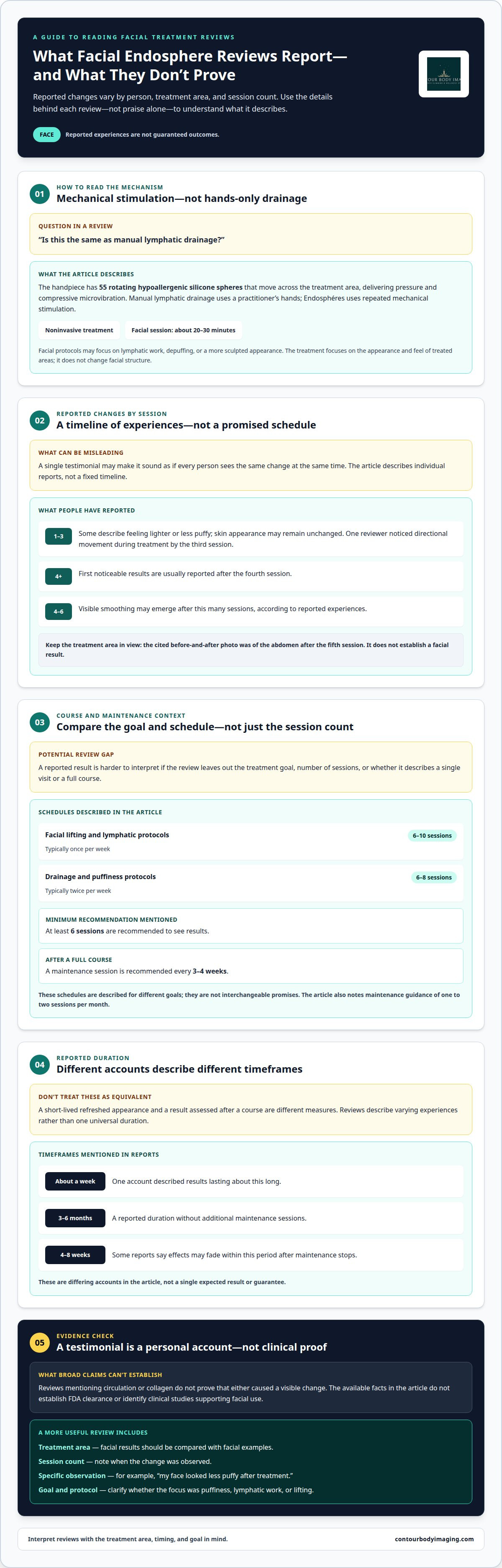
Endosphéres Therapy is a noninvasive treatment that uses rotating spheres and compressive microvibration. Facial protocols may focus on lymphatic work, depuffing, or a more sculpted appearance.
Facial Treatment and Lymphatic Work
Facial Endosphéres treatment combines device-delivered pressure and vibration with work intended to support lymphatic drainage. The handpiece contains 55 rotating hypoallergenic silicone spheres, which move across the treatment area. Unlike manual lymphatic drainage, which uses a practitioner’s hands, this method delivers repeated mechanical stimulation. The distinction matters when you’re comparing treatment approaches: ask what areas the protocol covers and whether its aim is facial lymphatic work, sculpting, or both.
Sculpting and Depuffing Goals
Facial Endospheres protocols may be used for facial sculpting and a less puffy appearance. The treatment does not change facial structure; it focuses on the appearance and feel of treated areas. Goals matter because a protocol for temporary puffiness may differ from one focused on facial lifting. Before treatment, describe the areas you want addressed and clarify what visible changes the proposed course aims to target.
Clinical Evidence and FDA Clearance
The facts available here don’t establish whether Endosphéres Therapy is FDA-cleared or identify clinical studies supporting facial use. FDA clearance is a distinct regulatory claim, and a device’s mechanism or marketing description doesn’t establish that status. Client reviews can describe personal experiences, but they aren’t clinical studies. For a clearer discussion, ask the provider to distinguish documented evidence from testimonials and explain how any cited research relates specifically to facial treatment.
Session length and course recommendations offer practical planning details. A facial session takes about 20-30 minutes. A minimum of six sessions is recommended to see results, while facial lifting and lymphatic protocols typically involve 6-10 sessions, once per week. Protocols for drainage and puffiness typically involve 6-8 sessions, twice per week. These are different schedules for different goals, not interchangeable promises.
After completing a full course, a maintenance session is recommended every 3-4 weeks. Ask how the proposed schedule matches your main concern, whether it targets lifting or puffiness, and when progress will be reviewed. Those details help you understand the commitment before beginning, rather than treating one facial session as a full course.
When choosing a facial treatment, look for a practitioner who can explain the process, discuss your concerns, and clearly describe the proposed protocol. During a consultation, share relevant health information and ask how the treatment areas and intensity will be tailored. A useful discussion connects the plan to your goals, explains what the session involves, and sets realistic expectations for assessing progress.
Client review themes and reported results
Reviews may describe different kinds of change, from a lighter feeling to a visible difference in appearance. For Endosphere therapy for face reviews, treatment area and session timing provide useful context for judging what a testimonial actually shows.
Common Client Review Themes
Some accounts describe reduced heaviness and a flatter, less swollen look after 2-3 sessions. Others focus on what the treatment feels like or when they first noticed a change. These details matter because a temporary refreshed appearance differs from a change in skin texture. Endosphere therapy for face reviews are easier to interpret when the writer states the treatment area and the result they noticed.
Reviews may mention circulation or collagen, but those terms don’t prove that either caused a particular visible change. Look for a specific observation rather than broad praise. For example, “my face looked less puffy after treatment” describes a personal impression, while a general claim of improved skin doesn’t say what changed or when.
Results by Session
Reported results vary by session. During sessions 1-3, people may describe feeling lighter or less puffy, while skin appearance may remain unchanged. One reviewer noticed directional movement during treatment by the third session. First noticeable results are usually reported after the fourth session, and visible smoothing may emerge after 4-6 sessions.
Reported timelines describe individual experiences, not a fixed schedule for facial treatment. The before-and-after photo example after the fifth session concerned the abdomen, so it doesn’t establish a facial result. When comparing accounts, note the treatment area, number of sessions, and specific change described.
Result Duration and Maintenance
Reported duration ranges from about a week in one account to 3 to 6 months without additional maintenance sessions. Other reports say effects may fade within 4-8 weeks after maintenance stops. These timeframes describe different experiences and shouldn’t be treated as interchangeable. A short-lived refreshed look and a result assessed after a treatment course are not the same measure.
Maintenance guidance includes one to two sessions per month after a course, while another recommendation is a session every 3-4 weeks. Discussing maintenance as part of the plan helps you understand how often treatment may continue and how progress will be evaluated.
Before-and-After Photos
The cited before-and-after example shows the abdominal area after the fifth session, not facial treatment, so it can’t demonstrate facial results. Photos can help track a facial course when they show the same areas under comparable conditions, but they document appearance, not what caused a difference.
When assessing Endosphere therapy for face reviews, prioritize facial examples and details about session count. Reviews tied to a clear treatment area and observation period offer more useful context than isolated praise or body photos used to imply facial outcomes. A professional facial treatment plan can help frame a discussion about goals and progress.
Aftercare and downtime
After Endosphéres Therapy, people can return to normal daily activities, and no downtime is necessary. Mild redness may appear immediately after treatment and usually lasts 30-60 minutes. That temporary response is useful to plan around if you have an event or appointment soon after a facial session, even though it doesn’t require scheduled recovery time.
The reported side effect is mild, temporary redness. Before a facial session, discuss health conditions, skin concerns, and sensitivities with the practitioner so they can consider treatment suitability and intensity. This is especially relevant if your skin is already irritated or you’re concerned about how rhythmic vibration may feel on your face.
Hydration is a practical part of aftercare. Guidance recommends drinking at least 2 liters of water daily during treatment, rather than treating one glass immediately afterward as the whole plan. A 20-30 minute walk after a session is also advised. These are simple wellness steps, not a substitute for the practitioner’s directions for your individual treatment.
Plan your schedule around the short-lived redness, not an assumed recovery period. For example, if your skin looks flushed after a morning appointment, the reported 30-60 minute window gives a more realistic expectation than expecting redness to last all day. Individual responses can differ, so let the practitioner know if a reaction lasts longer or feels unusual.
Hydration advice during treatment is often framed as supporting the body’s fluid balance. It doesn’t mean Endospheres guarantees reduced fluid retention or a lasting change in facial fullness. A temporarily less puffy appearance and longer-term skin changes are different outcomes. Aftercare can support comfort, but it can’t promise either result.
Keep the aftercare routine straightforward: follow the practitioner’s guidance, drink water throughout the day, and fit in the recommended walk if it suits your schedule. For instance, a 20-minute walk after your appointment falls within the suggested 20-30 minute range. Avoid adding extra steps based on online reviews when they don’t match your practitioner’s instructions.
Timing matters if you’re planning a photo, meeting, or celebration. Since mild redness can last 30-60 minutes, allow that window before an occasion where you’d prefer an even-looking complexion. The treatment doesn’t require downtime, but leaving a little space afterward makes room for a temporary visible response without disrupting your usual activities.
How Endospheres compressive microvibration works
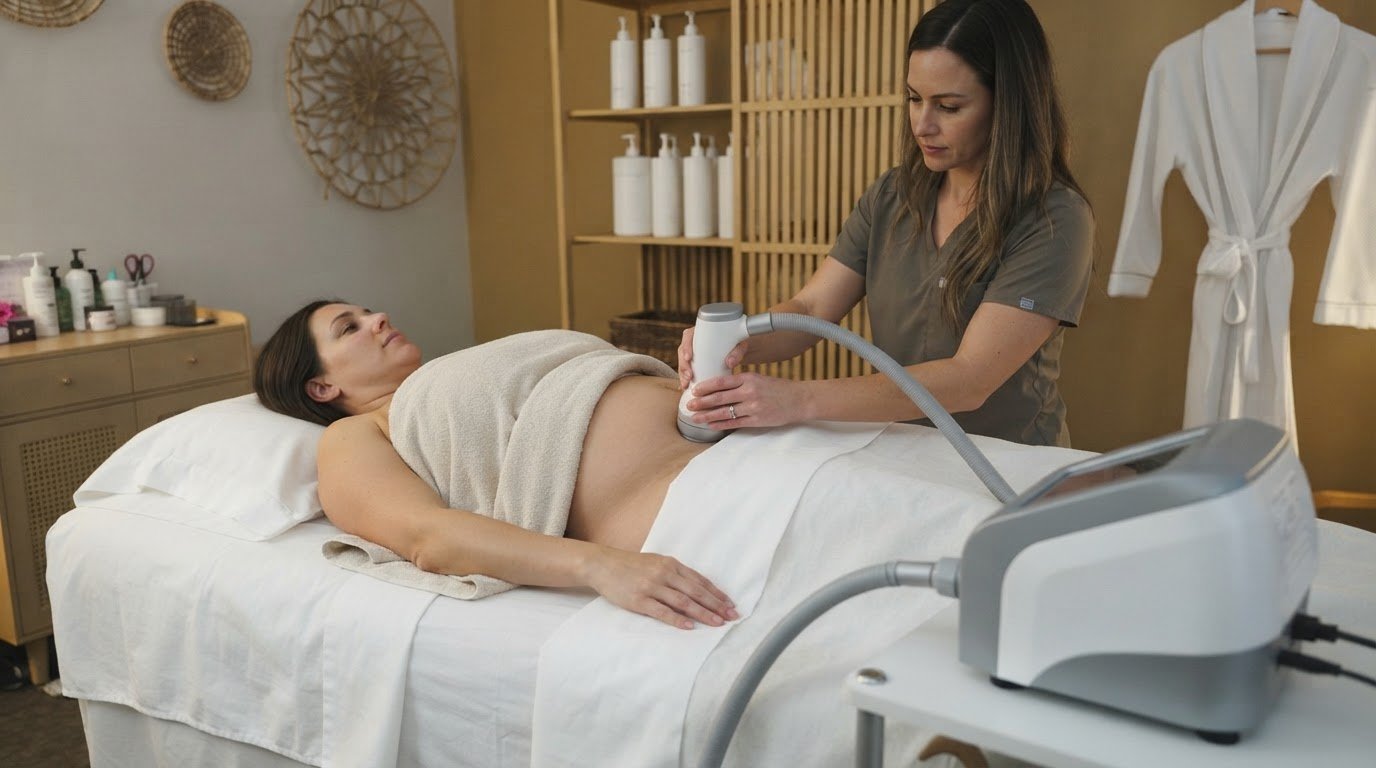
Endospheres Therapy uses compressive microvibration, which combines controlled pressure with vibration. During facial treatment, a practitioner applies the device to facial areas using rotating spheres. Understanding these mechanical actions helps explain what the treatment involves without treating beauty claims or client reviews as proof of a particular biological result.
The vibration operates between 39 and 355 Hz. Hertz measures cycles per second, so this range describes how frequently the device vibrates, not how long a session lasts. The treatment pairs that vibration with pressure from the moving spheres. Together, these actions create the method’s characteristic mechanical stimulus, rather than relying on heat or an injectable substance.
Pressure and microvibration are related but distinct parts of the process. Pressure means the device makes controlled contact with the treatment area; vibration adds repeated movement during that contact. The term “compressive microvibration” captures both elements. It does not establish how much facial contouring or depuffing someone will see afterward.
During facial treatment, the practitioner guides the device across the intended area. Its rotating spheres provide the contact surface as the device delivers vibration. This is a professional treatment, not a home massage technique. The practitioner’s movements determine which facial areas are treated, while the device provides the pressure and vibration.
The 39-355 Hz range also gives readers a useful way to interpret technical descriptions. Frequency is a device setting measurement; it isn’t a direct measure of visible change, comfort, or treatment quality. For example, a review mentioning a rhythmic sensation describes an experience, but doesn’t show that the treatment altered facial structure or produced a lasting result.
Claims about circulation, lymphatic movement, or skin appearance need careful interpretation. The mechanism described here is controlled pressure combined with vibration, not a guarantee of a particular outcome. A review can describe what someone noticed immediately, but that observation alone cannot identify which mechanical action caused it. Separate how the device works from claims about results.
In practical terms, the treatment follows a simple sequence: the practitioner applies the device, its rotating spheres contact the facial area, and compressive microvibration combines pressure with repeated movement. The facial goal shapes the area treated, while the mechanism remains the same. Knowing these steps helps you understand the treatment mechanically and assess descriptions of the experience more clearly.
Cellulite and skin texture
Cellulite and facial puffiness are different concerns, so body-treatment reviews can’t establish facial outcomes. Cellulite affects up to 90% of women and about 10% of men. These figures describe how common cellulite is, not how well a particular treatment works. For readers assessing facial reviews, that distinction keeps body-focused claims in perspective.
Endospheres protocols for cellulite appearance and body contouring typically involve 10-12 sessions, once or twice per week. The course focuses on areas such as the thighs and buttocks, where dimpling and uneven texture are assessed. Facial sculpting reviews concern another treatment area and goal. A review describing smoother thighs therefore shouldn’t be treated as evidence of a similar facial change.
Reported body changes are described across stages rather than as one immediate transformation. During sessions 7-9, dimpling may become less pronounced and skin texture may look more even. That timeline gives a practical frame for interpreting reviews: note the session count and the area treated. A comment about a single appointment doesn’t convey the same course context.
Photos can make comparisons easier, but they need consistent framing to be useful. For example, compare the same body area and similar posture across before-and-after images. The course result is assessed against before-treatment photos at sessions 10-12. That comparison provides a structured checkpoint, but photos document appearance rather than establish that changes came from a specific mechanism.
Intensity is another detail that shapes how a review reads. The experience depends partly on how the practitioner applies the device to the selected area. But intensity alone doesn’t prove a stronger aesthetic result, and cellulite appearance isn’t the same measure as muscle change. Look for reviews that describe the treated area, course stage, and visible texture separately.
The clearest takeaway is to match evidence to the concern. A 10-12-session body protocol and photos of thigh texture relate to cellulite, not facial depuffing. If your goal is facial sculpting, prioritize facial examples and ask how the practitioner evaluates progress. Keep body-course timelines in their proper context rather than expecting the same result across different areas.
Contour Body Imaging: Endosphere
Contour Body Imaging offers Endospheres Therapy for people considering professional facial treatment after reviewing reported results and downtime. A consultation is a practical next step if you want to discuss whether this approach fits your facial goals and what a course may involve.
A conversation can help connect your priorities, such as facial sculpting or depuffing, with realistic expectations for treatment and aftercare. If your interest is broader skin rejuvenation, Cryo Facial and Lumaray 360 are also available options to discuss. Each treatment has a different approach, so your main concern can guide the conversation.
Contact Contour Body Imaging to discuss Endosphere and your facial treatment goals.
Make Your Next Step a Clear One
Reviews of Endosphere therapy for the face can help you frame questions, but start by defining what a worthwhile change would look like for you. Choose a priority, such as facial definition or a fresher appearance, and keep that goal central in any treatment discussion.
Consider what would help you feel comfortable moving forward: understanding the treatment plan, knowing how progress will be discussed, or having space to share skin concerns. Bring those priorities to a professional consultation. Clear expectations help you make a considered choice rather than basing it on someone else’s before-and-after experience.
A thoughtful decision starts with your own goals and questions. Take the time you need, then choose the next step that feels right for you.
Frequently Asked Questions
How long do the results last?
Reported duration varies, and immediate changes shouldn’t be confused with results from a completed course. One account described effects lasting about a week; reports without maintenance describe results lasting 3 to 6 months. Other reports say effects may fade within 4-8 weeks after maintenance stops. These different timeframes reflect different experiences, so consider the treatment goal and maintenance pattern when interpreting a review.
What does compressive microvibration actually do?
Compressive microvibration combines controlled pressure with vibration delivered by the treatment device. The practitioner moves the device over selected areas while its rotating spheres provide contact and repeated movement. This describes the treatment’s mechanical action, not a guaranteed change in facial shape or skin. If a review claims a specific result, distinguish what the person observed from what the mechanism alone can establish.
Who Is It For?
Endospheres facial treatment may interest people seeking professional facial sculpting or a less puffy appearance without invasive treatment. Start with a specific goal, such as addressing visible puffiness rather than expecting a change to facial structure. A practitioner can discuss the intended treatment area and approach with you. Share relevant skin concerns and health information before the session so they can inform the discussion.
What is Endosphere therapy for the face and how does it work?
Endosphere therapy for the face is a professional treatment using a device with rotating spheres to deliver compressive microvibration. The practitioner guides the device over the facial areas included in the protocol. Sessions may focus on facial sculpting or lymphatic work. Before proceeding, clarify which areas the session addresses and what outcome the treatment plan is intended to assess, rather than relying on a general description of facial results.
What do customer reviews say about facial Endosphere therapy results?
Reviews commonly describe gradual changes, including a less swollen appearance, but reported timing varies from person to person. Treat testimonials as individual accounts, not predictions. To assess a review, look for the treatment area, number of sessions, and when the person noticed a change. Be cautious about applying abdominal or thigh photos to facial treatment, since results for one area don’t demonstrate results for another.
How many Endosphere face treatments are needed and how often?
A minimum of six sessions is recommended to see results. Facial lifting and lymphatic protocols typically use 6-10 sessions once per week; protocols focused on drainage and puffiness typically use 6-8 sessions twice per week. These schedules reflect different goals. Ask how the proposed course matches your priority and when progress will be reviewed, so you understand the plan before starting.
How does Endosphere facial therapy compare with microcurrent, lymphatic drainage, and radiofrequency treatments?
Endospheres uses mechanical pressure and vibration, while microcurrent and radiofrequency are different treatment categories. Lymphatic drainage describes an approach focused on lymphatic movement; Endospheres facial protocols may also include lymphatic work. Reviews alone can’t rank these options or establish which is more effective. Compare the intended goal, treatment method, and outcome being assessed, and don’t treat different technologies as interchangeable.
What should I expect during and after an Endosphere facial session?
A facial session takes about 20-30 minutes. The practitioner moves the device across the planned areas; afterward, people can resume normal activities without downtime. Mild redness may occur for 30-60 minutes. After treatment, guidance includes drinking at least 2 liters of water daily during the course and taking a 20-30 minute walk. Follow the practitioner’s specific aftercare directions if they differ.
Comments