

Full Body Red Light Therapy in The Woodlands: Safety and Use
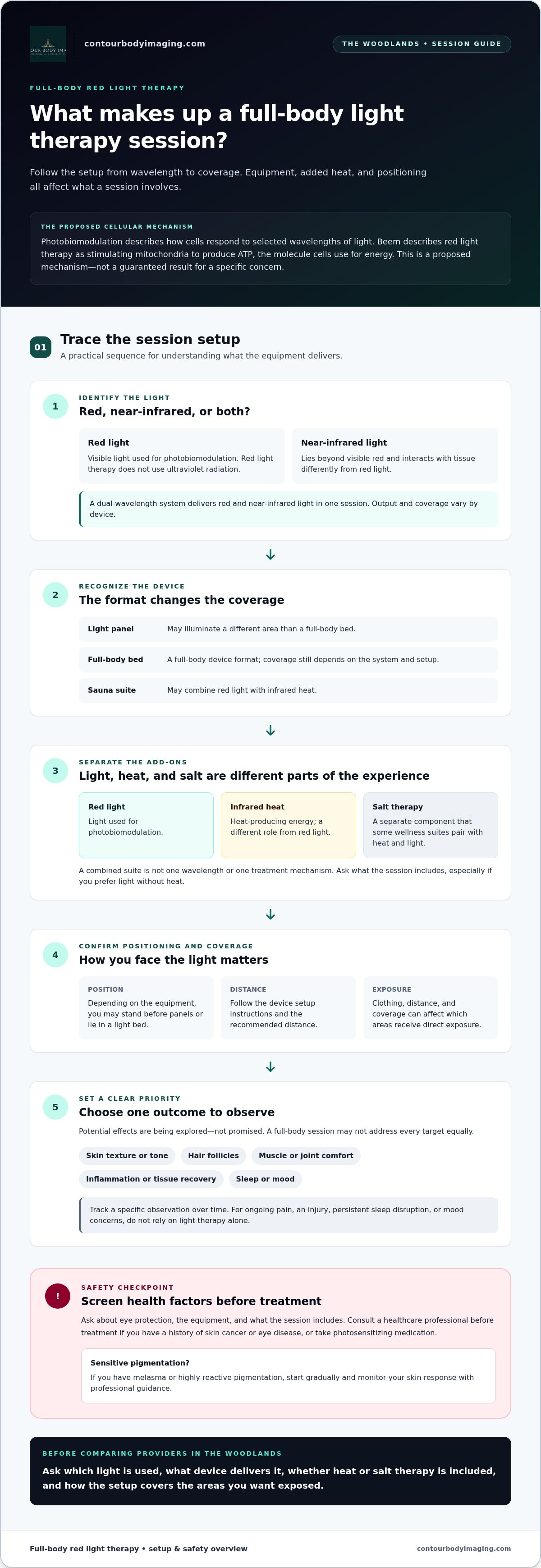
Full body red light therapy in The Woodlands may not suit every skin type. If you have melasma or highly reactive pigmentation, start gradually and monitor your skin response with professional guidance. Anyone with a history of skin cancer or eye disease, or who takes photosensitizing medication, should consult a healthcare professional before treatment.
It’s reasonable to ask about side effects before trying a light-based treatment, especially when sessions expose a larger area of the body. This guide explains how red and near-infrared light work, what benefits are being explored, which safety considerations matter, and how treatment frequency is generally approached. You’ll also learn what full-body treatment involves and how to explore local red light therapy options in The Woodlands, so you can make a more informed choice about whether it fits your wellness goals.
Table of Contents
Photobiomodulation and how red and near-infrared light work
Photobiomodulation describes how cells respond to selected wavelengths of light. Red light therapy exposes tissue to light without using ultraviolet radiation. Beem describes red light therapy as stimulating mitochondria to produce adenosine triphosphate (ATP), the molecule cells use for energy. This proposed mechanism helps explain why the treatment is studied for its effects on cellular activity, rather than viewed as heat alone.
Red and near-infrared light occupy different parts of the light spectrum. Red light is visible; near-infrared light lies beyond visible red. Both can be used in photobiomodulation, but they interact with tissue differently. The device, its output, distance from the body, and session setup all affect how light reaches the treated area.
What equipment and wavelengths do local full-body red light therapy providers use? Equipment varies: a provider may use a light panel, a full-body bed, or a system integrated into an infrared sauna suite. Systems may use red light, near-infrared light, or both; the exact output depends on the device. Ask which setup a session uses and whether it combines light with heat.
A dual-wavelength system delivers red and near-infrared light in one session. This exposes the body to two parts of the spectrum rather than relying on red light alone. However, dual-wavelength devices do not all have the same output or coverage. A panel, for example, may illuminate a different area than a full-body bed.
Infrared sauna suites add another distinction: infrared refers to heat-producing energy, while red light therapy uses light for photobiomodulation. A suite can combine infrared heat with red light, creating a warm session alongside light exposure. The two elements serve different roles, and comfort with heat, session setup, and the area exposed all shape the experience.
Some wellness suites also pair infrared heat, red light, and salt therapy. This is a combined environment, not a single wavelength or treatment mechanism. Salt therapy is a separate component, while light exposure and infrared heat remain distinct. Before starting, identify what the session includes, especially if you prefer a light-only treatment.
For full-body exposure, positioning matters. Depending on the equipment, you may stand before panels or lie in a light bed. Follow the device’s setup instructions so the intended areas face the light source. Clothing, distance from the device, and coverage can affect which parts of the body receive direct exposure.
In The Woodlands, compare the session format and type of light, not just the phrase “red light therapy.” Ask whether the system uses red light, near-infrared light, or both, and whether it includes infrared heat or salt therapy. These details clarify what a session involves and help you match the equipment to your comfort and treatment goals.
Potential benefits for inflammation, pain, skin, healing, sleep, and mood
Photobiomodulation is being explored for several wellness goals, but the evidence and intended outcomes vary by concern. Start by defining one priority, such as skin appearance or muscle comfort, before considering a customized plan.
Potential Skin, Hair, Muscle, and Joint Benefits
Researchers study whether red light exposure can support cellular repair and skin health. This may interest people focused on skin texture, tone, or recovery after irritation. It is not a promise to resolve a particular skin concern. Set a specific, observable goal, such as tracking how an area looks over time.
Hair follicles, muscles, and joints are also discussed in relation to photobiomodulation. These are distinct targets, so a full-body session may not address each concern equally. Consider which area matters most, how the equipment covers it, and whether your goal is cosmetic or related to comfort. Note your priority before the first session.
Potential Inflammation, Pain, and Healing Benefits
Inflammation, discomfort, and tissue recovery are among the areas studied in relation to red and near-infrared light. The proposed connection between light exposure and cellular activity does not establish a clinical result for a specific condition. For example, distinguish an interest in post-exercise muscle comfort from treatment for an injury or persistent pain.
Keep your goal practical. Record where the discomfort occurs and what it feels like, then note whether daily activities feel different over time. This gives you a clearer basis for evaluating changes than relying on a general impression after one relaxing session. Red light therapy should not replace medical care for an injury, ongoing pain, or a condition requiring diagnosis.
Potential Sleep and Mood Benefits
Sleep and mood are broader wellness outcomes that can be shaped by daily routines, stress, health, and the treatment environment. A quiet session may feel relaxing, but relaxation during a visit does not prove that light exposure changed sleep or mood. Track a concrete measure, such as your bedtime routine or perceived rest, rather than assuming a connection.
If you’re considering treatment for these goals, choose one observation to follow and keep other routines steady. For instance, note whether you feel more settled after sessions while maintaining your usual evening habits. If sleep disruption or mood concerns persist, consult a healthcare professional instead of relying on light therapy alone. A clear goal helps you judge whether this approach fits your wellness priorities.
Safety considerations and side effects
Safe use starts with health screening, eye protection, and clear communication about the equipment. Red light, near-infrared light, and infrared heat have different functions, so find out what a session includes.
Eye Protection
Before a session, ask what eye protection the device requires and follow its instructions. The right approach depends on the equipment and whether your eyes face the light source. Don’t stare directly into bright LEDs. If you have eye disease or a history of eye problems, consult a healthcare professional before treatment and discuss the planned light exposure.
Potential Side Effects
Pay attention to skin comfort during and after exposure. If you notice irritation, unusual warmth, or discomfort, stop the session and tell the operator. This information can help guide adjustments to positioning or exposure. If you have melasma or highly reactive pigmentation, start gradually and monitor your skin response with professional guidance.
Your health history matters before the first session. Anyone with a history of skin cancer or eye disease, or who takes photosensitizing medication, should consult a healthcare professional before red light therapy. Bring a current medication list and mention relevant diagnoses, including past skin cancer treatment. Some medications can change how skin responds to light, so screening helps identify concerns before exposure.
Skin pigmentation deserves specific attention. If you have melasma or reactive pigmentation, note the affected areas before treatment and watch for changes afterward. Gradual exposure and professional guidance can help you monitor your response. Don’t assume full-body coverage suits every skin concern equally: the body area, light source, and individual sensitivity all matter.
Contrast therapy adds temperature changes to light exposure. An infrared sauna may add heat, while a contrasting cold environment introduces another sensation. Tell the operator if you feel unwell or uncomfortable, and end the session rather than pushing through. A relaxing setting should still let you communicate easily and leave the equipment safely.
Before treatment, take these practical steps:
Describe relevant health history and medication use during screening.
Follow the device instructions for eye protection and positioning.
Report discomfort promptly, especially with heat or skin irritation.
Keep light exposure separate from any medical plan unless your healthcare professional advises otherwise.
Red light therapy is intended to interact with cellular function and energy production, not replace medical assessment. A careful screening conversation helps align the session with your health needs and comfort.
Recommended treatment frequency
There’s no single red light therapy frequency that fits every goal or device. A practical schedule depends on the equipment’s instructions, the area treated, your purpose, and how your body responds. Follow the device protocol rather than adding sessions in hopes of faster progress.
Frequency and session length are separate decisions. A full-body system may expose a broad area, while a panel focuses on a smaller target. Output, distance, and time under the light affect exposure, so schedules for different devices aren’t interchangeable. Ask how the recommended routine relates to the specific equipment and your intended use.
Cellular activity, including the role of mitochondria in energy production, helps explain the therapy’s proposed mechanism. It doesn’t establish a universal number of weekly sessions. Someone focused on skin appearance, for example, may track a different outcome than someone observing muscle comfort. Your goal helps determine what to monitor, while device guidance informs the session plan.
A simple record can support a personalized approach. Before starting, write down your main goal and the body area you plan to treat. After each session, note the date, device setup, exposure time recommended by the operator, and any changes in comfort or skin response. This gives you a useful comparison instead of relying on memory.
Review your record during regular check-ins. If your skin feels irritated or treatment causes discomfort, pause and report the response before another session. If you notice no change, don’t automatically increase exposure; revisit your goal, positioning, equipment instructions, and schedule with the professional overseeing your sessions. Consistency means following a suitable routine, not maximizing frequency.
To prepare for a first visit, clarify these points:
Which device and treatment area will the session use?
What schedule does the equipment guidance recommend for that goal?
How should you record sessions and any changes afterward?
What response means you should pause and discuss the routine?
Keep other wellness routines reasonably steady while observing changes. For example, note whether your sleep habits, exercise, or skincare also changed during the same period. This context makes your treatment log more useful and helps distinguish light-session observations from other influences. A personalized schedule should be easy to follow and grounded in the selected device’s instructions.
In The Woodlands, ask for a clear explanation of the recommended frequency before beginning. A thoughtful plan connects your treatment goal, equipment, session setup, and review process. Follow those details consistently, then use your recorded response to guide any adjustments with the professional overseeing treatment.
Red light therapy availability at the Woodlands location
In The Woodlands, compare full-body options by equipment, session setup, and light exposure, rather than by the service label alone. These details show whether a session uses red and near-infrared light, infrared heat, or a combination.
How do full-body red light therapy options in The Woodlands compare with those in nearby areas? Compare the device type, wavelengths, coverage, and whether heat or salt therapy is included. These specifics are more useful than assuming nearby studios offer identical sessions.
For a comfortable visit, start with the practical details of your trip to the Woodlands location. Use the clinic’s listed address and operating hours to plan your route and arrival. Allow time to review the session setup before exposure, especially if the equipment combines light with infrared heat.
Availability involves more than having a device on site. Read the service description to understand whether the equipment treats the whole body or a selected area. A panel, light bed, or sauna suite can provide different experiences and coverage. Find out which wavelengths the session uses and what the setup requires.
Do providers in The Woodlands offer packages, memberships, or introductory discounts? These arrangements are specific to each studio, not standard features of every local option. Read the terms carefully, including how visits are scheduled and whether the plan suits your intended treatment frequency.
Compare local choices with a short checklist:
Identify whether the equipment offers full-body or targeted exposure.
Check whether red light, near-infrared light, or both are used.
Distinguish light therapy from infrared heat or added salt therapy.
Review the studio location, operating hours, and session arrangements.
Understand any package or membership terms before choosing a routine.
Location affects convenience, but it shouldn’t replace a clear understanding of the session. A nearby infrared sauna suite, for example, may pair heat with light, while another setup may focus on light exposure. Choose based on the format, comfort, and wellness goal you’ve identified.
In The Woodlands, use the clinic’s location details to plan your visit, then match the equipment and session format to your priorities. Knowing what a visit includes makes it easier to compare local options and decide whether the treatment fits your routine.
Contour Body Imaging: Cryo T-Shock Body Contouring
Contour Body Imaging offers Cryo T-Shock Body Contouring for people seeking a non-invasive body-contouring approach rather than light therapy. Its thermal shock technology targets fat cells, making it distinct from red light therapy, which focuses on light exposure and skin health.
For readers interested specifically in red light, Lumaray 360 is the relevant service, described as supporting cellular repair and overall skin health. The right next step depends on your goal: consider Cryo T-Shock Body Contouring for body contouring, or explore Lumaray 360 when red light therapy aligns more closely with your interests.
Contact Contour Body Imaging to discuss which option best fits your wellness goals.
Choose a Next Step That Fits Your Goals
Your next step is to connect your wellness goal with a treatment approach that feels manageable. If you’re considering full body red light therapy in The Woodlands, decide what you want to focus on and what would make a session comfortable. A clear priority can guide a useful conversation and help you make an intentional choice.
If your interests extend beyond red light therapy, Contour Body Imaging also offers Cryo T-Shock Body Contouring, Cryo Facial, and Endosphere Therapy. These are distinct services, so consider which best matches the outcome you’re seeking rather than treating them as interchangeable options.
Reach out to discuss your interests and explore a suitable direction. Taking time to choose thoughtfully can help make your wellness care feel personal and purposeful.
Move forward at your own pace, with confidence in your choice.
Frequently Asked Questions
Are there side effects?
Skin responses vary, so pay attention to how you feel during and after a session. If you notice irritation, discomfort, or a change in pigmentation, stop and seek guidance before another session. If you have melasma or highly reactive pigmentation, start gradually and monitor your skin response with professional guidance. Share any unexpected response with the professional overseeing treatment.
Should I prepare my skin before a session?
Prepare to discuss skin concerns, medications, and the area you want treated. For example, mention sensitive or reactive patches before positioning under the device. Follow the equipment’s instructions for clothing, positioning, and eye protection, since setup varies by system. Avoid changing your skincare routine just for treatment unless your healthcare professional or session instructions recommend it.
Can it worsen melasma?
Melasma can involve reactive pigmentation, so approach red light therapy gradually. Monitor the affected skin and seek professional guidance about your response rather than assuming treatment will improve pigmentation. Note how the area looks before treatment and observe any changes afterward. If pigmentation appears worse or your skin becomes irritated, pause further exposure and consult a healthcare professional.
How often should I use it?
There isn’t one schedule that suits every device, treatment area, or goal. Follow the equipment’s guidance and your session plan instead of increasing frequency independently. A simple record can help: note each visit, the treated area, and your skin’s response. If you’re considering a new schedule, review the record with the professional overseeing treatment before making changes.
How soon will I see results from Red Light Therapy?
There’s no reliable timeline that applies to everyone or every goal. Skin appearance, muscle comfort, and other wellness aims are different outcomes, so decide what change you’re tracking before treatment. For example, use consistent lighting when observing your skin, or record how a specific activity feels. Keep other routines steady where practical, and discuss your observations with the professional guiding your sessions.
Is it safe?
Safety depends in part on personal health factors and the equipment used. Consult a healthcare professional before treatment if you have a history of skin cancer or eye disease, or take photosensitizing medication. Tell the session professional about these factors and follow the device’s eye-protection instructions. If you have melasma or highly reactive pigmentation, start gradually and monitor your skin response with professional guidance.
Which clinics in The Woodlands offer full-body red light therapy?
Contour Body Imaging offers Lumaray 360 red light therapy in The Woodlands. The clinic’s service information describes this treatment as supporting cellular repair and overall skin health. Full-body coverage depends on the equipment and session format, so distinguish a full-body setup from treatment focused on a specific area. Consider your goal and the type of light exposure you want when reviewing local options.
What are the addresses and hours of red light therapy providers in The Woodlands?
Contour Body Imaging’s address is 719 Sawdust Road, Spring, Texas, in the Woodlands area. Plan your visit around the clinic’s published operating hours. Before traveling, consider the route and leave time to review the session setup and share relevant health information. The location is a practical starting point for people seeking local red light therapy; session format and equipment determine what treatment involves.


Comments