

Is Red Light Therapy Safe for Facial Signs of Aging?
Red light therapy is generally considered safe for facial skin when used as directed, and it doesn’t use the ultraviolet light associated with sunburn. Still, whether it’s safe for your face depends on using appropriate eye protection and following the device’s instructions. Short-term use appears to carry a low risk of harmful side effects, but long-term safety and the evidence for signs of facial aging deserve a closer look.
It’s understandable to want a gentle approach to fine lines or changes in skin firmness without unnecessary risk around your eyes. This article explains how red light therapy works, which precautions matter, and why treatment frequency varies by device and goal. You’ll also learn what studies suggest about facial aging, where the evidence has limits, and how red light therapy can complement everyday skin care rather than replace it.
Table of Contents
What is red light therapy?
Red light therapy uses specific wavelengths of visible red light, sometimes alongside near-infrared light, to affect skin cells. For facial treatments, the wavelength and device instructions help determine how the light is delivered.
Effects on Skin Cells
Red and near-infrared light reach skin cells and can influence cellular activity, including processes associated with collagen production. Collagen helps support skin structure, so these effects are relevant to concerns such as fine lines and changes in firmness.
Red light therapy doesn’t use ultraviolet light, the type associated with sunlight and tanning booths. That distinction matters if you’re considering facial treatment, but it doesn’t mean every device or use pattern is risk-free. Wavelength, intensity, distance from the skin, and exposure time all affect how treatment is delivered.
Wavelength and Light Intensity
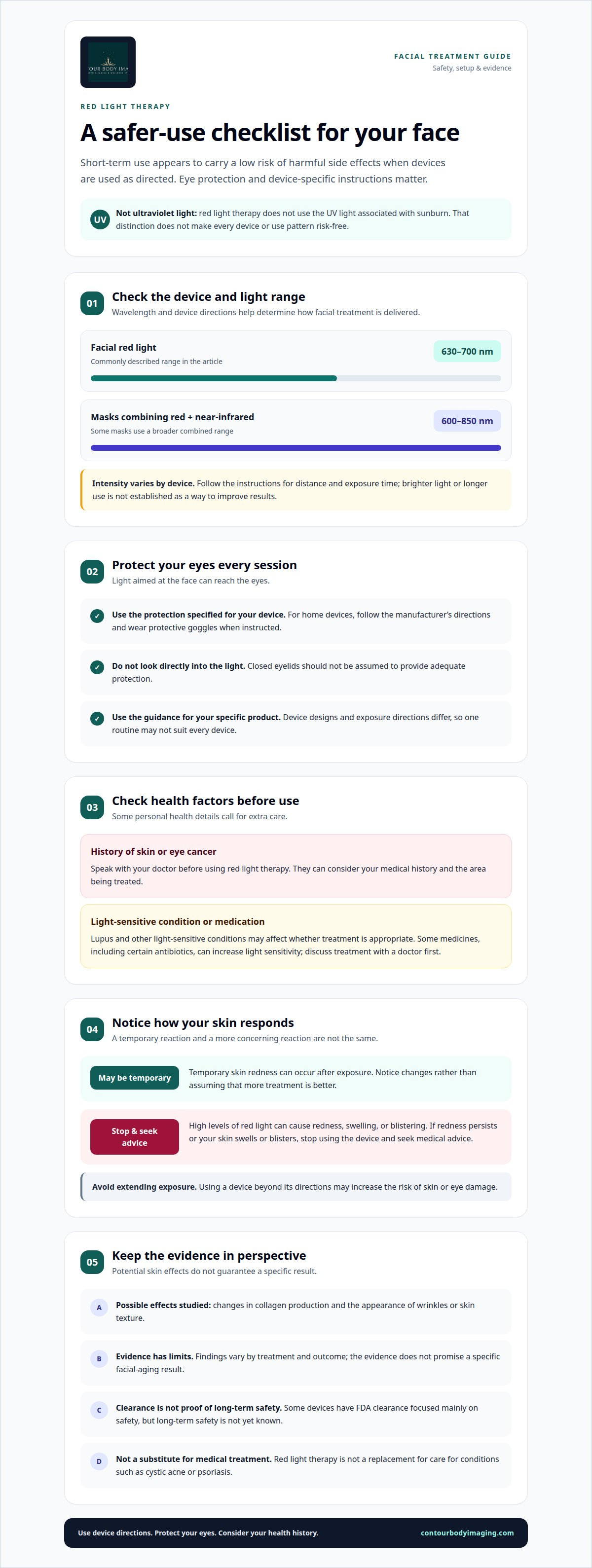
Facial red light treatments typically use red wavelengths of 630-700 nanometers; masks may combine red and near-infrared light across 600-850 nm. Intensity varies by device, so there isn’t one universal intensity value for every facial treatment.
For a particular device, follow its directions for distance and exposure time rather than assuming that brighter light or longer use will improve results. A study of mild to moderate acne used red light at 630 nm, while a comparison study included low-wavelength infrared light at 890 nm. Those examples show why treatment details matter.
What wavelength and light intensity are used in facial red light therapy? Red light commonly falls between 630 and 700 nanometers, while facial masks may also use near-infrared light between 600 and 850 nm. Intensity depends on the device, and its instructions determine how it should be used.
Potential Skin Benefits
Possible skin effects include changes in collagen production and improvements in the appearance of wrinkles or skin texture. Red light has also been studied for acne, but the specific wavelength and treatment setup matter. For example, the acne study using 630 nm examined mild to moderate acne, not every acne type.
Red light therapy isn’t a replacement for medical treatment for conditions such as cystic acne or psoriasis. If you’re considering it for an ongoing skin concern, a doctor or dermatologist can help assess whether it suits your needs. Evidence for facial rejuvenation also varies by treatment and outcome, so potential benefits shouldn’t be treated as guaranteed.
A history of skin or eye cancer calls for extra care. If you’ve had either, speak with your doctor before using red light therapy. They can consider your medical history and the area being treated. This is especially relevant for facial use, where light is close to the eyes and skin changes may need medical attention.
Eye protection and red light therapy safety
Red light therapy appears to carry a low risk of dangerous short-term side effects when devices are used as directed, but eye protection matters. Facial use also calls for extra care if you have a light-sensitive condition, take photosensitizing medication, or have relevant health concerns.
Is red light therapy safe for facial skin and eyes? Short-term use appears generally safe when you follow device directions, but unprotected eyes may be harmed by the light. Can red light therapy interact with medications that cause light sensitivity? Some medicines, including certain antibiotics, can increase light sensitivity, so discuss treatment with a doctor first.
Short-Term Safety and Side Effects
Short-term red light therapy appears safe when used as directed, though temporary skin redness can occur. Facial skin may show a reaction after exposure, so notice any changes rather than assuming more treatment is better.
High levels of red light can cause redness, swelling, or blistering. Misusing a device, such as extending exposure beyond its directions, may increase the risk of skin or eye damage. If redness persists or your skin swells or blisters, stop using the device and seek medical advice. These effects differ from the mild, temporary redness that may occur after a session.
Eye Protection
Eye protection means shielding your eyes during facial red light treatment with the protection specified for the device. Light directed toward the face can reach the eyes, and using a device without protection may cause harm.
For home devices, follow the manufacturer’s directions and wear protective goggles when instructed. Don’t look directly into the light or assume closed eyelids provide adequate protection. Device designs and exposure directions differ, so one pair of goggles or one routine may not suit every product. Shielding your eyes is a practical safety step, not an optional extra.
Device Clearance and Long-Term Safety
Some red light therapy devices have FDA clearance, which focuses mainly on safety. That clearance can inform your device choice, but it doesn’t mean every device has the same output or directions.
Read the instructions for your specific device, including its eye-protection guidance and recommended exposure. Short-term use appears safe when directed, but the long-term safety of red light therapy isn’t yet known. This matters if you’re planning repeated facial sessions over an extended period. Safety clearance isn’t proof of long-term effects or a reason to exceed the device’s instructions.
Medication-Related Light Sensitivity
Medication-related light sensitivity occurs when a medicine makes the body more sensitive to light. Certain antibiotics, for example, can increase sensitivity and affect how a person may respond to treatment.
Lupus and other light-sensitive conditions can also affect whether red light therapy is appropriate. If you take medication that causes light sensitivity or have a condition such as lupus, avoid treatment until you’ve discussed it with a doctor. Share the medication name and device details so your doctor can consider the type of light and your health history. Don’t stop prescribed medication to use a red light device.
What is the optimal number of treatments for different concerns like loose skin and crow’s feet?
Red light therapy schedules vary by device, treatment goal, and skin concern. Repeated sessions are common for wrinkles or loose skin, but there isn’t one schedule that applies to every face.
Treatment Frequency
Treatment frequency is how often sessions take place during a week or course of treatment. It matters because red light therapy is generally used repeatedly, not as a one-time approach to skin concerns.
For many skin conditions, schedules may involve one to three sessions weekly for weeks or months. Some guidance recommends using effective devices multiple times a week for four to six months. These figures describe different protocols, not a universal schedule for crow’s feet or loose skin.
At-home masks may be recommended three to five times per week. That frequency reflects mask-specific guidance, so don’t automatically apply it to another device. Follow the instructions for the device you use, since its light output and directions determine the schedule.
One facial study used eight LED red-light treatments over four weeks. That’s an example of a studied course, not a guaranteed schedule for every person or device. A dermatologist can help weigh your treatment goal, skin condition, and device instructions when you’re considering a routine.
Photobiomodulation, another term for light-based treatment, is often discussed in relation to cellular activity and collagen. For wrinkles, the aim is usually gradual skin changes over repeated sessions. Loose skin and crow’s feet are different concerns, so your desired outcome and treatment area can affect how a course is planned.
Treatment Duration
Treatment duration is the time spent under or in front of the light during each session. It matters because exposure time is part of the device’s intended use, not something to increase at will.
Red light therapy sessions are often described as lasting around 10-30 minutes. At-home mask recommendations may specify 10-20 minutes. Those ranges aren’t interchangeable: the device’s instructions should guide the session length, especially when treating delicate facial skin.
Session length and course length are separate. A 10-minute mask session may be repeated across weeks, while a professional protocol may use another duration. More minutes in one session don’t automatically replace repeated use over time, and longer exposure shouldn’t be assumed to improve collagen or wrinkles.
Ultraviolet light differs from red light, but that distinction doesn’t determine treatment duration. For facial use, your specific device, its directions, and your goal, such as softening visible wrinkles, all matter. Follow the instructions for session time rather than extending exposure to try to accelerate results.
There’s no established optimal session duration or dose for every skin issue. Follow your device’s directions and consider your goal, such as crow’s feet versus broader skin rejuvenation. Reassess your routine over its planned weeks or months instead of changing frequency and duration at the same time.
Evidence limitations
Evidence for red light therapy depends on the outcome a study measures. A study assessing skin texture doesn’t automatically establish improvement in loose skin, crow’s feet, or every sign of facial aging. The treatment goal matters: wrinkle appearance, skin firmness, and healing are distinct outcomes. Evidence for one can’t be treated as proof of results for another.
Studies can also differ in their participants, devices, exposure plans, and assessment methods. For example, a change measured in a clinical setting with professional-grade equipment may not predict the effect of a home device. Comparing photographs, patient reports, or skin measurements can yield different views of the same treatment. These differences make broad claims about all devices difficult to support.
Some research examines red light in connection with inflammation or tissue healing. Those findings don’t by themselves establish that facial red light therapy reduces wrinkles or restores skin firmness. The process being studied matters: evidence about healing after a procedure answers a different question from evidence about routine facial rejuvenation.
Device strength is another consideration. Professional-grade equipment used in studies is often more powerful than devices sold for home use. Differences in light delivery can affect how closely a home routine matches a research protocol. A study’s outcome shouldn’t be assumed to apply equally to every mask, wand, or clinic treatment.
Red light therapy shouldn’t be confused with laser therapy. Both involve light, but they use different technologies and treatment methods. Evidence for a laser procedure doesn’t establish the effects of a red-light device. For facial concerns such as persistent acne, cystic acne, or psoriasis, red light therapy doesn’t replace medical treatment.
For signs of aging, consider claims alongside everyday skin care. Red light therapy can complement sun protection, moisturizing, restorative sleep, and healthy eating, but it doesn’t replace them. A visible change in one study doesn’t establish the same outcome for every person, skin concern, or device. Keep claims specific to the treatment and result actually studied.
Use a practical evidence check: identify the specific concern, such as crow’s feet; note whether the study used a similar device and treatment setting; then look at the outcome it measured. If a claim jumps from cellular effects to a promise about facial appearance, it goes beyond the stated evidence. This distinction helps set realistic expectations without dismissing red light’s potential role in a broader skin-care routine.
Red-light therapy for facial signs of aging
For facial aging, red light therapy is a non-invasive option studied for changes in skin appearance. In one facial LED study, 90 patients received treatment, and more than 90% reported noticing some improvement.
At-home red light devices are often less powerful than professional equipment used for skin rejuvenation. Professional treatments and home devices can also differ in light delivery and setup, so results in one setting don’t automatically predict outcomes in another.
In the United States, facial red-light therapy costs depend on the device, treatment area, and setting; pricing is provided after a quote request. These factors shape treatment costs, while no single price applies to every facial treatment.
For signs such as fine lines, crow’s feet, or changes in firmness, distinguish a reported improvement from a measured, predictable result. The 90-patient study offers a specific example, but its reported improvement doesn’t establish that every person will see the same change. The outcome also depends on what researchers measured and the treatment used.
Facial devices use red and near-infrared wavelengths, and light exposure can influence cellular activity associated with skin health. This mechanism helps explain interest in collagen and skin rejuvenation. It doesn’t mean every person responds the same way or that more light produces better results.
Redness can occur after treatment, and higher light exposure can cause more pronounced skin reactions. Follow device directions and keep eye protection in place during facial use. If a skin change concerns you, a dermatologist can assess it rather than assuming it’s a sign of aging.
Red light therapy differs from ultraviolet exposure and from procedures using a laser. The phrase “low-level laser” sometimes appears in discussions of light-based treatments, but it shouldn’t blur the differences between devices and methods. Red-light treatments are non-invasive; they don’t replace sun protection, moisturizing, or medical care for skin conditions.
A practical takeaway: consider the specific concern, treatment setting, and evidence behind the claimed outcome. Red light therapy can complement regular skin care, but it doesn’t replace sun protection, healthy eating, restorative sleep, or moisturizing. These habits remain relevant whether treatment takes place at home or in a professional setting.
Contour Body Imaging
Contour Body Imaging offers Lumaray 360 red light therapy as an option for people exploring light-based skin treatments. If you’re weighing facial aging concerns against questions about device use, treatment routines, or realistic expectations, a conversation can help you understand how this option fits your wellness goals. The focus is on informed choices, not promises of a particular result. For other facial care preferences, Cryo Facial is another available treatment, though it uses a different approach from red light therapy. Choosing between options depends on the kind of skin treatment you’re considering and the questions you want answered. Contact Contour Body Imaging to discuss your facial treatment goals and explore the available options.
Choose a Next Step That Fits Your Skin Goals
If you’re weighing whether red light therapy is safe for your face, make your next step a thoughtful choice based on your skin goals, health history, and comfort with ongoing treatments. A healthcare professional can address personal medical concerns. Wellness treatments can complement, but shouldn’t replace, medical care or everyday skin protection.
Contour Body Imaging offers non-invasive wellness options, including Cryo T-Shock Body Contouring, Cryo Facial, and Endospheres Therapy®. If you’re considering an aesthetic treatment, the team can help you explore which approach aligns with your goals at its clinic serving The Woodlands and Dallas, Texas.
Move forward at a pace that feels right for you. Informed, comfortable choices are an important part of caring for your skin.
Frequently Asked Questions
Are devices purchased for at-home use a safe, reasonable option?
At-home devices can be a reasonable option when you follow their specific instructions and protect your eyes as directed. Output and coverage vary, so results from professional equipment don’t necessarily predict what a home mask or wand will do. Before starting, consider your skin concern, the device’s intended use, and whether medical or medication-related factors affect your suitability.
Before and after: What results can you expect?
Expect any changes to develop gradually rather than appear immediately after one session. You may notice differences in fine lines, skin texture, or overall radiance, but outcomes vary with the device, routine, and individual skin. For a useful comparison, look at your skin under similar lighting before and during a treatment course. Don’t mistake temporary redness for proof of lasting improvement.
But is there proof it works?
Research supports biological effects from red light, and clinical studies have examined outcomes such as collagen activity and facial skin appearance. That doesn’t establish that every device produces the same effect or reliably corrects a specific concern. Check what a study actually measured: evidence about cellular activity, for example, isn’t equivalent to proof of lasting changes in wrinkles or firmness.
Can it cause cancer?
Red light therapy hasn’t been shown to cause cancer, and it doesn’t use ultraviolet light. However, if you’ve had skin or eye cancer, speak with your doctor before treatment. This is especially relevant for facial use, since treatment exposes skin near the eyes. Red light therapy also shouldn’t replace medical evaluation of a new or changing spot.
How does red light benefit the skin?
Red light can affect cellular processes associated with collagen production, which helps support skin structure. That’s why researchers study it for concerns such as fine lines and changes in texture. The response depends on the treatment and skin concern, so the mechanism alone doesn’t promise a visible result. Continue sun protection and regular moisturizing as part of your skin-care routine.
What is the safest and most effective amount of red light to use at home?
There isn’t one established dose for every at-home device and skin concern. Use the exposure time and frequency stated in your product’s instructions, and don’t extend sessions to try to speed up results. Device output, distance from skin, and treatment goal all affect exposure. If you have a medical concern or take photosensitizing medication, discuss use with a healthcare professional first.
What are the risks and side effects of red light therapy on the face?
Possible effects include temporary redness; excessive exposure can cause swelling or blistering. Eye exposure is another concern, so use the protection specified for your device and don’t look directly into its light. Stop treatment if you develop a concerning skin reaction, and seek medical advice for persistent symptoms. Following device directions helps prevent misuse, but doesn’t remove every possible risk.
Who should avoid facial red light therapy, including people with photosensitivity or skin conditions?
If you have lupus or another light-sensitive condition, or take medicines that increase light sensitivity, avoid treatment unless a doctor advises otherwise. Certain antibiotics can cause photosensitivity. If you’ve had skin or eye cancer, speak with a doctor before treatment. Red light therapy doesn’t replace medical care for cystic acne, psoriasis, or other persistent skin conditions.


Comments