

Lumaray 360 Benefits: What Red Light Therapy May Support
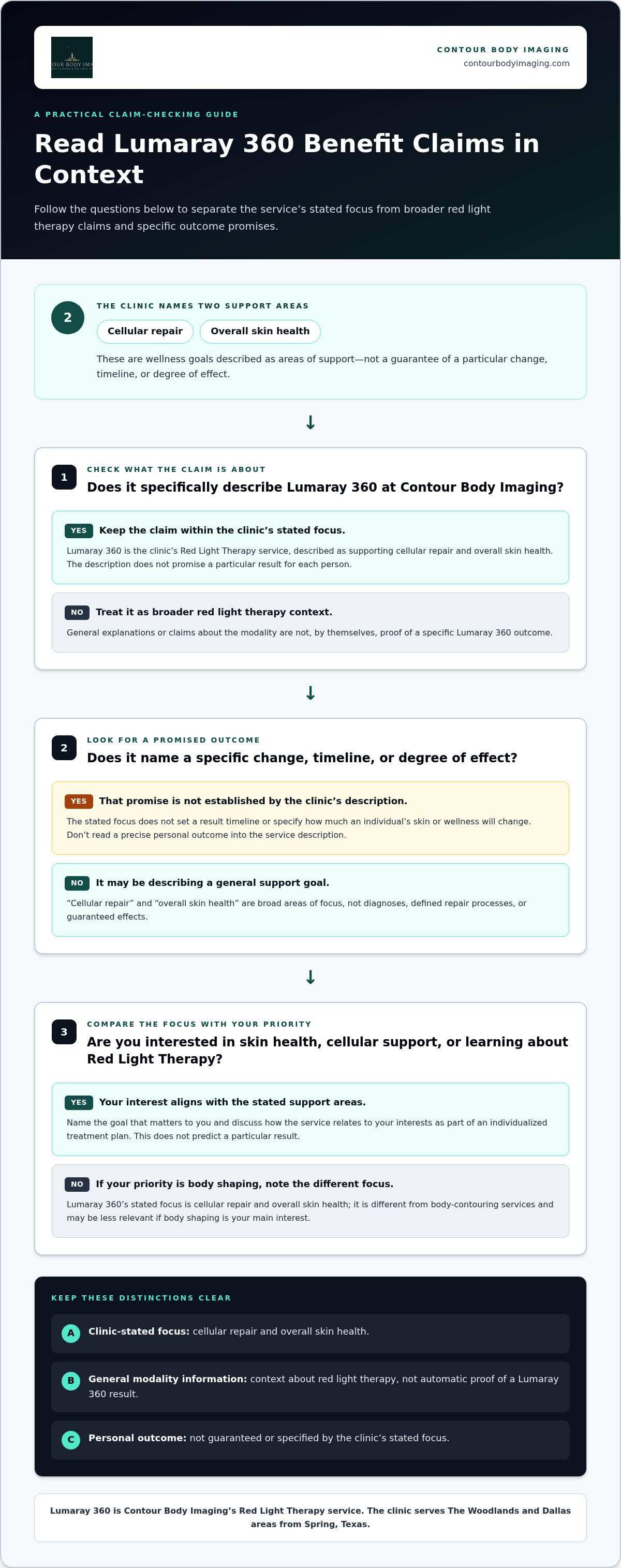
When considering Lumaray 360 benefits, it helps to start with the service’s stated focus: supporting cellular repair and overall skin health. These are wellness goals, not promises of a particular result. At Contour Body Imaging, the conversation can begin with what you hope to explore and whether Red Light Therapy fits your priorities.
Lumaray 360 is Contour Body Imaging’s Red Light Therapy service. Its focus is different from body-contouring services, so it may be more relevant if you’re interested in skin health or the clinic’s cellular-support focus than in body shaping. This guide explains how to interpret those stated benefits, how to compare them with broader claims about red light therapy, and what to consider when discussing personal fit. Contour Body Imaging serves The Woodlands and Dallas areas from its clinic in Spring, Texas.
Table of Contents
What Lumaray 360 Benefits May Mean for Skin and Wellness
Lumaray 360 is Contour Body Imaging’s Red Light Therapy service. The clinic describes its focus as supporting cellular repair and overall skin health. Those phrases explain the service’s stated wellness goals, but they don’t promise that each person will experience a particular change. Keeping that distinction in mind makes it easier to assess online claims and decide what questions to bring to a consultation.
Search results can be confusing because similar names may appear on retail products or unrelated pages. In this article, “Lumaray 360” refers to Contour Body Imaging’s Red Light Therapy service, not every product or result with a similar name. Before applying a claim you find elsewhere, check whether it describes this service or red light therapy more generally. The clinic’s stated focus is cellular repair and skin health.
Which benefit areas does the clinic associate with Lumaray 360?
The two stated areas are cellular repair and overall skin health. Cellular repair is a broad phrase. Here, it describes the clinic’s support focus rather than a specific repair process or a guaranteed effect for each client. “Overall skin health” is also a general area of interest, not a promise of a particular appearance or measurable result.
Red light therapy is discussed more broadly online, and explanations may combine proposed mechanisms with possible uses. The general Red light therapy overview can offer background on how the modality is described. However, general information should not be taken as proof of a particular Lumaray 360 outcome. Keep the distinction clear: broad discussions of red light therapy are not the same as the clinic’s stated focus for this service.
How should readers interpret the word “benefits”?
Think of “benefits” as a shorthand for the goals the treatment is described as supporting, not a forecast of what will happen for you. People have different priorities and experiences. The clinic’s description does not establish a guaranteed result, a timeline, or a specific degree of change. Claims beyond cellular repair and overall skin health should not be assumed to describe Lumaray 360.
When you come across a benefit claim, check what it actually says. Does it describe a general wellness focus, or promise a precise personal outcome? Is it about red light therapy broadly, or specifically about Lumaray 360 at Contour Body Imaging? These questions help you distinguish useful context from marketing language without dismissing your interest in the service.
If you’re considering Lumaray 360, start by naming the goal that matters to you. You might be interested in overall skin health, the clinic’s cellular-support focus, or simply learning more about Red Light Therapy. Sharing your priorities and expectations in an individualized discussion gives you a chance to understand how the service fits your interests without assuming everyone will have the same experience.
How Red Light Therapy Is Framed as Cellular Support
“Cellular support” can sound like a precise medical claim, but in the description of Lumaray 360 it’s a broad way to express the service’s wellness focus. It doesn’t identify a diagnosis, promise a biological change, or establish what an individual will experience. Understanding the phrase in context helps you consider the service without reading more into it than the description states.
Lumaray 360 is Red Light Therapy focused on supporting cellular repair and overall skin health. This captures the clinic’s stated purpose without turning a support goal into a promise. General explanations of red light therapy may discuss how the modality is understood, but those descriptions alone don’t establish a particular effect from Lumaray 360.
What does cellular repair mean in everyday language?
In everyday language, “cellular repair” refers to support associated with cells and their upkeep. For Lumaray 360, it describes the clinic’s stated focus, not a diagnosis or a claim that the service treats, cures, or reverses a condition. General scientific discussions of red light therapy are a separate topic. They should not be treated as Lumaray 360-specific proof or as a prediction of your personal response.
How does skin health fit into the treatment’s stated purpose?
Overall skin health is the second area the clinic names as a support focus. The phrase doesn’t guarantee a cosmetic change or specify what someone’s skin will look or feel like. It also shouldn’t be expanded into claims about concerns the clinic’s description doesn’t name. If skin health is your priority, bring that goal into a discussion about whether the service aligns with your interests.
It’s useful to be careful with broader red light claims because information about a treatment category can cover different settings, uses, and research questions. A result discussed in a study or an online post doesn’t automatically apply to every service using red light, and it doesn’t predict what an individual client will experience. Keep three things separate: the clinic’s stated focus, general information about the modality, and a specific outcome that would need its own supporting evidence.
A practical way to assess a claim is to look for its most specific promise. If it names a particular change, timeline, or effect, check whether the statement is about Lumaray 360 itself or red light therapy in general. The clinic’s stated focus remains cellular repair and overall skin health. Broader descriptions can provide context, but they should not be treated as additional service claims.
If you want to connect these support areas with your own wellness priorities, you can discuss Lumaray 360 with Contour Body Imaging as part of an individualized treatment plan. A conversation can help you explain what you hope to explore and ask how the service relates to those goals, without assuming a particular result in advance.
Lumaray 360 Benefits: Stated vs. Assumed
Clear wording matters when you’re evaluating a wellness service. Contour Body Imaging describes Lumaray 360 as Red Light Therapy focused on cellular repair and overall skin health. Those are the grounded points to use when considering whether the service matches your interests. Other statements about what red light therapy might do in different contexts shouldn’t automatically be read as claims about Lumaray 360.
The distinction is straightforward: a stated focus describes what the clinic associates with its service; an assumed outcome predicts a result for you. Use both ideas when reading service descriptions or preparing questions about your goals.
Which Lumaray 360 benefit statements are grounded in clinic information?
The clinic identifies Lumaray 360 as Red Light Therapy and describes its support focus as cellular repair and overall skin health. These are the clinic’s descriptions, not a guarantee of efficacy or an independent research finding. Keep the source in view: the treatment name and focus come from the clinic, while general explanations or studies about red light therapy relate to their own research contexts.
Which claims need qualification rather than certainty?
Specific cosmetic, metabolic, or healing outcomes need evidence that directly supports the claim and applies to the service being discussed. A general finding about red light therapy can provide context, but it can’t establish what one person will experience or prove a particular result from Lumaray 360. Treat a specific outcome as something to assess on its own, not as a promise based on a broad claim.
For example, saying that a treatment supports skin health is not the same as promising a change to a particular skin concern. Similarly, research involving a different device, protocol, or group of participants doesn’t automatically transfer to this service. Results described in a study belong to that study’s conditions; they don’t guarantee a similar result for every client.
The reasonable takeaway is that the clinic’s stated focus is clear, while individual results and additional effects shouldn’t be presumed. If a claim sounds more specific than “supporting cellular repair and overall skin health,” consider whether it’s a clinic description, a general statement about the therapy, or an outcome that needs separate evidence. This lets you explore the Lumaray 360 benefits with interest and realistic expectations.
How to Decide Whether Lumaray 360 Fits Your Goals
A useful decision starts with your priorities, not a promise you’ve seen online. Lumaray 360 is the clinic’s Red Light Therapy service, described as supporting cellular repair and overall skin health. Consider whether those areas match what you’re looking for, then use your questions to guide a conversation about personal fit. You don’t need to have every detail settled before you begin.
Use this short reflection to organize your thoughts:
Identify your goal. Are you interested in overall skin health, the clinic’s cellular-support focus, or general wellness? Describe your interest in your own words rather than relying on a broad claim or label.
Set expectations. Think about what you hope to understand or explore while leaving room for individual differences. A treatment goal isn’t a guarantee of a result, and it doesn’t establish a timeline.
Consider personal fit. Ask yourself whether the service’s stated focus feels relevant and what you’d want to know about the experience. Your preferences and questions are part of the discussion.
What should you clarify about your personal goals?
Separate an appearance-related interest, such as discussing overall skin health, from a broader interest in cellular support or wellness. These priorities can overlap, but naming the one that matters most helps make the conversation more specific. Before you meet, you could note what prompted your interest, what you hope to learn, and what questions you have about the experience or individualized recommendations.
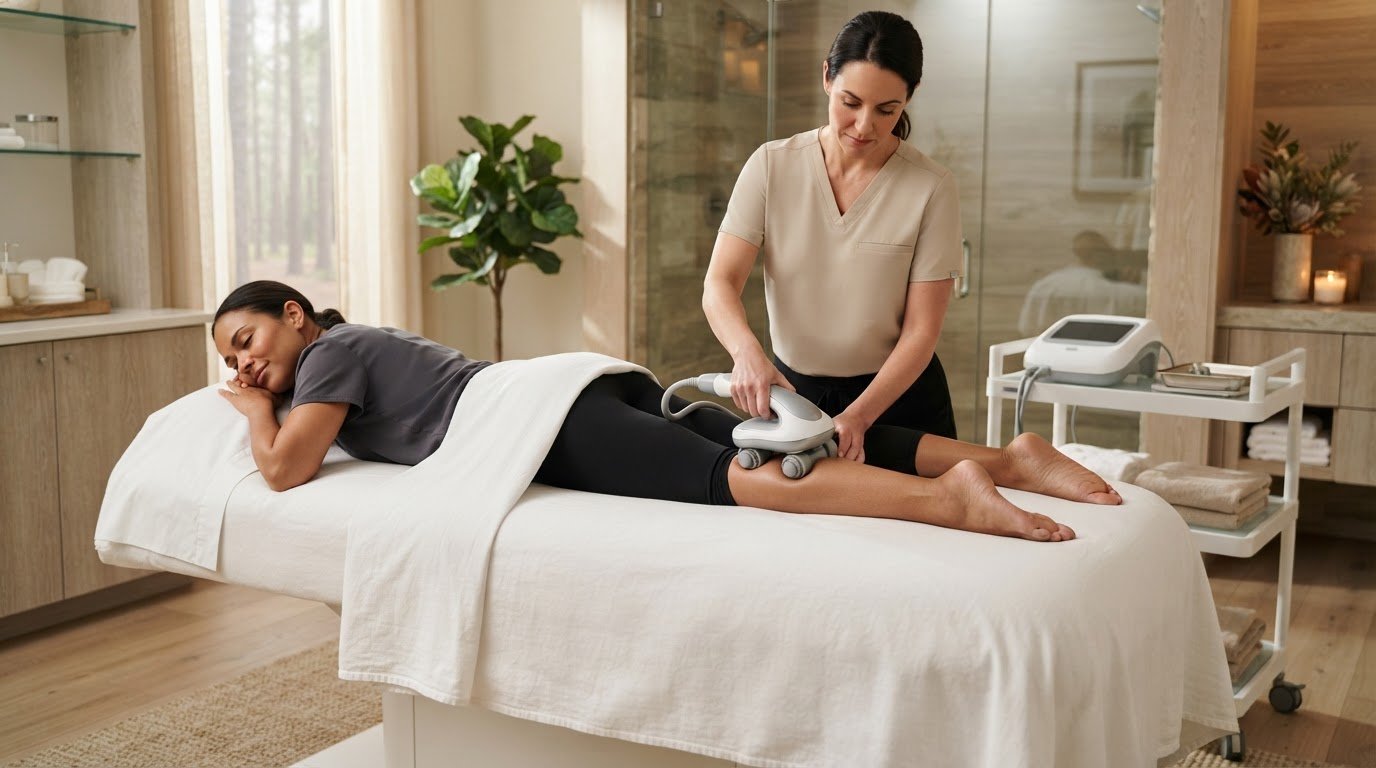
It also helps to distinguish skin-health interests from body-contouring goals. Red Light Therapy and body-contouring services have different stated focuses, so a goal centered on body shaping deserves a separate discussion. The clinic’s non-invasive body sculpting guide offers context for that distinction without suggesting that Lumaray 360 is a body-contouring treatment.
How can a consultation make the decision clearer?
A consultation gives you space to describe what matters to you and discuss how Lumaray 360 may fit within an individualized treatment plan. Rather than assuming one approach suits everyone, the clinic can consider your goals and questions as part of a broader wellness conversation. You can ask what the clinic means by its stated support focus and how it relates to your priorities, while keeping expectations realistic.
Comfort matters in the discussion, too. Raise anything that would help you feel informed and at ease, and take time to understand the conversation before deciding on next steps. A supportive consultation can clarify the service’s intended focus without promising an outcome or suggesting that everyone will have the same experience. The aim is to discuss a plan in light of your goals, not to apply a universal promise.
Explore Lumaray 360 at Contour Body Imaging
At Contour Body Imaging, Lumaray 360 is offered as Red Light Therapy within a broader, holistic approach to aesthetic wellness. The clinic describes the service as supporting cellular repair and overall skin health. Individualized treatment planning keeps the conversation centered on your goals and helps you explore whether the service fits your priorities without treating a general wellness focus as a guaranteed personal result.
The clinic emphasizes comfort and a safety-conscious experience. A thoughtful treatment discussion gives you room to explain what you hope to explore, ask questions, and understand how the service is framed before deciding on next steps. The focus is personal guidance, not a one-size-fits-all promise.
What can local clients expect from the clinic’s approach?
Contour Body Imaging serves clients in The Woodlands and Dallas areas from its clinic at 719 Sawdust Road in Spring, Texas. The clinic’s approach is supportive and professional, with attention to comfort, safety, and individualized wellness planning. You can bring your goals to the discussion and explore how Lumaray 360 may fit within that broader approach.
Personalizing a plan starts with understanding what matters to you. You may want to learn more about the clinic’s skin-health focus or ask how cellular support relates to your wellness interests. A clear conversation helps distinguish those priorities from expectations that go beyond the service’s stated purpose. You can begin with the questions that are most relevant to you.
What is a useful next step if you are interested?
A consultation is an opportunity to talk through your goals, ask about the clinic’s stated support areas, and discuss individualized treatment planning. You might explain whether your interest is skin health, cellular support, or general wellness, then ask how the service relates to that priority. The conversation can also help you share what would make the experience feel comfortable and informative.
You don’t need to arrive with a fixed conclusion. Consider writing down your main goal and any questions you have. The clinic can discuss Lumaray 360 in the context of your individual priorities without promising a particular outcome or suggesting one plan suits everyone. That gives you a grounded basis for deciding whether it feels like a suitable next step.
If you’re ready to explore the Lumaray 360 benefits in relation to your own wellness goals, book a consultation with Contour Body Imaging.
Take a Thoughtful Next Step Toward Your Wellness Goals
Choosing a wellness service can feel more manageable when you focus less on broad online promises and more on what you want to understand. Before deciding, consider which questions matter most: how an individualized plan can reflect your priorities, how the service’s stated focus relates to those priorities, and what would help you feel comfortable moving forward. You don’t need every answer before beginning the conversation.
Think of Lumaray 360 benefits as a reason to explore whether the service aligns with your goals, not as a checklist of outcomes to expect. A personal discussion gives you room to share what you’re hoping for, ask questions, and consider an individualized approach without pressure to expect a particular result. That can be a useful next step while you’re still weighing your options.
Move at a pace that feels right for you. A clear, supportive conversation can help you make an informed choice with confidence.
Frequently Asked Questions
What benefits does Lumaray 360 offer?
Contour Body Imaging describes Lumaray 360 as Red Light Therapy focused on supporting cellular repair and overall skin health. These are areas of support, not guaranteed changes. If you’re exploring the Lumaray 360 benefits, describe your priority in practical terms, such as wanting to learn about the clinic’s skin-health focus. A consultation can help you discuss how that goal fits an individualized approach without assuming a particular result.
Is Lumaray 360 the same as red light therapy?
Yes. Lumaray 360 is the name Contour Body Imaging uses for its Red Light Therapy service. Search results may show similarly named retail products or services, so check whether the information refers to this clinic’s treatment before applying a claim to it. A product description elsewhere isn’t necessarily a description of Lumaray 360 or evidence about what you might experience at the clinic.
Can Lumaray 360 improve skin health?
The clinic describes Lumaray 360 as supporting overall skin health, but that doesn’t promise a specific cosmetic result. If skin health is your main interest, note what you’d like to discuss and bring those questions to a consultation. You can ask how the clinic’s stated focus relates to your goals without assuming particular changes, how quickly they might occur, or whether they’ll occur for you.
Does Lumaray 360 burn fat or replace body-contouring treatments?
Don’t assume Lumaray 360 provides a specific fat-reduction result or replaces a body-contouring service. The clinic describes it as Red Light Therapy focused on cellular repair and overall skin health. If your priority is body contouring, name that goal clearly during a consultation so the clinic can discuss an individualized approach and relevant services, including Cryo T-Shock Body Contouring, separately from Lumaray 360.
How many Lumaray 360 sessions do I need?
There isn’t a universal session count to assume from general information about red light therapy. The clinic can discuss an individualized treatment plan in relation to the goals you bring to a consultation. Ask how a recommended plan connects to your priorities and what expectations are reasonable, rather than relying on a schedule found online. Don’t treat a suggested timeline or hoped-for result as guaranteed.
Where can I learn about Lumaray 360 near The Woodlands or Dallas?
Contour Body Imaging serves The Woodlands and Dallas areas from its clinic at 719 Sawdust Road in Spring, Texas. If you’re nearby, book a consultation to talk through your interest in Lumaray 360, share your wellness goals, and discuss the clinic’s individualized approach. It’s a local opportunity to ask questions and consider your next steps.

Comments