

LymphaPress Lymphedema Management in Dallas
A compression device can support lymphedema care, but understanding how it works and what the evidence shows matters as much as knowing its name. For people exploring LymphaPress for lymphedema management in Dallas, the system uses air-inflated garments to deliver programmed compression to a targeted area. It may be one part of a broader care plan, not a replacement for individualized clinical guidance.
It’s reasonable to want clear, practical information before considering a treatment device. This guide explains how LymphaPress compression works, what clinical studies and patient-reported outcomes can tell you, and what questions matter when discussing treatment. You’ll also learn where patients and clinical professionals can direct inquiries, so you can better understand the evidence and identify a sensible next step.
Table of Contents
Patient and clinical professional inquiries
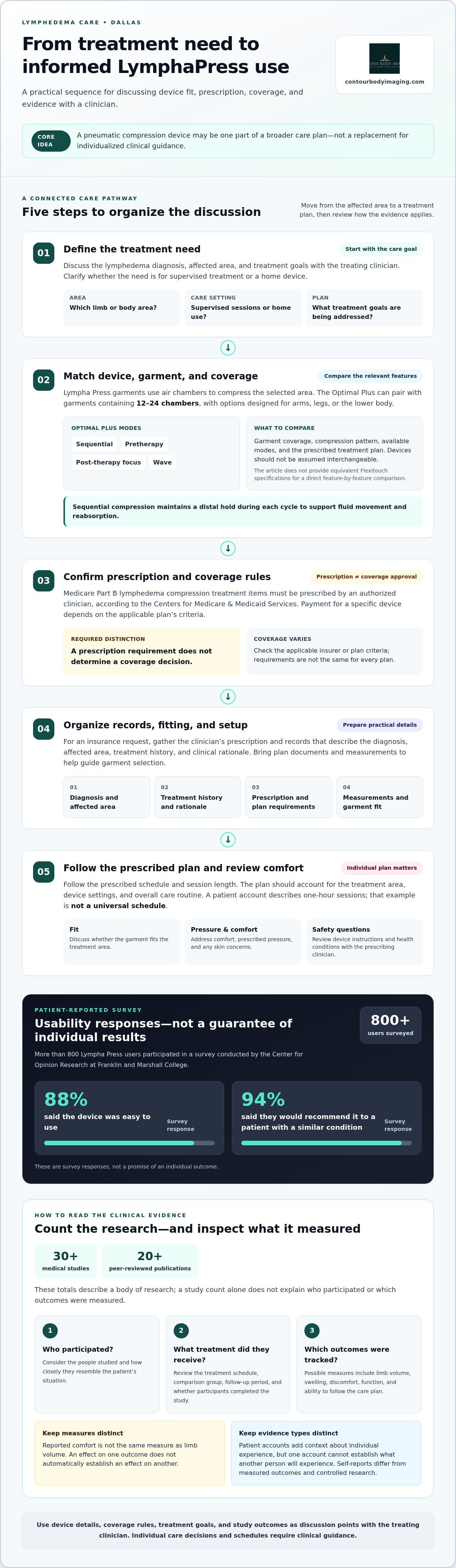
Patients and clinicians can use device details, coverage rules, and treatment goals to guide practical inquiries. These points clarify what to compare, document, and discuss when exploring care in Dallas.
Device Options and Lymphedema Support
Lympha Press garments use air chambers to apply compression to the selected area. The Optimal Plus can be paired with garments containing 12-24 chambers, with options designed for arms, legs, or the lower body. Look at the area needing treatment, garment coverage, and prescribed mode. Sequential compression maintains a distal hold during each cycle to support fluid movement and reabsorption.
How does LymphaPress compare with Flexitouch and other lymphedema pumps? Compare garment coverage, compression patterns, available modes, and treatment plans instead of assuming devices are interchangeable. Lympha Press Optimal Plus includes sequential, pretherapy, post-therapy focus, and wave modes. Without equivalent Flexitouch specifications, a direct feature-by-feature comparison isn’t possible here.
Insurance Coverage and Eligibility Requirements
Does Medicare or insurance cover LymphaPress devices in Texas? Medicare Part B lymphedema compression treatment items must be prescribed by an authorized clinician, according to the Centers for Medicare & Medicaid Services. Coverage and payment for a specific device depend on the applicable plan’s criteria, so distinguish a prescription requirement from a coverage decision.
What are the eligibility and documentation requirements for insurance coverage of a pneumatic compression pump? Start with a clinician’s prescription and records describing the lymphedema diagnosis, affected area, treatment history, and clinical rationale. Insurer requirements vary, so organize treatment records and plan documents before submitting a request.
Dallas Fitting, Purchase, and Clinical Care
Where can I get fitted for or purchase a LymphaPress device in Dallas? Start with the prescribing clinician, who can identify the treatment area and garment needs, then coordinate fitting and acquisition through the appropriate medical equipment channel. Bring prescription details and measurements to help guide garment selection.
Which Dallas clinics or therapists provide LymphaPress treatment for lymphedema? Ask a lymphedema therapist or treating clinician about local care options and whether sessions use a pneumatic compression device. When discussing Dallas care, specify the affected limb, diagnosis, and whether you need supervised treatment or a home device.
Treatment Use, Comfort, and Adherence
How often and how long should LymphaPress be used for lymphedema? Follow the prescribed schedule and session length. The plan should account for the treatment area, device settings, and overall care routine. A patient account describes one-hour sessions, but that example is not a universal schedule.
Comfort and fit can influence whether treatment becomes a consistent routine. More than 800 Lympha Press users participated in a survey conducted by the Center for Opinion Research at Franklin and Marshall College; 88% said the device was easy to use, and 94% said they would recommend it to a patient with a similar condition. These are survey responses, not a promise of an individual outcome.
What are the risks, contraindications, and side effects of LymphaPress? Before treatment, review the device instructions and discuss health conditions, skin concerns, or discomfort with the prescribing clinician. Correct garment fit and prescribed pressure are important points to address.
What steps are needed to get a LymphaPress prescription and device in Dallas? Discuss the diagnosis and treatment goals with an authorized clinician, obtain a prescription when appropriate, then address coverage documentation, garment fitting, and device setup. Bring questions about comfort, schedule, and the treatment area to that discussion.
Clinical studies and treatment evidence
Clinical evidence helps patients and clinicians assess pneumatic compression beyond device features or individual testimonials. The available evidence counts include more than 30 medical studies and more than 20 peer-reviewed publications supporting Lympha Press compression therapy and home-treatment devices. Those totals describe a body of research, but a study count alone doesn’t explain which patients were studied or what outcomes researchers measured.
Read each study by asking three questions: who participated, what treatment they received, and which outcomes researchers tracked. For lymphedema, useful outcomes may include limb volume, swelling, discomfort, function, and ability to follow the care plan. A report measuring one outcome doesn’t automatically establish an effect on another. For example, reported comfort is not the same measure as limb volume.
Study design matters, too. Look for the treatment schedule, comparison group, follow-up period, and whether participants completed the study. These details help show how closely the research resembles a particular patient’s situation. A home-treatment study can inform questions about routine use, but its results still depend on the study population and methods.
Patient accounts add useful context, but they answer a different question from clinical studies. Someone describing less swelling or easier movement can illustrate an experience, but one account cannot establish what another person will experience. In the earlier survey discussion, reported responses offered perspectives on usability and perceived changes. Keep these self-reports distinct from measured outcomes and controlled research when weighing evidence.
For a practical review, patients can bring a study or outcome question to their clinician and compare it with their treatment goals. Ask whether the evidence concerns a similar condition, treatment area, and care setting. Clinicians can note which outcomes they plan to monitor before treatment begins. Consistent measurements over time make it easier to discuss whether the plan is meeting its goals.
Evidence supports informed discussion, not a one-size-fits-all conclusion. The research counts give readers a starting point; the population, methods, and measured outcomes give those counts meaning. For a separate wellness goal, the introductory offer is a distinct next step from reviewing lymphedema treatment evidence.
Additional details can help place the evidence in context. The page reports that 0% of Lympha Press® patients remained compliant with treatment during the first two years of use. A Lympha Press user in Charleston, South Carolina, reported that after one month of daily treatments, their legs had almost returned to normal. This account describes an individual experience, rather than an outcome that can be assumed for every patient.
Device features may also shape treatment discussions. The Optimal Plus post-therapy mode targets specific limb regions after the primary treatment mode for patients with fibrotic tissue or hard-to-treat areas. Lympha Press garments inflate with air to provide custom treatment to the area needing therapy. Lympha Press states that its systems have more than 40 years of experience and clinical use. The report said these items must be prescribed by a physician, physician assistant, nurse practitioner, or clinical nurse specialist, according to the U.S. House of Representatives. Patients can discuss these details with their clinician when considering how a device fits their care plan.
Lymphedema management
More than 10 million Americans have a lymphedema diagnosis, making consistent care a practical concern for many households. In Dallas, management begins by identifying where swelling occurs, how it affects daily activities, and which goals matter to the patient. For people exploring LymphaPress for lymphedema management in Dallas, these details help frame a conversation about whether pneumatic compression fits their care plan.
Lymphedema involves fluid buildup that can cause swelling in an affected area. Management focuses on addressing symptoms and supporting daily function, rather than relying on one technique alone. A care plan may include compression, movement, skin care, and clinical follow-up. The right elements depend on the treatment area, health history, and clinician’s assessment.
A useful first step is to describe changes clearly. Note where swelling appears, whether clothing or footwear fits differently, and which activities feel more difficult. Someone with arm swelling, for example, may have trouble reaching or dressing, while someone with leg swelling may notice changes when walking. Specific examples help connect treatment goals to everyday needs.
Tracking symptoms can make follow-up conversations more precise. Record comfort, daily function, and changes in the affected area consistently. If a clinician monitors limb measurements, ask which method to use and when to record them. Comparing measurements taken at different locations or with different methods may not reveal a meaningful trend.
Compression is one possible part of lymphedema management. Pneumatic compression uses an inflatable garment to apply pressure in a programmed pattern, and other approaches may also be part of care. Treatment settings and garment coverage affect how a device addresses a particular area. In Dallas, a discussion about LymphaPress for lymphedema management can focus on these details and the patient’s goals.
Clear communication helps patients and care teams review progress. Bring a concise record of symptoms, comfort, treatment use, and questions to appointments. If swelling changes or treatment becomes difficult to tolerate, note what changed and when. Lympha Press states its compression therapy is backed by more than 50 years of clinical expertise; a clinician can help relate device information to an individual care plan.
What is LymphaPress and how does it help manage lymphedema?
Lympha Press is a pneumatic compression system designed to support lymphedema care. Its garments inflate with air to apply compression to the selected treatment area. The Optimal Plus can be programmed for a patient’s specified treatment. A clinician’s plan determines which area, mode, and settings fit the treatment goals.
The compression pattern explains how the device works. In sequential mode, chambers inflate in order and maintain a distal hold during each cycle. This hold is intended to help prevent fluid from moving backward while supporting fluid movement and reabsorption. Pressure progresses through the garment chambers rather than being applied everywhere at once.
The Optimal Plus also includes modes for different treatment stages and needs. Pretherapy starts proximally, closer to the body’s center, to clear fluid buildup before continuing in sequential or peristaltic mode. Post-therapy focus targets selected limb regions after the primary mode and is intended for fibrotic tissue or harder-to-treat areas.
Peristaltic compression follows a different pattern. It inflates sequentially without maintaining a distal hold and is described as suitable for sensitive patients and people with painful wounds. This distinction can help frame a discussion about comfort and mode selection. Someone concerned about pressure on a sensitive area can ask how the prescribed mode addresses that concern.
Before using the system, clarify the treatment plan in practical terms. Confirm which garment area the prescription targets, which mode the clinician selected, and how the device should be programmed. These details connect the machine’s sequence to the care plan and make it easier to describe treatment accurately at follow-up.
Lympha Press describes the Optimal Plus as designed for lymphedema, lipedema, and chronic venous insufficiency. These conditions can involve different treatment goals, so the device’s intended use does not determine an individual’s plan. The selected garment and programmed sequence should match the treatment area and prescribed approach.
For a simple example, an upper-limb plan would focus on the arm area addressed by its garment, while a lower-limb plan would target the leg. The device’s air chambers provide the compression pattern, but they don’t replace the broader care plan. Keeping the diagnosis, treatment area, selected mode, and prescribed settings together gives patients a clear framework for discussing Lympha Press therapy with their clinician.
Which LymphaPress devices and garment options are available for lymphedema?
Lympha Press options differ by pump features, treatment coverage, and garment design. The Lympha Press Optimal Plus supports adjustable pressures from 20 to 90 mmHg and works with garments containing 12 to 24 chambers. Selecting an option starts with the treatment area and prescribed approach, not simply the number of chambers.
The Optimal Plus offers four therapy modes: Pretherapy, Post Therapy Focus, Wave, and Sequential. Its Bluetooth feature lets a smartphone or tablet operate the device as a remote control. These features help patients understand how the console fits into their prescribed routine. The treatment mode and settings still need to match the care plan.
Garment choices cover upper and lower body areas. The 12-chamber ComfySleeve and 8-chamber ComfyLite are upper-body options, while arm sleeves come in 4- or 12-chamber versions. Leg sleeves are available in 4-, 8-, or 12-chamber versions. The 12-chamber leg sleeve uses overlapping chambers to deliver a directional compression wave.
For broader coverage, Lympha Pants come in 16- or 24-chamber versions and treat the lower body, including the abdomen and groin. The Lympha Jacket provides bilateral arm treatment and covers the chest, shoulders, back, and abdomen. Upper-body garments can also address the arms, shoulder, one side of the back, and chest wall. These coverage differences matter when the prescribed treatment area extends beyond one limb.
Other pump configurations serve different needs. The PCD-52 is a multizone sequential gradient pump with a battery for portability and Smart Technology for patient-specific therapy. The PCD-51 can treat two limbs simultaneously. Compare the intended treatment area, portability needs, and garment coverage with the clinician’s prescription when reviewing these systems.
The Optimal Plus console measures 13.3 x 9.4 x 7.8 inches and weighs 9.92 lbs. It operates on 100-240 VAC at 50-60 Hz. Its USB port updates console software, and its app is available for Android, iPhone, and tablets. These details can help patients assess the device’s place in their home routine.
For a fitting discussion, identify the affected area, review garment coverage, and bring the prescription’s treatment details. An arm sleeve differs from pants intended for bilateral lower-limb treatment. These specifics help connect the device configuration to the care plan.
Lympha Press upper-body garments are designed to treat the entire arm, shoulder, one side of the back, and chest wall. Use these coverage areas to guide a fitting conversation: identify which regions are included in the prescribed plan, then ask whether the garment matches that plan. Clarify whether treatment is limited to the arm or extends to other upper-body regions. Before choosing a garment, confirm the prescribed approach with the clinician and discuss how its coverage fits the treatment instructions. Considering the target areas directly keeps garment selection connected to the care plan, rather than relying on general assumptions about which areas need treatment.
Contour Body Imaging: Cryo T-Shock Body Contouring
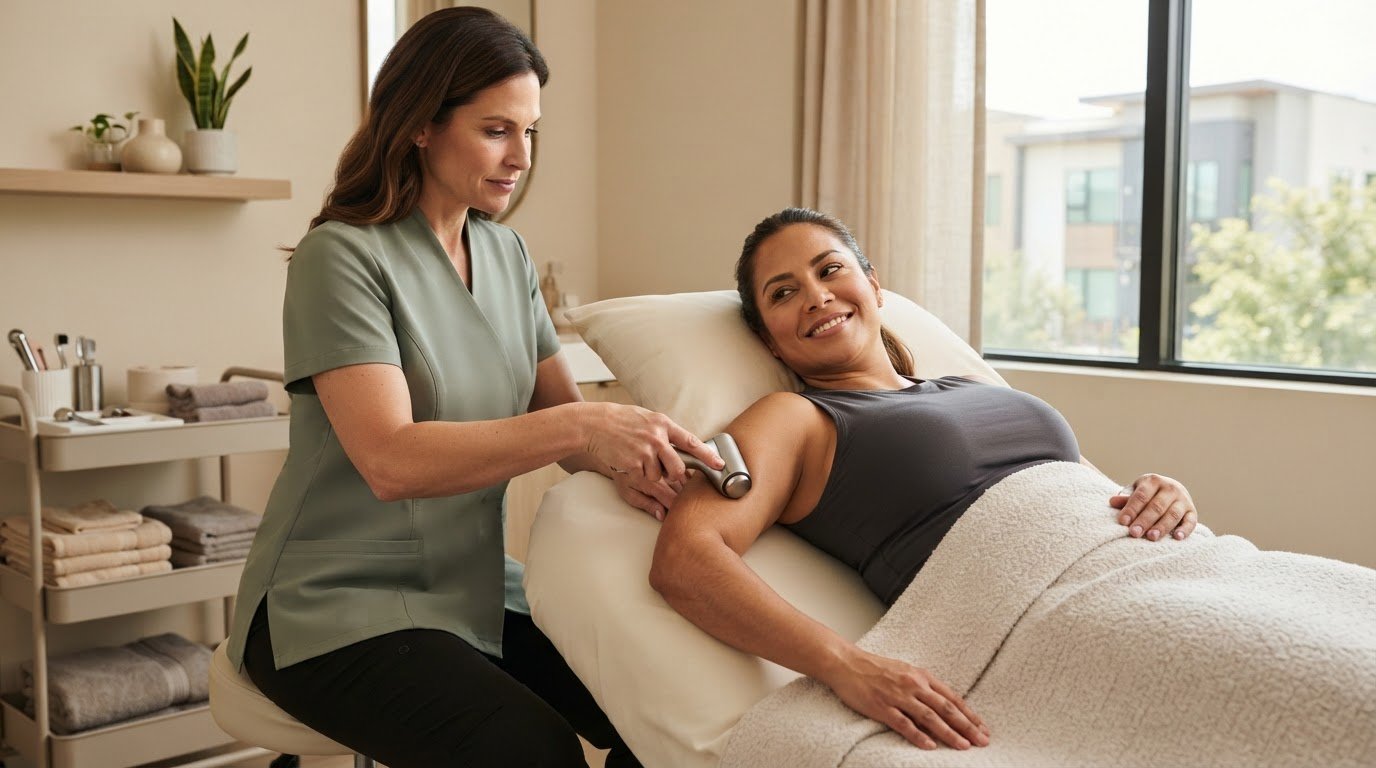
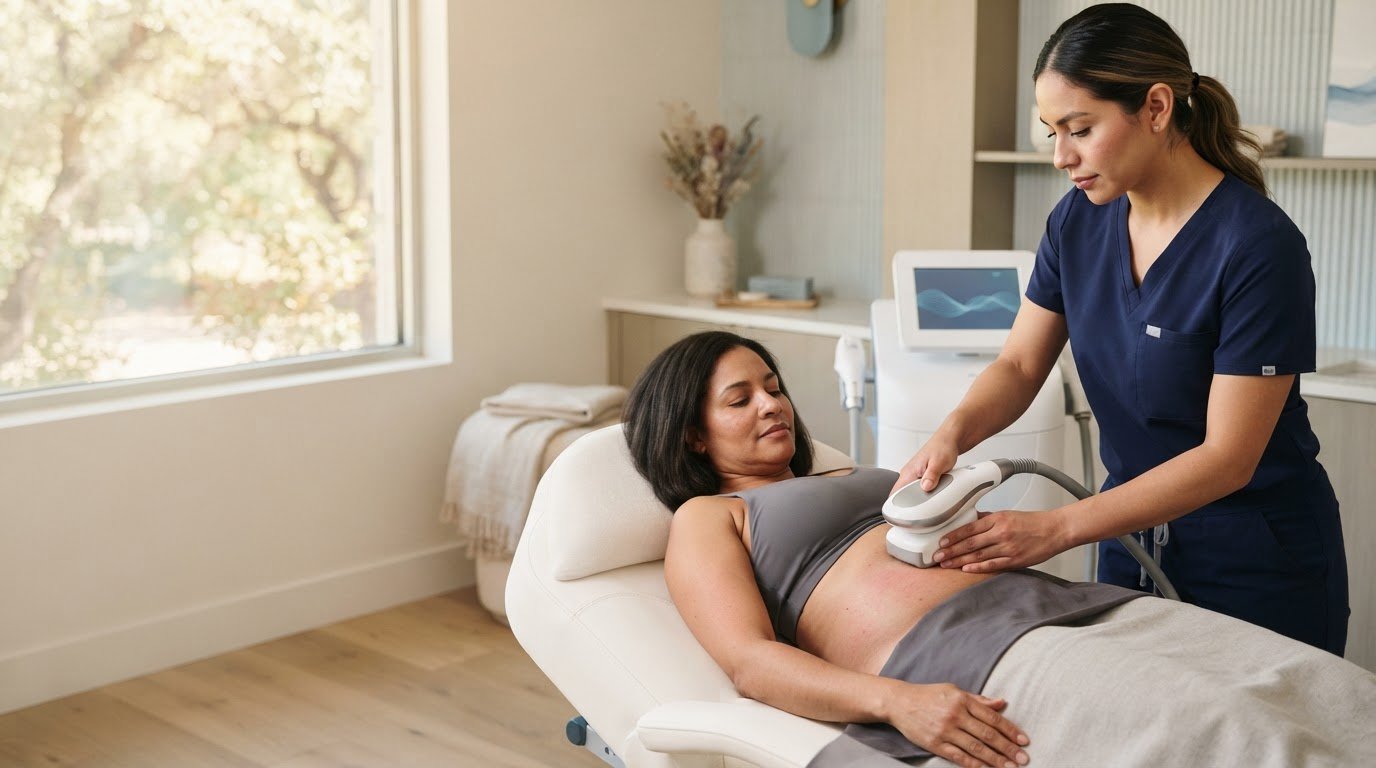
Contour Body Imaging offers Cryo T-Shock Body Contouring for people interested in non-invasive body contouring. This is a separate goal from lymphedema management: body contouring is not a substitute for prescribed compression therapy or clinical care. If your priority is lymphedema management, continue working with your treating clinician on your care plan and device guidance.
For a distinct aesthetic goal, Cryo T-Shock Body Contouring uses thermal shock technology to target fat cells. A conversation about your goals can help clarify whether this service fits what you’re seeking. Contact Contour Body Imaging to discuss Cryo T-Shock Body Contouring and your next step.
Choose a Next Step That Fits Your Goals
Choosing LymphaPress for lymphedema management in Dallas is a clinical decision, while body contouring addresses a separate aesthetic goal. Keep those aims distinct as you consider what comes next. For lymphedema care, bring your questions and goals to the clinician guiding your plan. For an aesthetic service, focus on the change you’re hoping to explore and discuss whether the approach fits that goal.
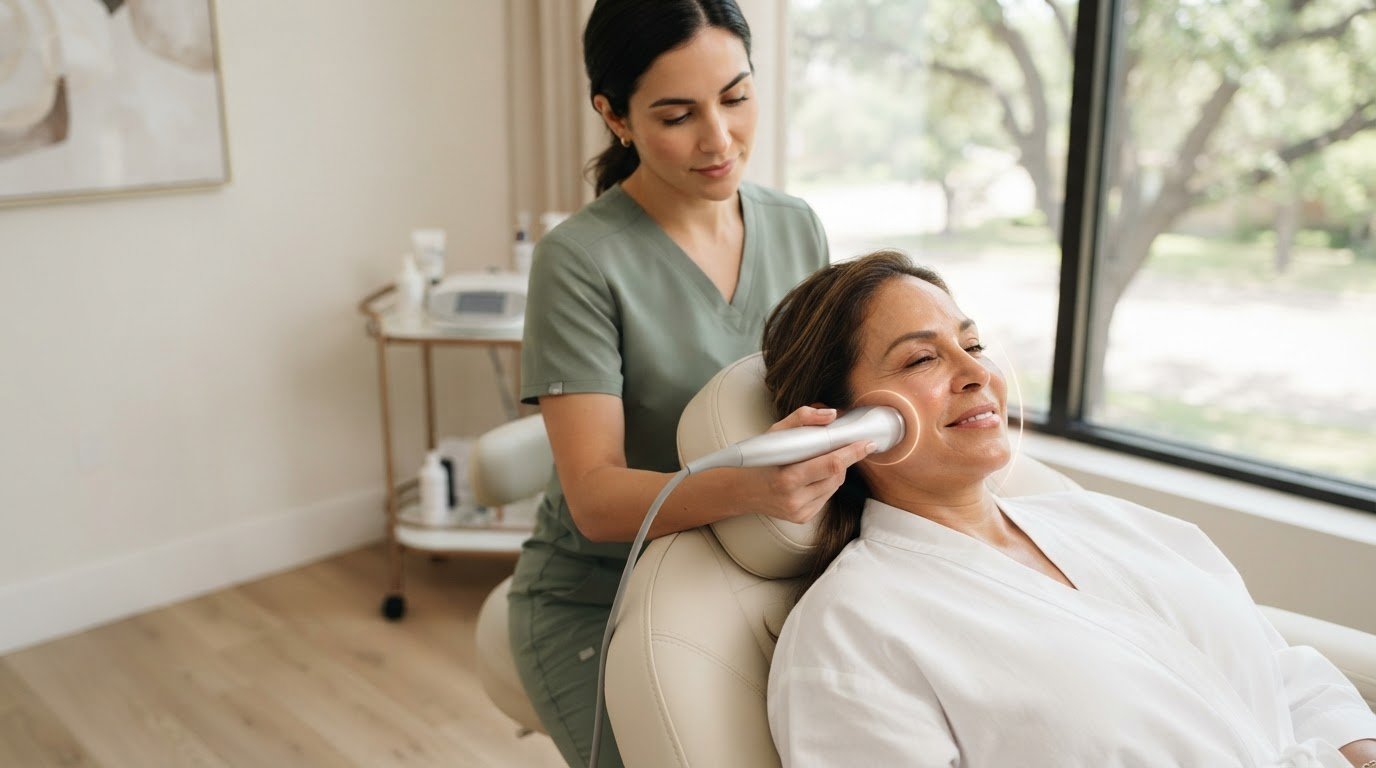
Contour Body Imaging offers Cryo T-Shock Body Contouring, Cryo Facial, and Endosphere. These services address different wellness and aesthetic interests, not a substitute for a prescribed lymphedema care plan. A conversation about your priorities can help you decide which direction makes sense for you.
Take the next step at your own pace, with a clear goal and appropriate guidance.
Frequently Asked Questions
Which Dallas clinics or therapists provide LymphaPress treatment for lymphedema?
Ask a lymphedema therapist or treating clinician about local care options and whether sessions use a pneumatic compression device. Specify the affected limb, diagnosis, and whether you need supervised treatment or a home device.
What are the risks, contraindications, and side effects of LymphaPress?
Review the device instructions and discuss health conditions, skin concerns, and any discomfort with the prescribing clinician before treatment. Correct garment fit and prescribed pressure are important points to address.
Comments