

LymphaPress Sessions for Heavy Legs in The Woodlands
Recurring leg swelling doesn’t have a one-size-fits-all session schedule. For people considering LymphaPress for heavy legs in The Woodlands, how often to use compression depends on the cause of the swelling and an individualized treatment plan. Although reported routines range from daily to multiple times a day, these examples aren’t a schedule for everyone. A clinician should assess the cause of leg swelling before pneumatic compression is considered.
It makes sense to want a clear routine when heaviness or swelling keeps returning. The right frequency also depends on whether treatment is intended to address temporary discomfort or is part of ongoing lymphedema management.
This guide explains how compression sessions work, what can shape their timing, and how LymphaPress relates to recurring swelling. You’ll also learn why medical guidance matters when swelling is persistent, newly unexplained, or connected to a diagnosed condition.
Table of Contents
Lymphatic drainage for heavy, swollen legs and ankles
Heavy legs and ankle swelling can make standing, walking, and daily routines uncomfortable. Pneumatic compression uses an inflatable garment that applies pressure in cycles, supporting fluid movement through the treated limb. It may be considered when swelling involves the legs, but the cause matters. A clinician should assess leg swelling before pneumatic compression is considered.
During treatment, a fitted leg garment surrounds the limb and applies sequential pressure. LymphaPress uses a suit with gentle air pressure to deliver rhythmic compression massage and stimulate the lymphatic system. The garment’s fit and the pump’s settings affect how treatment is delivered. A clinician’s assessment helps determine whether this approach is appropriate.
Manual lymphatic drainage is a different technique. It uses light, rhythmic movements and isn’t intended to force fluid out of the body. When pneumatic compression is indicated, it may form part of a broader plan that includes manual drainage, compression bandaging or garments, exercise, and skin care.
One user reported noticing a difference in leg size after a 20-minute treatment. That is an individual account, not a typical session length or a promised result. Leg heaviness can have different causes, and one person’s experience doesn’t establish the right treatment or schedule for someone else.
Where can you get treatment in The Woodlands? Contour Body Imaging offers LymphaPress lymphatic drainage for clients seeking professional support for heavy legs. It uses a specialized compression suit, rather than manual drainage alone. Medical assessment is important when swelling is persistent, unexplained, or linked to a diagnosed condition.
What are the risks and contraindications? Unexplained swelling needs medical assessment before compression. People with an active infection, fever, a history of blood clots, congestive heart failure, kidney concerns, or cancer-related lymphedema should consult a physician before lymphatic treatment. New or worsening symptoms also warrant medical attention.
Possible concerns include applying compression before the underlying cause has been assessed or when a person’s health makes it unsuitable. Medical guidance is especially important after surgery, with a diagnosed condition, or when swelling affects one or both legs. The cause, affected areas, and overall health all shape the decision.
Assessment: Identify the cause and pattern of swelling.
Fit: Match the garment coverage to the affected leg, foot, and ankle.
Plan: Coordinate compression with other care, such as movement and skin care.
These points help distinguish a comfort-focused session from treatment within a lymphedema plan. For recurring swelling, clinical assessment is the starting point, not a specific session count or another person’s results.
Session types and durations
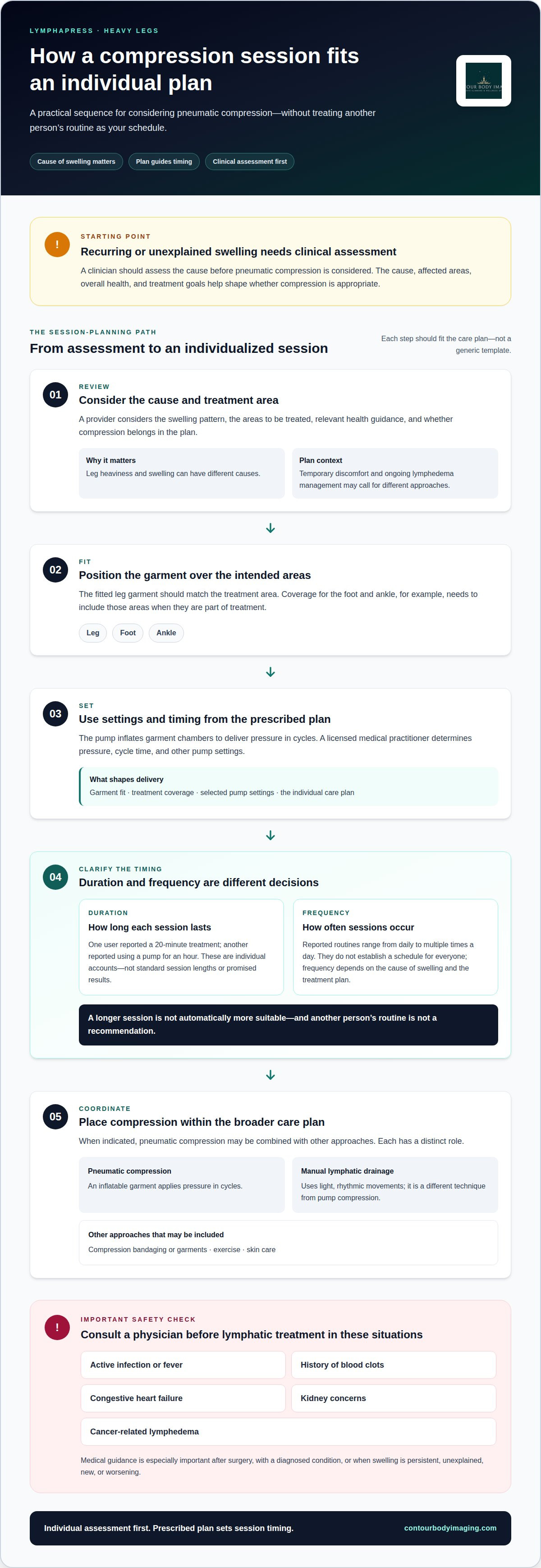
A pneumatic compression appointment uses a pump and fitted garment. The garment applies pressure in cycles, while selected settings shape the session. A licensed medical practitioner determines pressure, cycle time, and other pump settings. For people considering LymphaPress for heavy legs in The Woodlands, session timing should follow the prescribed plan, not a generic estimate.
Manual lymphatic drainage and pneumatic compression are different approaches. Manual drainage uses light, rhythmic techniques; a pump inflates garment chambers to deliver compression. When indicated, compression may fit into a broader care plan alongside manual drainage, compression garments or bandaging, exercise, and skin care. Each component has a distinct role.
During a session, the provider positions the garment over the treatment area. The pump then applies pressure according to selected settings. A clinician’s assessment helps determine the device, garment, and settings. Treatment involving the foot and ankle, for example, requires attention to garment coverage across those areas.
Session length varies. One LymphaPress user reported using a compression pump for an hour. That account describes an individual routine, not a standard appointment duration. Treatment area, selected cycle time, garment, and clinical plan can all affect how long a session takes. A longer session isn’t automatically more suitable.
Frequency and duration are separate decisions. Duration means how long each session lasts; frequency means how often sessions occur. Individual users have reported daily or multiple-daily routines, but these accounts don’t establish a schedule for everyone. A clinician considers the cause of swelling, treatment goals, and response over time.
A professional appointment generally follows a practical sequence:
Review: The provider considers the treatment area and relevant guidance.
Fit: The garment is positioned over the intended areas.
Set: Pump settings and session timing follow the prescribed plan.
Ankle-focused treatment, for example, may require different coverage than treatment involving the full leg. The provider considers the areas being treated and the prescribed settings rather than relying on a generic session template. This helps ensure appointment details align with the individual plan.
A plan for LymphaPress for heavy legs in The Woodlands should distinguish session length from visit frequency. Discuss both with the clinician directing care, especially if symptoms or treatment instructions change. Clear expectations help each appointment fit the broader plan, without treating another person’s routine as a recommendation.
Plans discussed for lymphatic care after liposuction should not be treated as a default schedule for pneumatic compression. A related Detoxity post says many liposuction clients plan 6 to 9 lymphatic sessions. That figure describes the clients discussed in the post; it does not set the length of a pump session or establish how often another person should use a device. Keep the purpose of each visit clear when discussing care with the clinician. Ask how session duration and visit frequency fit the prescribed plan, and whether changes should be guided by the treatment area or response. This keeps the schedule tied to individual direction rather than applying a routine from a different treatment context.
Lymphedema and recurring swelling
Swelling that returns can have different causes, so recurring symptoms alone don’t establish lymphedema. More than 10 million Americans have a lymphedema diagnosis, according to the research figures provided for this topic. The condition involves persistent fluid buildup, while temporary swelling can have other explanations. A clinical assessment helps distinguish the pattern and identify appropriate care.
Pay attention to when swelling appears and which areas change. For example, note whether both ankles swell after a long day or one leg remains enlarged after surgery. These patterns give a clinician useful context, but they don’t replace an assessment. Unexplained or persistent swelling needs medical review before LymphaPress for heavy legs The Woodlands is considered.
Surgery can complicate the picture. One LymphaPress user reported persistent leg swelling eight months after major surgery. Another reported that daily pump treatments for a month nearly returned their legs to normal. These are individual experiences, not forecasts or treatment schedules. After surgery, lymphatic drainage should follow the surgical team’s instructions and timing.
For diagnosed lymphedema, treatment focuses on ongoing management rather than a single session. Pneumatic compression may be one part of care when indicated. A clinician’s plan considers the affected area, the cause of swelling, and how treatment fits with other approaches. Consistent medical guidance matters because recurring fluid buildup requires more than choosing a device or session frequency.
A useful appointment conversation at Contour Body Imaging can clarify the next steps. Describe when swelling began, whether it changes during the day, and how it affects walking or daily activities. Include relevant surgery history and any existing diagnosis. These concrete details help a clinician assess the swelling and decide whether compression belongs in a broader care plan.
New or unexplained swelling: Arrange clinical assessment before compression.
After surgery: Follow the surgical team’s instructions for timing and care.
Diagnosed lymphedema: Use medical guidance to coordinate ongoing management.
Recurring swelling can also change over time. A clinician can review whether the affected area, symptoms, or response to care have changed, then adjust the plan accordingly. Track changes in plain terms, such as ankle swelling that returns each evening or persistent fullness after surgery. A clear timeline supports a more focused discussion than relying on memory.
Patient stories can illustrate why swelling deserves attention, but they can’t identify its cause for another person. The eight-month post-surgical account and one-month treatment report show individual experiences only. Assessment, diagnosis, and medical direction remain central when swelling persists or returns. A patient testimonial from Contour Body Imaging states that the patient was diagnosed with secondary lymphedema and lipedema in 2020.
Lymphedema management
Lymphedema care can involve several forms of compression and supportive routines. Compression stockings apply garment pressure, while pneumatic devices use a pump to inflate chambers in cycles. Doctors often recommend stockings for mild edema. For more advanced edema, they may combine stockings with leg pumps. The choice depends on the person’s condition and clinical assessment, not preference alone.
How does a provider assess fitting needs and advise on a prescription? The clinician considers the swelling, affected areas, and health history. That assessment guides the appropriate device, garment, and settings. A licensed medical practitioner prescribes pressure, cycle time, and other leg-pump settings. Swelling affecting the foot and ankle, for example, calls for assessment of garment coverage across those areas.
Medicare coverage has specific criteria. According to the Centers for Medicare & Medicaid Services, coverage for a pneumatic compression device applies when a physician finds no significant improvement after a trial of a graduated compression stocking or sleeve, or when significant symptoms remain. This criterion concerns Medicare; coverage through other insurance plans depends on their individual terms.
A prescription plan should connect device settings with the person’s diagnosis and treatment goals. Pressure and cycle time aren’t interchangeable details. They shape how a pump delivers compression, so a licensed medical practitioner determines them. Garment choice matters, too: it needs to match the treatment area. These decisions turn a general device option into a plan tailored to the assessed condition.
Compression is one part of lymphedema management, not the whole routine. A broader plan may include manual lymphatic drainage, compression bandaging or garments, exercise, and skin care. Each part addresses a different aspect of care. For example, movement and skin care may accompany compression rather than be replaced by it. The clinician’s guidance helps coordinate these elements.
People with diagnosed lymphedema need care from a clinician with appropriate specialized training and medical guidance. Heart conditions also require particular attention. For compensated heart failure, classified as NYHA I and II, compression of both legs may cause a short, asymptomatic increase in cardiac preload, according to the National Center for Biotechnology Information, U.S. National Library of Medicine. This clinical detail reinforces why health history matters before bilateral compression.
Stockings: Often recommended by doctors for mild edema.
Pump: May be combined with stockings for more advanced edema.
Prescription: A licensed medical practitioner sets pressure and cycle time.
Coverage: Medicare criteria include a stocking or sleeve trial without significant improvement, or significant remaining symptoms.
For a clear plan, connect the diagnosis, garment fit, settings, and coverage criteria. That discussion helps distinguish everyday compression from a medically directed device plan.
Is LymphaPress prescribed for lymphedema, venous insufficiency, or other conditions?
A pneumatic compression device isn’t selected by diagnosis name alone. A clinician assesses the cause and pattern of swelling, the affected areas, and relevant health conditions. That assessment determines whether compression fits the care plan and which device, garment, and settings are appropriate. Leg swelling with a diagnosed condition, for example, requires different consideration from unexplained swelling.
For lymphedema, pneumatic compression can form part of clinician-directed management. The practitioner considers how it fits with other care, such as compression garments, manual lymphatic drainage, exercise, and skin care. A device doesn’t automatically replace those approaches. The treatment plan connects the person’s needs with the method and garment coverage.
Venous insufficiency also requires assessment of the individual’s condition. The available information doesn’t establish that every person with venous insufficiency should use a pump. Instead, the clinician evaluates symptoms, medical history, and treatment goals before deciding whether pneumatic compression is suitable. The diagnosis alone doesn’t determine the device or its settings.
A licensed medical practitioner prescribes pressure, cycle time, and other leg-compression settings. These details guide how the pump delivers pressure during treatment. They aren’t choices for a user to set independently. Prescribed settings and garment selection should align with the clinician’s assessment and the area being treated.
Assessment and fitting work together. The provider considers where swelling occurs, whether it affects the foot or ankle, and which areas the garment needs to cover. A leg garment designed for the entire leg, foot, and ankle addresses a broader area than one selected for a smaller treatment zone. Fit and coverage help shape the plan.
Before treatment begins, a practical review can include:
Condition: The clinician reviews the diagnosis and cause of swelling.
Coverage: The provider matches garment coverage to affected areas.
Prescription: A licensed practitioner sets pressure and cycle time.
Coordination: The care plan accounts for other recommended treatments.
These steps matter for home use, too. Pneumatic compression systems are used at home under clinician direction and by prescription from a licensed medical practitioner. A prescribed plan identifies the device and settings; it doesn’t mean the same routine suits everyone or every diagnosis.
For heavy legs in The Woodlands, start with the clinical question behind the swelling. A medical assessment helps distinguish lymphedema, venous concerns, and other causes, then guides whether compression belongs in the treatment plan. Follow the prescribed settings and care instructions as part of that plan.
Contour Body Imaging: LymphaPress
Contour Body Imaging offers LymphaPress lymphatic drainage for clients seeking professional support for heavy legs in The Woodlands and the Dallas area. If swelling is recurring, unexplained, or connected to diagnosed lymphedema, medical assessment remains important when deciding whether compression is suitable. LymphaPress uses gentle air pressure for rhythmic compression massage and may be considered as part of a broader approach, guided by your needs and relevant medical advice.
During your visit, share which areas feel heavy or swollen and whether you have a diagnosis or care instructions. These details help shape a thoughtful conversation about how LymphaPress fits your goals. The treatment isn’t a substitute for medical diagnosis or prescribed lymphedema care.
If you’re exploring LymphaPress in The Woodlands, contact Contour Body Imaging to discuss your needs and next steps.
Choose a Next Step That Fits Your Needs
A useful next step is to decide what you want professional support to address: leg heaviness, recurring swelling, or a diagnosed lymphatic concern. That distinction can frame a focused conversation about whether LymphaPress fits your goals and how it may sit alongside existing medical guidance. For LymphaPress for heavy legs in The Woodlands, keep your priorities personal rather than measuring progress against someone else’s experience. Consider how leg heaviness affects activities you want to enjoy, such as walking comfortably or standing through your routine.
Contour Body Imaging also offers Cryo T-Shock Body Contouring, Cryo Facial, and Endospheres Therapy® for clients considering other wellness and aesthetic treatments. These are distinct options, not replacements for medical assessment or prescribed lymphedema care. A thoughtful conversation can help you understand whether LymphaPress aligns with your needs and what next steps make sense.
Move forward at a pace that feels right for you, with your comfort and care needs guiding the way.
Frequently Asked Questions
How often should I come?
Follow the schedule in your care plan rather than choosing appointment frequency based on someone else’s routine. The right interval depends on why your legs feel heavy, whether swelling has been assessed, and whether compression is part of clinician-directed care. If your symptoms change between appointments, share that information with your clinician before changing the schedule. A consistent plan makes it easier to discuss how treatment fits your needs.
How should I prepare for my appointment?
Before your appointment, gather relevant medical guidance and note where you experience heaviness or swelling. Be ready to mention a lymphedema diagnosis, recent surgery, or other health concerns that may affect compression. If a clinician has prescribed settings or given treatment instructions, bring those details. This helps the provider understand your situation and keep the session aligned with the guidance you’ve received.
What is LymphaPress and how does it help heavy legs?
LymphaPress is a lymphatic drainage treatment that uses a suit and gentle air pressure to deliver rhythmic compression massage. The pressure stimulates the lymphatic system and supports circulation, which may be relevant when legs feel heavy or puffy. For example, a treatment plan may address both legs rather than focusing only on the area where heaviness feels strongest. Suitability depends on the cause of symptoms and medical guidance.
How often and for how long should LymphaPress sessions be provided for heavy legs?
Session frequency and duration should follow the treatment plan for your condition, not a universal timetable. A clinician considers the cause of heaviness, the areas being treated, and the prescribed pump settings when setting expectations. Don’t use another person’s session length or routine as your guide. If you have clinician-directed instructions, use them to discuss the schedule and appointment length with your provider.


Comments