

Lymphatic Drainage in Dallas for Post-Op Recovery
Post-op lymphatic drainage may complement other parts of a recovery plan, but it does not replace your surgeon’s instructions or medical care. For lymphatic drainage for post-op recovery in Dallas, get your surgeon’s approval before starting treatment. Manual lymphatic drainage uses light pressure and rhythmic strokes to stimulate lymphatic flow.
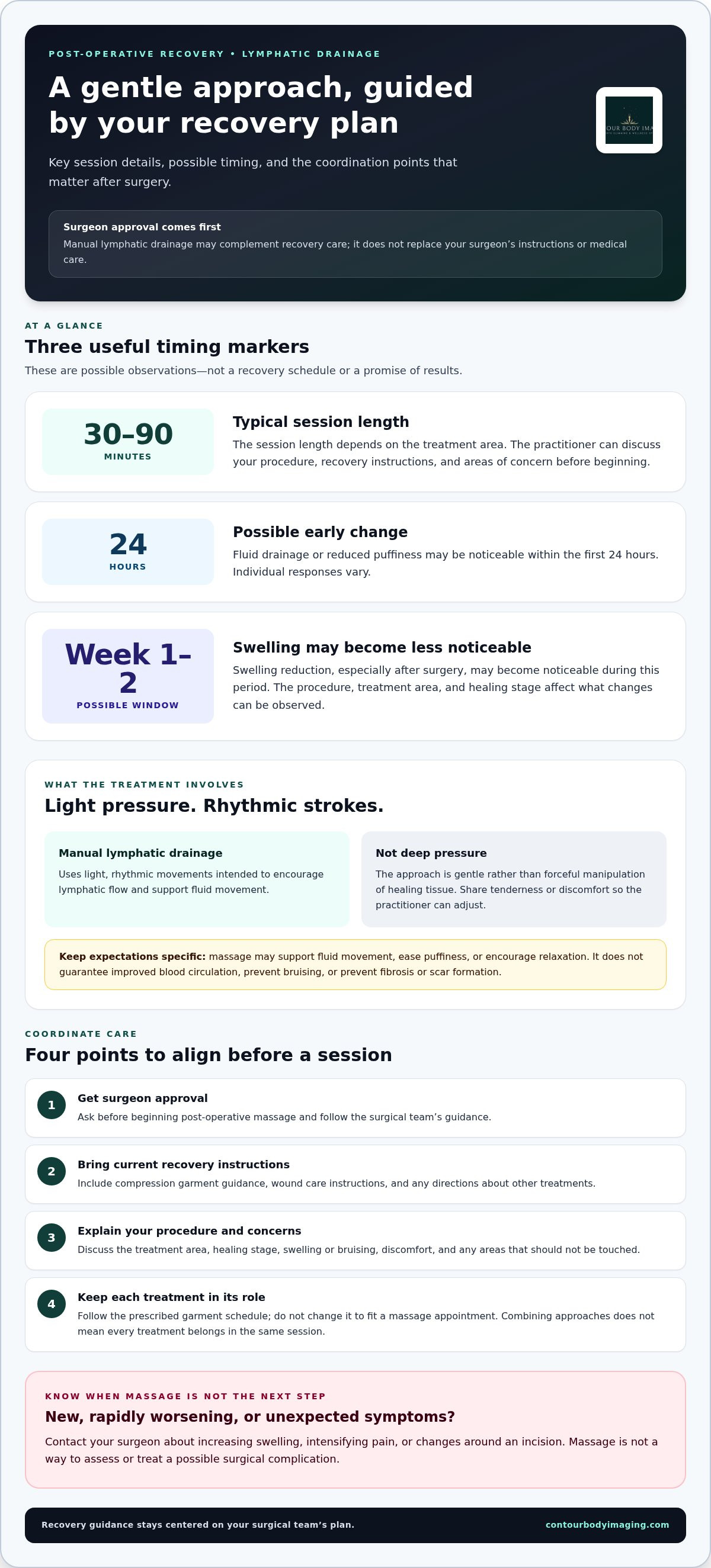
It’s understandable to wonder whether this gentle approach can fit alongside other treatments, and what to expect as you heal. A session typically lasts 30-90 minutes, depending on the treatment area. The right timing and approach matter, especially after surgery.
This guide explains how manual lymphatic drainage works, what potential benefits it may offer for swelling and bruising, when it may begin, and how it can fit alongside other treatments. You’ll also learn what to discuss with your surgical team to make an informed, comfortable choice during recovery.
Table of Contents
Can Lymphatic Massage be combined with other treatments?
Massage is often considered alongside other parts of a post-surgery recovery plan. Coordination is key: manual lymphatic drainage should complement, not replace, your surgeon’s instructions or medical care. Get your surgeon’s approval before beginning massage after surgery, then follow their guidance on compression garments, wound care, and other treatments. Combining approaches doesn’t mean every treatment belongs in the same session.
Compression garments and lymphatic massage have different roles in a recovery routine. A garment may be part of your surgeon’s post-operative instructions, while massage uses light pressure and rhythmic strokes to encourage lymphatic flow. Keep to the garment schedule prescribed by your surgical team; don’t change it to accommodate a massage appointment. Share the garment instructions with the practitioner so the session can fit around them.
Patients may seek lymphatic massage after facial procedures or body surgeries, including a facelift, rhinoplasty, liposuction, or tummy tuck. The treatment area, procedure, healing stage, and surgeon’s directions determine which areas are appropriate to address. For example, someone recovering from facial surgery needs a plan focused on that area, not a routine copied from someone recovering from abdominal surgery.
A session typically lasts 30-90 minutes, depending on the treatment area. The practitioner can discuss the procedure, current recovery instructions, and areas of concern before beginning. Manual strokes are light and rhythmic, rather than deep pressure on healing tissue. Patients can describe tenderness or discomfort during the session, helping the practitioner adjust the approach to the treatment area.
What about fibrosis and scars? These concerns call for clear treatment goals. Lymphatic massage focuses on lymphatic flow and fluid-related puffiness; it should not be presented as a guarantee against fibrosis or scar formation. Scar care is a separate consideration, and your surgical team’s instructions should guide when direct work near healing tissue is appropriate. This distinction helps avoid expecting one treatment to address every recovery concern.
Before combining massage with another treatment, use this practical sequence:
Obtain the surgeon’s approval before starting post-operative massage.
Bring the current recovery instructions, including compression garment guidance.
Explain the surgery, treatment area, and any concerns about swelling, bruising, or scars.
Keep each treatment aligned with the recovery plan, rather than replacing medical care.
This coordinated approach keeps the goal specific: supporting comfort and addressing concerns such as puffiness, while respecting the surgical plan. Treatment choices should follow the procedure and recovery instructions, not a one-size-fits-all schedule.
Potential benefits for post-operative swelling, bruising, and discomfort
After aesthetic procedures, swelling and bruising can affect comfort and make early recovery feel slower. Manual lymphatic massage may support fluid movement and provide a gentle, relaxation-focused part of a broader recovery plan.
Contact your surgeon instead of arranging massage if symptoms are new, rapidly worsening, or unexpected, such as increasing swelling, intensifying pain, or changes around an incision. Massage is not a way to assess or treat a possible surgical complication.
Post-Procedure Swelling and Bruising
Facial lymphatic drainage massage may help minimize swelling and bruising before and after facial procedures. Its light, rhythmic movements aim to support lymphatic flow rather than apply deep pressure to healing tissue. Note where swelling or discoloration appears and whether it changes; this can help guide a focused discussion about treatment timing and areas.
Fluid drainage and reduced puffiness may be noticeable within the first 24 hours, while swelling reduction, especially after surgery, may become noticeable during week 1-2. These are possible responses, not a schedule every patient will follow. The procedure, treated area, and stage of healing all affect what changes are observable.
Swelling During Surgical Recovery
Post-surgical swelling reflects fluid collecting in healing tissue, and manual lymphatic massage may support recovery by encouraging fluid movement. A gentle approach can also make a session feel more relaxing than forceful manipulation. The goal is to complement recovery care, not to speed healing by pressing on a surgical site or replacing medical treatment.
For example, someone recovering from a facial procedure may focus on facial puffiness, while another patient may have swelling in a different treatment area. The area, comfort level, and recovery instructions should guide the discussion. Massage may support comfort, but it does not treat every cause of swelling or bruising.
Consider these practical steps before a session:
Track where swelling or bruising appears and how it changes.
Describe the procedure, treatment area, and recovery stage during consultation.
Discuss any discomfort and identify areas that should not be touched.
Keep massage separate from medical evaluation of new or worsening symptoms.
Claims about circulation should stay specific: lymphatic massage is intended to encourage lymph flow, not guarantee improved blood circulation or prevent bruising. A realistic treatment goal may be to support fluid movement, ease puffiness, or encourage relaxation. If you’re exploring wellness services alongside recovery care, you can review the introductory offer as a separate next step.
Lymphatic drainage and post-surgical recovery
For lymphatic drainage for post-op recovery in Dallas, timing and technique should fit the specific operation. Start by getting your surgeon’s approval, then align any massage with the recovery instructions and treatment area.
When Massage Can Begin After Surgery
There isn’t one start day for every procedure. Some patients may begin post-operative sessions 3-5 days after surgery, while others may wait 1-2 weeks. Advanced Facial Plastic Surgery recommends scheduling facial lymphatic drainage massages 7-8 days after a procedure. These timelines differ, so get your surgeon’s approval before beginning.
The procedure, incision locations, and healing progress shape when gentle massage may be appropriate. A facial procedure and an abdominal operation can involve different recovery considerations. Your surgeon’s guidance should determine the timing and areas. Lymphatic drainage should complement medical care, not replace it.
Risks and Contraindications
Some health conditions require discussion with a doctor before treatment. People with heart conditions, kidney failure, a history of blood clots, or an infection should discuss their circumstances before lymphatic drainage massage. These details matter because health conditions can affect whether treatment is appropriate.
New or worsening symptoms after surgery call for medical attention, not massage. A massage practitioner does not diagnose surgical complications or replace your surgical team. Share relevant changes in comfort or healing before any session, and follow the care instructions for your procedure.
Does Texas health insurance cover post-op lymphatic drainage massage? Coverage depends on the policy and how it classifies the treatment. Post-surgical status alone does not establish coverage. Review your plan’s terms and ask how it handles manual lymphatic drainage.
Therapist Qualifications and Training
For lymphatic drainage for post-op recovery in Dallas, look for documented training in manual lymphatic drainage and experience with post-operative care. Ask how the therapist adapts gentle techniques to different treatment areas and follows surgical instructions. Relevant training and clear communication are more useful indicators than a general massage background alone.
A consultation should cover your procedure, recovery instructions, health history, and intended treatment area. Notice whether the therapist explains the approach and recognizes when medical guidance takes priority. This discussion helps you assess whether their experience fits your recovery needs.
How do I find a qualified therapist in Dallas? Consider documented lymphatic training, post-operative experience, and willingness to follow your surgeon’s guidance. Discuss your procedure and recovery goals to understand whether the therapist’s approach fits.
What credentials or training should a Dallas therapist have? Look for relevant massage credentials and specific education in manual lymphatic drainage and post-surgical care. Ask about training and experience with your procedure type, since general massage education does not necessarily cover post-operative techniques.
Before scheduling, organize your surgeon’s instructions, note the treatment area, and prepare to discuss health conditions or healing concerns. These steps help clarify the session’s purpose and keep treatment aligned with your recovery plan.
Manual lymphatic drainage and how it is described
Manual lymphatic drainage massage uses light pressure and rhythmic strokes to stimulate lymphatic flow. In post-surgical care, the technique is gentle, focused, and distinct from deep-tissue massage. Its purpose is to promote lymphatic movement, not to force fluid through healing tissue or replace medical care.
This therapy focuses on the lymphatic system. A practitioner uses repeated, controlled hand movements rather than vigorous kneading. Pressure stays light, and the treatment area guides the sequence. For example, facial work differs from work on an arm or abdomen because the area and recovery needs differ.
A session typically lasts 30-90 minutes, depending on the treatment area. Before starting, the practitioner should understand the surgery, the area being treated, and the recovery instructions. That information helps keep the session relevant. Patients can also describe tenderness or discomfort so the pressure and movements remain appropriate.
Manual lymphatic drainage is not the same as a general relaxation massage. Deep pressure and broad muscle work are not its defining features; light, rhythmic strokes are. The practitioner focuses on lymphatic flow and the selected treatment area. This distinction matters after surgery, when healing tissue may require a more careful approach than routine massage.
For example, a session for facial puffiness would focus on the face, while treatment after abdominal surgery would follow the recovery plan for that area. The practitioner’s goal is to use a technique suited to the tissue and your instructions. A suitable session is not defined by stronger pressure, but by a gentle method and a clear purpose.
Before treatment: Share the procedure, treatment area, and recovery instructions.
During the session: Describe tenderness, discomfort, or pressure that feels too strong.
After treatment: Follow the surgeon’s guidance and report concerning changes to the medical team.
These steps help keep manual lymphatic drainage aligned with post-operative care. They also clarify what the therapy can address: lymphatic flow in a specific area, rather than every concern linked to surgery. Assess the approach by its gentle technique, focus on the intended area, and fit with medical instructions.
In practical terms, lymphatic drainage massage is a structured manual therapy, not a forceful massage or a substitute for treatment from a medical professional. A clear discussion before the session can align the technique with recovery needs and help you understand its purpose.
When can lymphatic drainage massage safely begin after surgery?
There is no single start date that fits every operation. Post-operative timing depends on the procedure, treatment area, and healing progress. The consistent first step is getting your surgeon’s approval before beginning lymphatic drainage massage.
Published recommendations describe several possible starting points. Some patients may begin sessions 3-5 days after surgery, while others may wait 1-2 weeks. Advanced Facial Plastic Surgery recommends scheduling facial lymphatic drainage massages 7-8 days after a procedure. These timelines are not interchangeable instructions for every patient.
The differences reflect how surgery affects tissue and recovery. A facial procedure and an abdominal operation involve different treatment areas, incisions, and recovery plans. Your surgeon’s approval should account for the specific operation and healing stage. A calendar date alone cannot establish whether massage is appropriate.
Use this sequence to plan treatment responsibly:
Read your post-operative instructions and identify any limits on touch or movement.
Ask your surgeon for approval before arranging lymphatic drainage massage.
Share the procedure, treatment area, and recovery instructions with the practitioner.
Keep the first session within the areas and approach approved for your recovery.
Frequency also varies during recovery. Some Dallas practices recommend 2-3 sessions weekly initially, and one recommendation suggests 6-12 sessions for post-surgical recovery. These figures describe common plans, not a required schedule. The surgical procedure, response to treatment, and recovery instructions shape the appropriate cadence.
Session length is another planning detail. A lymphatic massage session typically lasts 30-90 minutes, depending on the treatment area. Advanced Facial Plastic Surgery advises drinking plenty of water before and after facial lymphatic drainage massage. The session itself requires no downtime, and patients can resume normal daily activities immediately afterward, while continuing to follow any surgical restrictions.
After treatment, some patients may notice better sleep quality within 24 hours. Others may have sessions once per week, while some may only need them once every month. These differences show why recovery plans should respond to the individual procedure and healing course, rather than follow a fixed calendar.
Before booking, have your surgical instructions and treatment area ready to discuss. That conversation can align the session timing, technique, and frequency with your recovery plan. Lymphatic massage should complement, not replace, your surgeon’s instructions and medical care.
Contour Body Imaging: Cryo T-Shock Body Contouring
Contour Body Imaging offers Cryo T-Shock Body Contouring for people exploring non-invasive body contouring separately from post-surgical lymphatic care. The treatment uses thermal shock technology to target fat cells; it is not a substitute for recovery instructions, medical care, or manual lymphatic drainage.
Consider it when your goal shifts from managing post-operative recovery to exploring body contouring, and follow your surgeon’s guidance about timing after surgery. For a different focus, Lumaray 360 red light therapy is offered to support cellular repair and overall skin health. These treatments have distinct purposes, so choose based on your goals and recovery plan.
For a calm next step, contact Contour Body Imaging or visit contourbodyimaging.com.
Choose a Next Step That Fits Your Goals
Recovery and aesthetic goals can overlap, but they call for different decisions. Choosing lymphatic drainage for post-op recovery in Dallas means keeping your surgeon’s care plan central while considering other wellness goals separately. First identify what you want support with, then make sure each treatment fits that purpose.
For aesthetic goals beyond post-surgical care, Contour Body Imaging offers Cryo T-Shock Body Contouring, Cryo Facials, and Endosphere Therapy. These are distinct options, not substitutes for lymphatic drainage or medical recovery care. Keeping that distinction clear helps you explore services with realistic expectations and focus on what feels appropriate for your goals.
Take the next step at your own pace, with your recovery plan guiding decisions related to surgery.
Thoughtful choices can help you feel more confident about the path ahead.
Frequently Asked Questions
How many sessions are needed?
A post-surgical plan commonly recommends 6-12 lymphatic massage sessions. Dallas recommendations describe starting with 2-3 sessions weekly, then adjusting frequency as recovery progresses. The procedure, treatment area, surgeon’s instructions, and response to care help shape the plan. Discuss the goal of each phase with your surgical team, such as addressing fluid-related puffiness or reviewing session frequency. A session count alone doesn’t determine whether massage is appropriate.
What is lymphatic drainage massage after surgery, and what benefits are supported by evidence?
Manual lymphatic drainage is a gentle massage using light pressure and rhythmic strokes to stimulate lymphatic flow. Reported potential benefits include supporting fluid drainage and reducing puffiness, with noticeable changes sometimes reported within the first 24 hours. Swelling reduction, especially after surgery, may become noticeable during week 1-2. These are potential responses, not proof of a guaranteed result for every patient or procedure.
Which surgeries commonly require or benefit from post-op lymphatic drainage?
No surgery automatically requires lymphatic drainage massage. People may seek it after facial procedures, where facial lymphatic drainage massage may help minimize swelling and bruising. Patients recovering from other operations can discuss whether treatment fits their recovery goals and surgical instructions. Consider the procedure, the area healing, and whether the surgeon approves massage. Lymphatic drainage complements recovery care rather than replacing medical treatment.
How often and for how many weeks is lymphatic drainage typically recommended after surgery?
Recommendations describe 2-3 sessions weekly at first, with a total plan of 6-12 sessions. The calendar duration depends on how often sessions occur and how the recovery plan changes. Some Dallas patients may instead have massage once per week, while others may have it once every month. Follow the surgeon-approved schedule, since frequency should fit the procedure and recovery rather than a generic timeline.
What should I expect during a post-op lymphatic drainage appointment?
Expect a discussion about your procedure, treatment area, recovery instructions, and goals before hands-on work begins. A session typically lasts 30-90 minutes, depending on the area. The practitioner uses light, rhythmic strokes rather than deep pressure. Share any discomfort during the appointment and clarify which areas your surgeon has restricted. Afterward, patients can resume normal daily activities immediately, while continuing to follow surgical restrictions.
How do manual lymphatic drainage, compression garments, and pneumatic compression compare after surgery?
These approaches differ in how they provide support: manual drainage uses a practitioner’s hands, garments provide wearable compression, and pneumatic compression uses a device. They are not interchangeable, and each should fit the post-operative plan. Continue using compression garments according to your surgical team’s instructions. LymphaPress is a lymphatic drainage option; discuss how it fits alongside manual massage or garments with the clinician overseeing your recovery.


Comments