

Non-Surgical Jowl Lift in Dallas: Areas, Results and Recovery
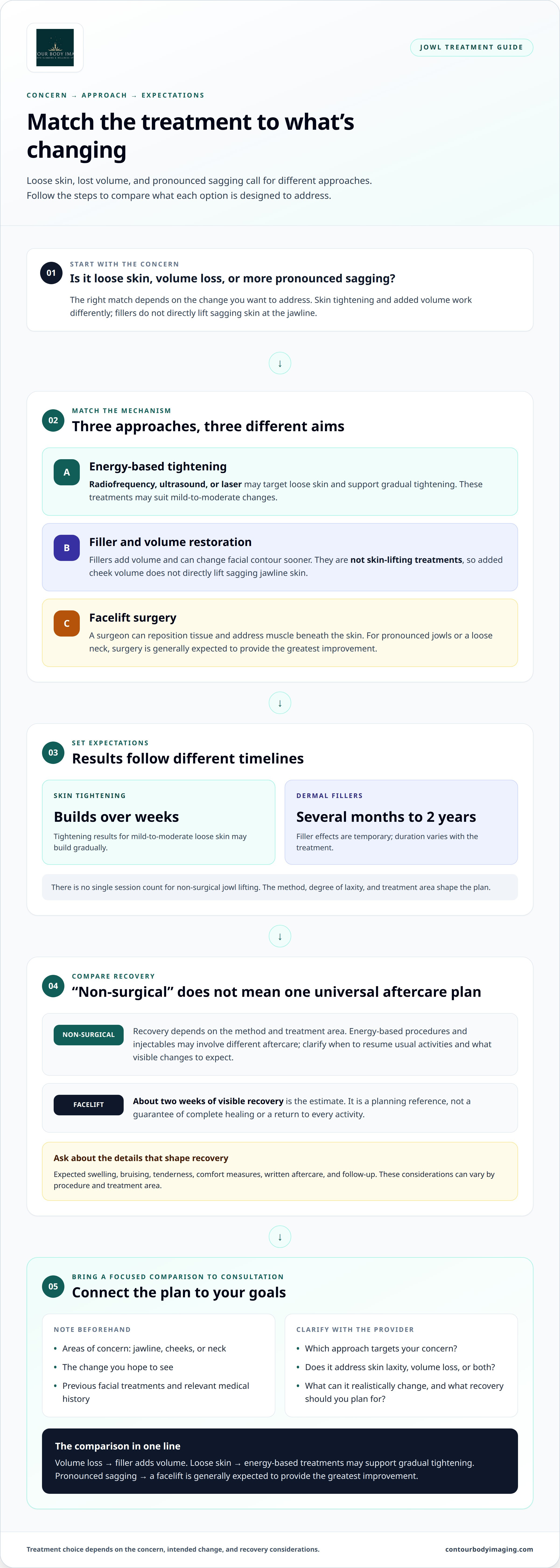
A smoother jawline doesn’t always require surgery, but non-surgical treatments and a facelift address sagging in different ways. A non-surgical jowl lift in Dallas may involve energy-based treatments such as radiofrequency, ultrasound, or laser to target loose skin. Fillers add volume rather than lift skin. For more pronounced jowls, a facelift is generally expected to provide the greatest improvement.
It’s understandable to want a refreshed lower face without a major procedure or lengthy recovery. A facelift can involve about two weeks of visible recovery, while recovery after non-surgical options depends on the treatment. Neither approach suits every concern or goal.
This guide explains which facial areas non-surgical treatments may address, when results can appear and how long they may last, and what recovery and risks to consider. You’ll also learn how non-surgical options compare with surgery, helping you make a more informed choice about your next step.
Table of Contents
What is a non-surgical face lift?
A non-surgical facial lift uses treatments intended to improve skin firmness or facial contour without a traditional facelift operation. Radiofrequency, ultrasound, and laser treatments may be used for concerns such as jowls and a loose-looking neck. Fillers work differently: they add volume rather than lift skin. That distinction matters when sagging along the lower face is your main concern.
A surgical facelift changes underlying facial structure more directly. A plastic surgeon can reposition tissue and address muscle beneath the skin, while a neck lift focuses on the jawline and neck. These procedures can be combined when concerns affect both areas. For pronounced jowls or a loose neck, surgery is generally expected to provide the most improvement. Non-surgical treatments may suit someone seeking a less invasive approach to mild or moderate changes.
Energy-based treatments don’t work like a surgical lift. Radiofrequency, ultrasound, and laser approaches use different forms of energy to target skin and support gradual tightening. The best match depends on whether the concern is loose skin, loss of volume, or both. For example, adding cheek volume with filler may change facial balance, but it doesn’t directly lift sagging skin at the jawline.
FaceTite is often discussed alongside facelift surgery, but the two aren’t interchangeable. FaceTite is described as minimally invasive, while a facelift is an operation that can reposition deeper tissue. Compare the scope of treatment: which area it addresses, what change it aims to create, and whether it matches the degree of sagging. A plastic surgeon can explain these distinctions in relation to facial anatomy and your goals.
A liquid facelift combines injectable treatments to create a refreshed appearance, often by restoring volume in selected areas. It doesn’t reproduce the tissue repositioning of facelift surgery, and fillers aren’t skin-lifting treatments. In Dallas, non-surgical options may include energy-based treatments or injectables, with methods varying between practices.
Prepare for a Dallas consultation by noting the areas that concern you, such as the jawline, cheeks, or neck, and the change you hope to see. Bring a list of previous facial treatments and relevant medical history. Ask which approach targets your concern, what it can realistically change, and whether it addresses skin laxity or volume loss. These details help keep the conversation focused and useful.
Non-surgical versus surgical recovery
Recovery after a non-surgical jowl procedure depends on the method and treatment area. A facelift has an estimated two weeks of visible recovery, while aftercare for a non-surgical procedure depends on the specific treatment.
Swelling, Bruising, and Discomfort
Swelling, bruising, and tenderness are practical recovery considerations for facial procedures, but not everyone experiences them. The method matters: an energy-based procedure and an injectable approach involve different techniques and may require different aftercare. Ask what visible changes to expect, how discomfort is managed, and which symptoms should prompt follow-up. Consider the full face and neck area being treated.
Recovery Time and Aftercare
Aftercare means following the instructions for the specific procedure, rather than assuming every non-surgical treatment has the same routine. Clarify when to resume usual activities, what skin care to use, and whether follow-up is part of the plan. For surgical facelift recovery, the estimate is two weeks of visible recovery. This describes visible recovery, not a guarantee of complete healing or a return to every activity.
Non-surgical treatments don’t share one universal recovery timeline. The method, treatment area, and extent of treatment shape what recovery looks like. For example, a plan focused on the jawline may involve different aftercare from a procedure addressing both the lower face and neck. Ask for instructions specific to your treatment, not a generic timetable for facial rejuvenation.
Discomfort also varies by procedure. Before treatment, clarify what sensations may occur during and afterward, what comfort measures are used, and how to manage tenderness at home. If a plan combines methods, ask how the aftercare instructions fit together. A clear explanation helps you plan work, social commitments, and daily routines without assuming that “non-surgical” means no recovery considerations.
Surgery involves a different recovery commitment because a facelift is an operation. The estimated two weeks of visible recovery is a useful planning reference, but it doesn’t mean everyone’s swelling or bruising follows the same course. A face and neck procedure may also involve different areas from a treatment limited to the jowls. Discuss the scope of surgery and recovery expectations with the plastic surgeon performing it.
Before choosing, compare the recovery needs alongside the intended change. A non-invasive option may appeal if you want to avoid surgical recovery, while surgery may better fit more pronounced sagging. Neither label alone tells you how much downtime to expect. Ask the provider to explain the procedure, written aftercare, and follow-up plan, then schedule around those details. You can review facial care options as you consider your next step.
When results appear and how long they may last
Timing depends on whether a treatment adds volume or targets skin laxity. For mild-to-moderate loose skin, tightening results build over weeks. Dermal fillers can change facial contour sooner, but their effect is temporary. These differences shape how people assess the lower face, jawline, and maintenance needs.
There’s no single session count for non-surgical jowl lifting. The treatment method, degree of laxity, and area being addressed determine the plan. A jawline-focused treatment may differ from one targeting the lower face more broadly. The number and spacing of sessions should reflect the treatment’s purpose, not a standard schedule applied to everyone.
Skin-tightening results for mild-to-moderate loose skin build over weeks. That gradual timeline matters when tracking a contour change: early impressions don’t necessarily show the full effect. Compare consistent photos over time, using the same angle and lighting. This can help distinguish a developing change from everyday differences in posture or expression.
Dermal filler results for jowls are described as lasting several months to 2 years. A liquid facelift, which uses injectable treatments to refresh facial appearance, is described as lasting several months to 1+ years. These ranges differ because the treatments and their goals differ. Fillers add volume; they don’t directly lift loose skin or correct substantial laxity.
Maintenance is part of the decision. If filler helps disguise the jowl area, repeated treatment may be needed to maintain that effect, which can mean repeated spending. Before choosing, consider whether you’re comfortable maintaining added volume over time. If your main concern is loose skin rather than volume loss, discuss a skin-tightening approach and its gradual timeline with a certified plastic surgeon or qualified treatment professional.
For a longer-lasting change, facelift results for jowls are described as lasting for years. That doesn’t make surgery the right fit for everyone, but it gives a meaningful comparison when weighing maintenance. A certified plastic surgeon can assess how much of the lower-face contour comes from laxity, volume changes, or both, then explain which approach addresses those concerns.
To compare options, write down your primary goal, such as softening the jawline or improving loose skin, and the maintenance you’d accept. Then match that goal to the treatment mechanism and timeline. For example, someone seeking gradual tightening should account for results building over weeks, while someone considering fillers should understand their stated duration and possible need for repeat treatment.
Risks and side effects
Every facial procedure involves considerations beyond the hoped-for contour change. For non-surgical jowl treatment, risks depend on the method, treatment area, and a person’s health and skin. A filler appointment, an energy-based procedure, and a minimally invasive technique aren’t interchangeable. Ask about side effects specific to the proposed method instead of relying on the broad label “non-surgical.”
Depending on the procedure, temporary skin responses may include redness, swelling, tenderness, or bruising. These effects can influence when you feel comfortable returning to work or social plans. The lower cheeks and jawline may also need different treatment approaches, so ask which areas will be treated and what changes to expect afterward. A clear explanation distinguishes expected short-term responses from symptoms that need clinical attention.
Filler adds volume, which can alter facial balance as well as the appearance of jowls. Placement and amount matter: adding volume to the cheeks, for example, isn’t the same as tightening loose tissue along the jawline. Discuss the intended change and the possibility that the result may not match your preference. Before proceeding, ask how the treatment plan addresses that concern.
Energy-based treatments and minimally invasive procedures use different mechanisms, so their risks and aftercare aren’t identical. Before choosing one, ask what device or technique will be used, which tissues it targets, and what discomfort or visible response may follow. For FaceTite or another procedure involving more than surface-level treatment, clarify how it differs from a surgical facelift and which professional will perform it.
For surgery, the discussion should cover the face and neck areas involved, planned tissue changes, and recovery-related risks. A surgical facelift is a larger intervention than a topical or energy-based treatment. Ask the plastic surgeon to explain the risks of the specific operation, including how your medical history could affect planning. Compare procedures by what they involve, not just by their names or marketing categories.
Use the consultation to create a practical safety checklist. Share relevant medical history, medications, allergies, and previous facial procedures. Then ask the provider to explain:
Which side effects are expected with this exact procedure.
Which symptoms require prompt follow-up and how to reach the treating practice.
What aftercare instructions apply to the jawline, cheeks, or other treated areas.
How the plan changes if you have a history of complications or sensitivity.
These questions help you weigh risks against the intended improvement. If a proposed treatment focuses on cheek volume but your main concern is loose tissue, ask how that choice addresses your goal. A careful plan explains the procedure, its limits, possible side effects, and follow-up steps before treatment begins.
How much does a non-surgical jowl lift cost in Dallas, Texas?
There isn’t one standard price for a non-surgical jowl lift in Dallas. Cost depends on the treatment selected, the area addressed, and the plan for your goals; pricing is provided after a quote request.
The treatment method is a key cost factor. A filler plan uses injectables to add volume, while an energy-based treatment targets skin tightening through a different approach. These methods aren’t interchangeable, so comparing prices without comparing goals can be misleading. Start by identifying whether your main concern is volume loss, skin laxity, or both.
The area being treated also shapes the plan. Someone focused on the jowls may need a different approach from someone seeking changes across the lower face and neck. The treatment area affects what a proposed plan includes. Ask which areas the quote covers rather than assuming “facial lift” describes the same treatment everywhere.
Session needs can affect total spending, too. Skin-tightening results for mild-to-moderate loose skin build over weeks, and the treatment plan may differ from an injectable approach. Filler results for jowls can last several months to 2 years, so ongoing maintenance may be a consideration. Compare the expected treatment plan and maintenance, not just the initial quote.
A combination approach can involve more than one method, changing what the overall plan includes. For example, a provider may discuss volume restoration alongside skin tightening when someone has both concerns. Combining treatments isn’t necessary or appropriate for everyone. Ask which part of the plan addresses each concern and whether a simpler approach could meet your goals.
Provider expertise and the setting also matter when comparing quotes. A consultation should explain the proposed technique, treatment area, expected timeline, aftercare, and any included follow-up. For surgical options, a facelift differs in scope from non-surgical treatment, so compare them as distinct procedures rather than equivalent services.
For a useful comparison, request an itemized description of the proposed treatment and ask whether the quote covers every planned area and session. Then weigh the total against the result you want, the recovery you can accommodate, and the maintenance you’re comfortable with. A lower initial cost may not reflect the full plan if repeat treatments are needed.
Contour Body Imaging
Contour Body Imaging can help you explore non-invasive skin and wellness options when you’re considering facial rejuvenation. Its offerings include Cryo Facial and Lumaray 360, but these are not the same as a surgical facelift or a dedicated jowl-lifting procedure. The right next step is to discuss your goals, such as improving overall skin appearance, and understand which available option fits them.
If you’re weighing treatments for the lower face, keep the distinction clear: changes to skin firmness and facial contour are different goals. A conversation can help you understand the services available and decide whether they align with what you’re seeking, without assuming every treatment directly addresses jowls.
Contact Contour Body Imaging to discuss your facial wellness goals.
Choose a Next Step That Fits Your Goals
Before choosing a treatment, decide what change matters most: a different jawline contour, improved skin appearance, or a broader wellness-focused experience. A non-surgical jowl lift in Dallas may involve approaches that differ from the facial services at a wellness clinic, so keep the treatment’s purpose clear as you explore options.
Contour Body Imaging offers Cryo Facial, alongside Cryo T-Shock Body Contouring and Endosphere. These services address different wellness and aesthetic interests; they aren’t a surgical facelift and shouldn’t be assumed to lift jowls. If your goal includes facial care, ask about the Cryo Facial and how it may align with your priorities.
A thoughtful next step is to discuss your goals and learn about the available services, without pressure to choose a treatment before you’re ready.
Clear priorities can help you move forward with confidence and choose the path that feels right for you.
Frequently Asked Questions
Are There Other Options for Facial Contouring?
Yes. Options include treatments that target skin tightening, injectables that add volume, and surgical procedures that reposition tissue. The right category depends on what you want to change. For example, someone concerned about loose skin may explore an energy-based treatment, while someone seeking added cheek volume may discuss fillers. These approaches create different effects, so identify your priority before comparing methods.
What Causes Jowls in the First Place?
Jowls describe a heavier or less defined appearance along the lower face and jawline. Skin laxity and changes in facial volume can contribute to that appearance, but they’re different concerns and may call for different approaches. For example, adding cheek volume doesn’t directly tighten loose skin at the jaw. A facial assessment can help clarify which visible change matters most to your goals.
What is the most effective nonsurgical alternative to a facelift?
There isn’t one non-surgical option that works best for every concern. Radiofrequency, ultrasound, and laser treatments may address jowls and loose neck skin, while fillers add volume rather than lift skin. The choice depends on whether the main issue is laxity, volume, or both. For substantial jowls, non-surgical treatment may offer less improvement than a facelift or face-and-neck surgery.
What non-surgical treatments can lift or reduce jowls?
Radiofrequency, ultrasound, and laser treatments are non-surgical options used for jowls and loose neck skin. Dermal fillers can change facial contour by adding volume, but they don’t directly lift skin. These distinctions matter when considering a non-surgical jowl lift in Dallas: match the treatment mechanism to your concern rather than choosing based on the word “lift” in a treatment name.
How do dermal fillers compare with Ultherapy, radiofrequency, and thread lifts for jowls?
Fillers add volume, while ultrasound and radiofrequency treatments use energy to target skin tightening. Ultherapy is an ultrasound-based approach, so it belongs to a different category from filler. Thread lifts are another distinct method, but outcomes and suitability depend on the specific technique. Compare the intended effect, treatment area, recovery, and risks instead of assuming these options produce the same type of lift.
What results can non-surgical jowl treatments achieve, and how long do they last?
Skin-tightening results for mild-to-moderate loose skin build over weeks. Filler results for jowls are described as lasting several months to 2 years, while liquid facelift results may last several months to 1+ years. Those treatments differ in purpose: filler adds volume, while skin tightening targets laxity. Maintenance may matter, especially when a filler effect fades and repeat treatment is considered.
What are the risks and side effects of non-surgical jowl lift procedures?
Risks and side effects depend on the treatment method and area addressed. Before a procedure, ask what temporary effects may occur, what aftercare applies, and which symptoms require follow-up. For fillers, discuss placement and the intended volume change; for energy-based treatments, ask which tissues the method targets. A clear explanation should cover the specific procedure rather than treating all non-surgical options alike.
Who is a good candidate for a non-surgical jowl lift, and who may need surgery?
Non-surgical treatment may suit someone seeking a modest change or addressing mild-to-moderate skin laxity. People with more pronounced jowls or loose neck skin may see greater improvement from facelift or face-and-neck surgery. Factors to consider include the degree of sagging, whether volume loss is also present, and the change you expect. A qualified professional can assess those concerns and explain the options.


Comments