

Red Light Therapy for Muscle Recovery in The Woodlands
A recovery session isn’t a substitute for rest, but red light therapy may complement a broader approach to muscle recovery. For people considering red light therapy for muscle recovery in The Woodlands, the treatment uses red and near-infrared light, commonly described in the 630-850 nm range, and may support cellular energy production and tissue repair.
It makes sense to want clearer answers before adding a treatment to your routine. This guide explains how red light therapy may affect muscle soreness, pain, and inflammation, what can influence the response, and which safety considerations deserve attention. You’ll also learn how to think about professional services near The Woodlands and where this option may fit alongside rest and appropriate medical care. Results can depend on factors such as the device, treatment settings, and schedule, so understanding the approach matters as much as knowing what the light is intended to do.
Table of Contents
How Does Red Light Therapy Work?
Red and near-infrared light therapy directs specific wavelengths toward the body. Unlike massage or movement-based rehabilitation, it uses light rather than pressure or exercise. It is a different approach and does not replace medical care.
Red and Near-Infrared Wavelengths
Red and near-infrared wavelengths describe the light used during photobiomodulation, sometimes called low-level light therapy. The range described for muscle, joints, and connective tissue is 630-850 nm. Red light and near-infrared light fall at different points within that range, so the wavelength is one detail to consider when understanding how a particular device is intended to work.
How Red and Near-Infrared Light Works
During a light therapy session, a device delivers light to a selected area. One proposed process involves mitochondria, structures inside cells that produce energy. Red and near-infrared light may stimulate mitochondrial activity and support cellular energy production and tissue repair. This is a proposed biological pathway, not a guaranteed recovery outcome.
Wavelength is only one treatment variable. Power, distance from the body, dose, schedule, and device indication can also affect exposure and response. For example, distance from the treatment area influences how much light reaches it. A professional protocol considers these settings together rather than treating “red light” as one uniform exposure.
The goal matters, too. A session for a specific muscle concern may use a different treatment area or schedule from one focused on general wellness. Protocols vary by device and purpose, and repeated sessions are often used. Don’t infer a session count or dose from wavelength alone.
“Infrared” can sound like heat treatment, but near-infrared light is described by its wavelength, not simply by whether a session feels warm. The device and its settings shape the exposure. Warmth alone doesn’t show that light is reaching a particular tissue or producing a recovery effect.
If you’re considering red light therapy for muscle recovery in The Woodlands, ask how the device’s intended use and settings relate to your goal. A provider should be able to explain the treatment area, wavelength range, distance, and session plan clearly. That context is more useful than a broad promise based only on the words “infrared light.”
Red light therapy differs from hands-on pressure, movement, and other physical methods. These approaches work differently and may serve different roles in recovery. Think of red and near-infrared light as a distinct option whose likely response depends on the device, treatment parameters, and your goal.
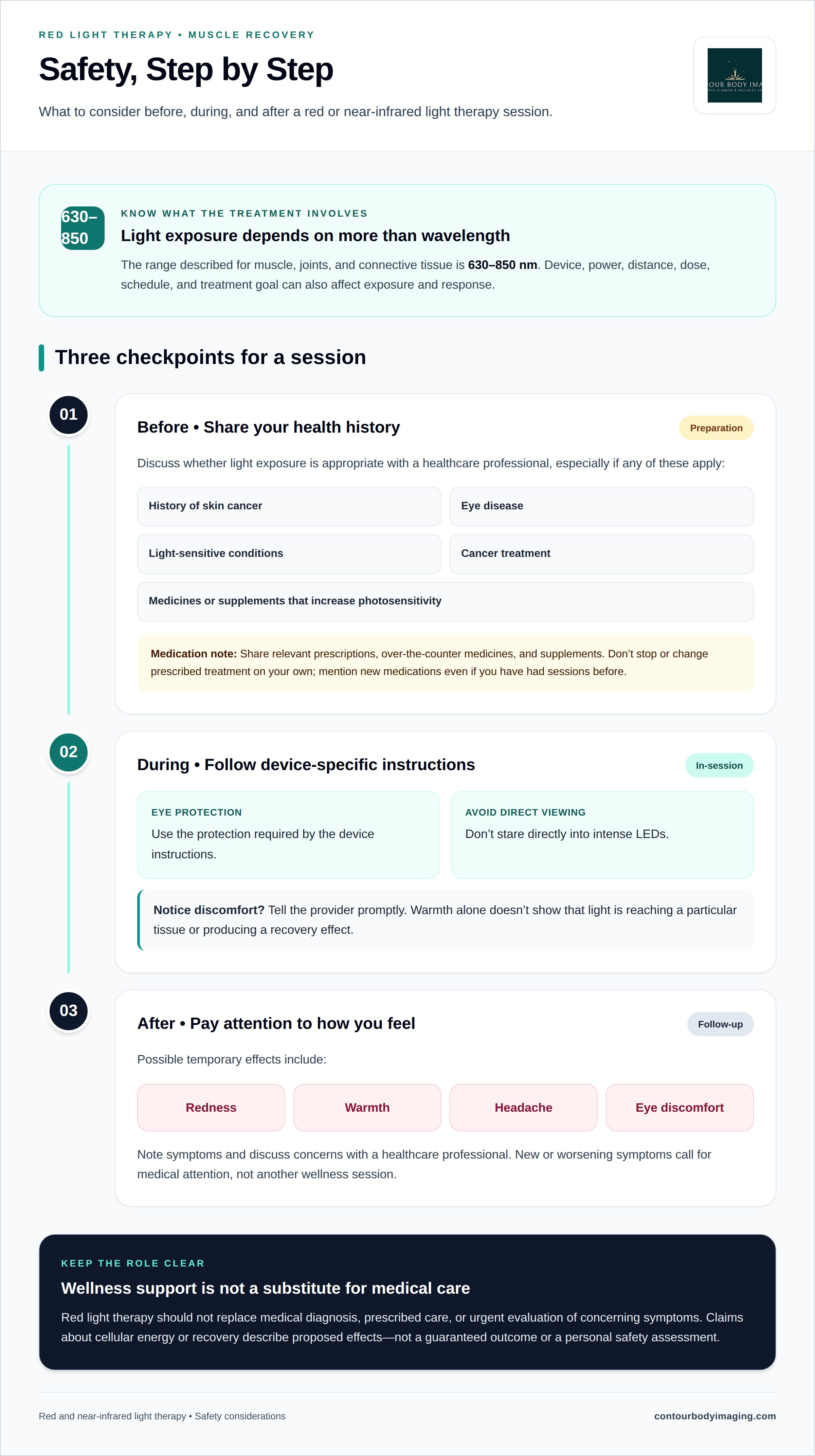
Safety and possible side effects
Even a wellness session should start with your health history. Before booking red light therapy in The Woodlands, ask which device is used, what it is intended for, and what eye protection its instructions require. Discuss how your medical history and current medications affect whether exposure is appropriate.
Photobiomodulation describes light-based treatment, but the term alone doesn’t establish safety for every person or prove health benefits. Tell a healthcare professional if you have a history of skin cancer, eye disease, light-sensitive conditions, cancer treatment, or use medicines and supplements that increase photosensitivity. These details can affect whether exposure is appropriate for you.
Reviewing medications matters because photosensitizing products can make light exposure a concern. Share relevant prescriptions, over-the-counter medicines, and supplements with your healthcare professional. Don’t stop or change prescribed treatment on your own. Mention a new medication even if you’ve completed red light sessions before without a problem.
Possible temporary effects include redness, warmth, headache, or eye discomfort. Follow the device’s specific eye-protection instructions, and don’t stare directly into intense LEDs. Tell the provider promptly if discomfort arises during a session. A mild warming sensation is no reason to ignore eye discomfort or other symptoms.
Before the session: disclose relevant diagnoses, cancer treatment, and light-sensitive medicines or supplements.
During the session: use the device-specific eye protection and report discomfort.
After the session: note any redness, warmth, headache, or eye symptoms and discuss concerns with a healthcare professional.
You can generally return to routine activities immediately after treatment. That doesn’t mean every symptom should be dismissed. Red light therapy shouldn’t replace medical diagnosis, prescribed care, or urgent evaluation of concerning symptoms. New or worsening symptoms call for medical attention, not another wellness session.
Claims about stimulating mitochondria or supporting recovery describe proposed effects, not a personal safety assessment. A provider should explain the device’s intended use, session settings, eye-protection instructions, and how the treatment relates to your goal. Clear answers help you understand the session without mistaking a general wellness claim for medical advice.
Share your relevant health details before treatment, then follow the device’s safety instructions during the session. If you’d like to discuss a wellness service in that context, explore a wellness-focused conversation before deciding whether it suits your needs.
Muscle soreness, pain, and inflammation
Research on red and near-infrared photobiomodulation examines pain, inflammation, and tissue response, but these are distinct outcomes. A review and meta-analysis included 17 trials on tendinopathy, a tendon condition, rather than every type of muscle soreness.
Muscle Soreness and Pain
After strenuous exercise, soreness can affect movement and comfort. Red light therapy is studied for its potential to support tissue repair and reduce pain, but findings about tendons don’t automatically apply to post-workout muscle soreness. The goal matters: discomfort after exercise is different from persistent pain or pain linked to an injury.
For a useful discussion, describe where the pain occurs, when it began, and what activity came before it. Recurring pain, a recent injury, or symptoms that limit ordinary movement change the context. Red light therapy shouldn’t replace medical assessment if pain is severe, worsening, or unexplained.
Inflammation and Swelling
Inflammation is part of the body’s response to tissue stress or injury. Swelling can occur alongside it, but visible swelling alone doesn’t identify the cause. Red light therapy is being studied for possible effects on inflammatory processes, not as a way to diagnose an injury or explain every swollen muscle.
Swelling after a demanding workout and swelling after a sudden injury, for example, are different situations. When it began, where it is, and any accompanying symptoms help distinguish them. A treatment plan should account for that history rather than treating inflammation and swelling as interchangeable targets.
Tissue Healing and Recovery Research
Photobiomodulation research examines how light exposure might stimulate mitochondria and support cellular energy production. This proposed mechanism helps explain why researchers study tissue healing, but it doesn’t prove pain relief or faster recovery for every person.
The 17-trial review focused on tendinopathy. That is useful context, but it does not establish the same effects for ordinary muscle soreness, every injury, or every treatment device. Readers should distinguish research on a specific tendon condition from broader claims about muscle recovery.
Research also measures different outcomes. A study that assesses pain doesn’t necessarily establish reduced swelling or improved tissue healing. Feeling less discomfort and regaining normal movement are related, for example, but they aren’t identical measures of recovery.
Consider red light therapy alongside the cause of soreness and your health history. A professional discussion can clarify whether the goal is comfort, support during recovery, or another wellness aim. Concerning symptoms still call for medical evaluation, not reliance on a light-based session alone.
How red light therapy works
Photobiomodulation means using light to influence biological activity. For muscle recovery, the proposed pathway involves mitochondria, which help cells produce energy, and possible support for tissue repair. This explains why researchers study the treatment; it doesn’t establish the same outcome for every person or goal.
A professional treatment plan starts with the session’s purpose. Muscle soreness, joint discomfort, and skin health are different goals, so the treatment area and device indication matter. The provider then considers settings such as wavelength, power, distance, dose, and schedule. These variables work together; they aren’t interchangeable device details.
A device’s wavelength identifies the type of light it delivers, while distance and power affect exposure at the treatment area. Dose describes the light delivered during treatment. Changing one setting can alter the overall protocol, so consider the settings together. The device’s stated indication also helps explain the use it is designed to address.
Repeated sessions are often used, but protocols vary by device and intended goal. Some guidance describes full benefits developing over 8-12 sessions, but that figure shouldn’t be treated as a universal schedule. The relevant treatment plan depends on the device, its parameters, and the purpose of care. A session count alone cannot explain how the device is being used.
A useful way to understand the process is to follow the treatment sequence:
Define the goal: identify whether the session targets a muscle area, joint, or another concern.
Match the device: consider its indication and the light wavelengths it delivers.
Set exposure: account for power, distance, dose, and the selected treatment area.
Plan the schedule: use a protocol suited to the device and goal, rather than assuming every person follows the same routine.
“Relaxing” describes how a session might feel, not whether its settings are appropriate. Similarly, cellular energy production is a proposed explanation, not a visible measure of recovery. Keeping these ideas separate helps distinguish the experience of a session from its intended biological effect.
If you’re considering red light therapy in The Woodlands, ask how the device’s intended use and settings relate to your goal. Clear explanations of wavelength, dose, and schedule make the plan easier to understand. These questions also help distinguish a muscle-focused approach from a session for skin health or general wellness.
Red light therapy uses a defined light exposure, not a single setting or guaranteed response. Device characteristics, treatment parameters, and the intended outcome all shape the protocol. Understanding those choices gives you a practical basis for discussing whether the approach fits your recovery needs.
Red light therapy services near The Woodlands
For residents of The Woodlands and Dallas, start by matching the session’s purpose to the service. A muscle recovery goal differs from a skin health goal, even when both involve red or near-infrared light. Ask how the treatment area, device indication, and session plan relate to your goal. Those details are more useful than a broad promise of recovery.
How much does red light therapy cost in The Woodlands, Texas? Pricing depends on the case and is provided after a quote request. Factors include the treatment goal, area addressed, device, and proposed session plan.
A professional session should have a clear scope. The provider should explain which area the treatment addresses, what the device is intended for, and how the plan fits your wellness goal. A session for general skin health, for example, shouldn’t be presented as treatment for a muscle injury without a clear rationale. Red light therapy doesn’t diagnose injuries or replace medical evaluation.
Before choosing a service, consider what it can and cannot do. Red and near-infrared light therapy is a non-drug wellness approach, not a substitute for medical care. A new injury, worsening pain, or reduced function calls for appropriate medical assessment. You may consider a light session separately as a wellness service, but it shouldn’t delay evaluation or prescribed care.
Use these practical points to understand a local service:
Goal: clarify whether you’re seeking support for muscle recovery, general wellness, or skin health.
Device: ask about its intended use and the treatment parameters relevant to that goal.
Plan: understand which area is addressed and how the session schedule is determined.
Safety: share relevant medical history, eye conditions, and photosensitizing medicines with a healthcare professional.
These points help set realistic expectations. Protocols vary by device and goal, and repeated sessions are often used. A schedule suited to one purpose may not fit another. Understand the reason for each treatment choice rather than assuming every red light service uses the same approach or produces the same effects.
If exercise leaves you sore, note when the soreness began and whether your movement or daily function has changed. This context can help distinguish routine post-activity discomfort from symptoms that deserve medical attention. For an existing injury, diagnosis and prescribed care come first. A wellness session is an optional complement, not a replacement.
In The Woodlands, choose a service conversation that explains the treatment goal, device indication, plan, and safety considerations in plain language. A clear explanation supports an informed decision without overstating what light therapy can do.
Contour Body Imaging
Contour Body Imaging offers a place to explore how red light therapy may fit into your wellness goals. Its Lumaray 360 red light therapy is described as supporting cellular repair and overall skin health. If you’re considering light therapy for muscle recovery, a conversation can help clarify how a wellness service relates to your goal and where medical care remains important. Red light therapy isn’t a substitute for evaluating an injury or following prescribed treatment. Contour Body Imaging also offers Cryo T-Shock Body Contouring, Cryo Facial, and Endosphere for other wellness and skin-care interests. For a thoughtful next step, contact Contour Body Imaging to discuss your questions and explore an approach that feels appropriate for you.
Make your next recovery decision with confidence
Let your recovery goal guide your next step. If soreness follows exercise, consider what you want to address and whether it affects movement or daily routine. For ongoing pain, a new injury, or worsening symptoms, prioritize medical guidance before considering a wellness session.
If you’re exploring red light therapy for muscle recovery in The Woodlands, ask how the service relates to your goal. A conversation with Contour Body Imaging can help you understand the treatment’s role, discuss relevant health considerations, and decide whether it fits alongside your existing care. A wellness service is not a substitute for medical evaluation.
Contour Body Imaging offers wellness and aesthetic services, including options for people considering light-based treatments. Reach out when you’re ready to discuss your questions and determine a suitable next step.
Choose the approach that supports your wellbeing, one informed step at a time.
Frequently Asked Questions
How many sessions are needed?
A commonly cited treatment course is 8-12 sessions, though protocols vary by device and goal. That range is a reference, not a personal prescription. The relevant plan depends on the intended treatment area, device settings, and how consistently sessions are scheduled. Track changes in soreness and everyday movement over time, and discuss persistent or worsening symptoms with a healthcare professional rather than relying on session count alone.
What is red light therapy and how may it support muscle recovery?
Red light therapy, also called photobiomodulation, applies red or near-infrared light to a selected area. The proposed mechanism involves stimulating mitochondria, which help cells produce energy, and supporting tissue repair. A session might focus on a sore muscle after exercise, for example. This biological explanation doesn’t guarantee recovery, and treatment doesn’t replace medical assessment or prescribed care.
What wavelengths and treatment settings do providers use for muscle recovery?
Red and near-infrared treatments for muscle, joints, and connective tissue are described across 630-850 nm. A provider’s plan also considers power, distance, dose, schedule, and the device’s intended indication. For example, the wavelength alone doesn’t explain how much light reaches a particular treatment area. Ask how those settings relate to the session goal, rather than judging a device by one specification.
How long are professional red light therapy sessions for muscle recovery, and how often are they scheduled?
Session length and frequency depend on the device, treatment area, dose, and goal. Red light protocols vary, and repeated sessions are often used; no single schedule applies to every device or person. Before planning appointments, clarify how exposure and spacing are set for the intended area. Cryo T-Shock session durations describe a different service and shouldn’t be used to estimate red light session time.
What are the risks, side effects, and contraindications of red light therapy?
Possible temporary effects include redness, warmth, headache, or eye discomfort. Discuss red light exposure with a healthcare professional if you have a history of skin cancer, eye disease, a light-sensitive condition, cancer treatment, or use photosensitizing medicines or supplements. Follow the device’s eye-protection instructions and don’t stare into intense LEDs. Red light therapy isn’t a substitute for diagnosis, prescribed care, or urgent evaluation of concerning symptoms.
Which clinics and wellness centers in The Woodlands offer red light therapy for muscle recovery?
Contour Body Imaging offers LumaRay 360 red light therapy near The Woodlands. Its stated focus includes cellular repair and overall skin health. If you’re considering it in connection with muscle recovery, bring your treatment goal and relevant health history into the discussion. A wellness service isn’t a replacement for medical care, especially for a new injury, worsening pain, or symptoms that affect daily function.
What red light therapy devices and treatment types are available in The Woodlands?
Contour Body Imaging offers LumaRay 360, which uses red and near-infrared light. The device’s stated uses include supporting cellular activity, collagen production, healing, and overall well-being. Treatment parameters and intended use matter when considering a particular goal, so distinguish red light therapy from other wellness services. Endosphere and Cryo T-Shock Body Contouring are separate offerings, not red light devices.
Comments