

Skin Tightening Treatments for the Face in Plano: Results Timeline
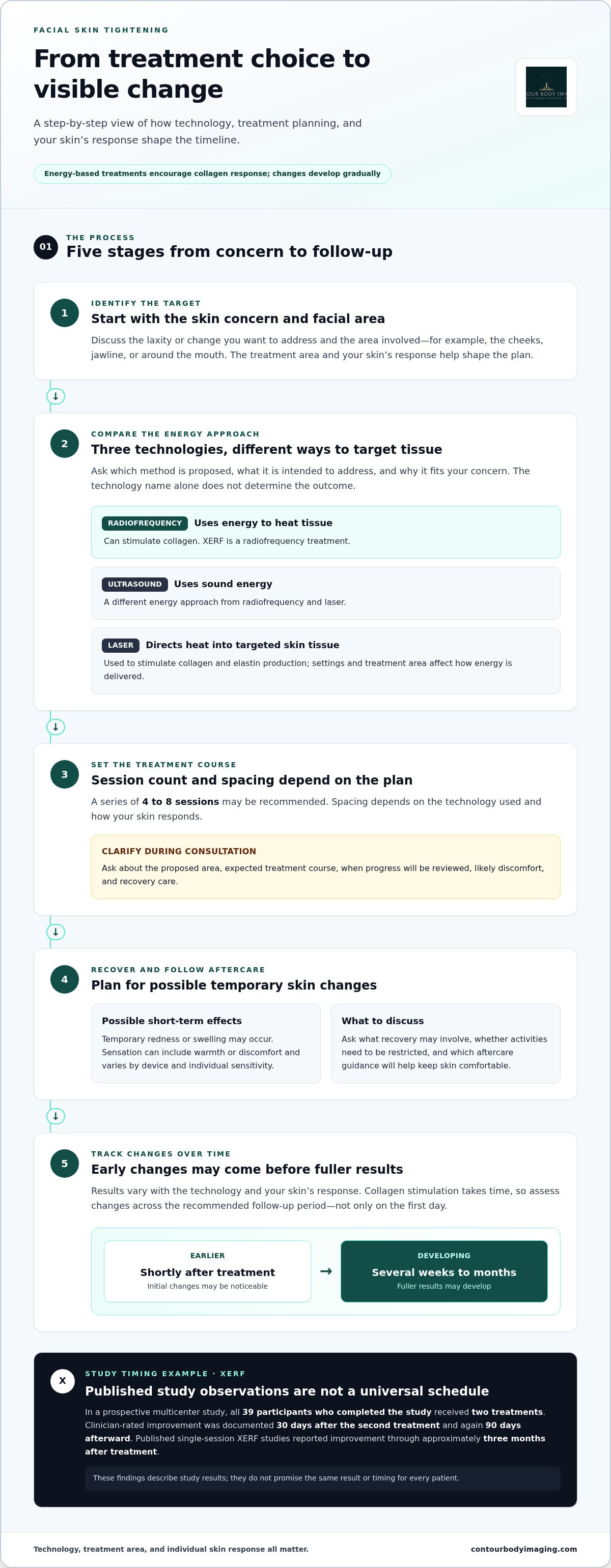
Results don’t appear all at once. If you’re researching skin tightening treatments for the face, early changes may be noticeable shortly after treatment at Contour Body Imaging, while fuller results can develop over several weeks to months. The timeline depends on the technology used and how your skin responds.
It’s natural to want to know when skin may look firmer, what recovery could involve, and whether you’ll need multiple sessions. This guide covers radiofrequency, ultrasound, and laser treatments, factors that affect results, and questions to ask about aftercare and session spacing.
You’ll also learn what recovery may involve and which factors can shape a treatment plan, helping you compare options with realistic expectations and a clearer sense of what may fit your goals.
Key Takeaways
Early changes may appear soon after treatment, while fuller results typically develop over several weeks to months.
Radiofrequency, ultrasound, and laser use different approaches, so the right option depends on your skin goals and treatment area.
Plan for possible temporary redness or swelling, and follow aftercare guidance to keep skin comfortable as it recovers.
A series of 4 to 8 sessions may be recommended; treatment spacing depends on the technology and your skin’s response.
Learn how non-surgical options compare and where a Cryo Facial may fit into a skin-focused care plan.
Table of Contents
What is Skin Tightening?
Facial skin tightening aims to improve laxity by encouraging the skin’s supportive structures to respond. Collagen helps provide firmness, while elastin helps skin stretch and return toward its shape. Treatments use energy, such as heat, to stimulate collagen production. The change develops gradually as the skin responds, rather than appearing like an immediate lift.
Skin aging can influence collagen levels. Collagen production drops by one additional percentage point each year after age 20. By age 50, the body produces 30 percent less collagen than in younger years. These figures describe collagen production, not a guaranteed prediction of how any one patient’s face will look or respond.
Laser skin tightening directs heat into targeted skin tissue to stimulate collagen and elastin production. The treatment area and laser settings determine how energy is delivered. Patients may feel warmth or discomfort, which can vary by device and individual sensitivity. A consultation should clarify the approach for areas such as the cheeks, jawline, or around the mouth.
For facial skin tightening in The Woodlands and Dallas, the results timeline depends on the technology and the skin being treated. Initial improvement may appear shortly after treatment, while fuller results typically develop over several weeks to months. Collagen stimulation takes time, so assess changes over the recommended follow-up period rather than judging by the first day alone.
How much do facial skin tightening treatments cost in The Woodlands and Dallas? The price depends on the treatment area, technology, and proposed session plan, and is given after a quote request. These factors help explain why one treatment plan may differ from another.
Which clinics in The Woodlands and Dallas offer facial skin tightening, and what treatments do they provide? Options may include radiofrequency, ultrasound, and laser treatments. Each uses a different energy approach, so available methods and the facial areas treated vary by clinic.
How can I verify a provider’s qualifications for cosmetic skin tightening? Review the provider’s credentials, training with the specific device, and experience treating facial skin. Compare credential details with records from the issuing organization, and clarify who performs each step of treatment.
Are facial skin tightening treatments covered by insurance, or are financing options available in The Woodlands and Dallas? Coverage depends on your policy and whether the treatment meets its medical-necessity criteria. Financing depends on the provider’s written payment terms, so review them alongside the treatment plan before deciding.
What should I ask during a facial skin tightening consultation in The Woodlands or Dallas? Ask which technology is proposed, which facial area it targets, and when changes may become noticeable. Discuss expected discomfort, recovery care, session spacing, and how progress will be assessed.
Radiofrequency, ultrasound, and laser skin-tightening technologies
Radiofrequency, ultrasound, and laser treatments use different energy approaches to address facial skin laxity. Comparing how each targets tissue can help you discuss suitable options during a consultation.
Radiofrequency Treatment Options
Radiofrequency skin tightening uses energy to heat tissue and stimulate collagen, which can support firmer-looking skin. It may suit people seeking a non-invasive option rather than surgery. XERF is a radiofrequency treatment. Before choosing, ask about the proposed treatment area, session plan, expected timeline, and how the approach fits your specific facial concern.
Ultrasound and Laser Technologies
Ultrasound treatments use sound energy, while laser skin tightening uses heat to stimulate collagen production. The technologies differ, so ask which method is intended to address your concern, such as laxity around the jawline. Clarify what changes the treatment aims to make, how progress will be assessed, and what recovery may involve. These details make comparisons more useful than technology names alone.
Radiofrequency is one option for people seeking collagen stimulation without an invasive or surgical procedure. Laser treatment also uses heat for collagen stimulation, while ultrasound uses a different energy approach. The method alone doesn’t determine the outcome. The treatment area, skin concern, device, and planned course all shape what you can reasonably expect.
XERF research offers specific timing examples, not a universal schedule. In a prospective multicenter study, all 39 participants who completed the study received two treatments. Clinician-rated improvement was documented 30 days after the second treatment and again 90 days afterward. Published single-session XERF studies reported improvement through approximately three months after treatment. These findings describe study results, not a promise for every patient.
Use a consultation to compare the intended target and rationale for each option. Ask whether the plan uses radiofrequency, ultrasound, or laser, and why that technology fits your concern. Clarify whether results are expected to develop gradually, what discomfort may feel like, and how long results may last. A clear explanation should connect the device and plan to your goals.
Ask which energy technology will be used and what area it targets.
Discuss the expected treatment course and when progress will be reviewed.
Request a plain-language explanation of likely discomfort and recovery.
If you’re exploring a non-surgical facial-care option, the introductory treatment offer can be a useful starting point for learning about available care.
Firmer-looking skin and smoother contours may develop over several weeks. Discuss how that timeframe relates to your treatment course and what changes to monitor during follow-up.
Recovery and activity restrictions
Recovery after facial skin tightening depends on the technology and your skin’s response. Plan for possible temporary redness or swelling, and follow the aftercare instructions for your treatment.
Recovery After Treatment
Mild redness or swelling may subside within a few hours to a day after treatment. Published human studies of XERF reported temporary reactions resolving within hours to two days. These timeframes come from different evidence and don’t establish one schedule for every procedure. Before leaving, make sure you understand which reactions are expected and what your personalized recovery plan includes.
Downtime can vary by device and treatment approach. Ask when you can return to your usual routine and whether the treated area needs special care. If the procedure uses needles, ask how that affects aftercare; energy-based methods can treat the skin differently. Clear guidance helps you plan work, social activities, and follow-up without assuming every treatment has the same recovery.
Aftercare and Downtime
Keep treated skin moisturized and hydrated after the procedure. Avoid hot baths and saunas, as heat can irritate treated areas. Follow the specific instructions for your treatment rather than adding products or activities that aren’t part of your care plan. These steps support skin comfort while collagen production continues to respond over time.
Ask for written aftercare guidance before scheduling around an event. Temporary redness or swelling could affect plans later that day, even when downtime is limited. Recovery depends on the technology, treatment area, and individual skin response. Build flexibility into your schedule rather than assuming there will be no visible effects.
Use these practical steps to prepare for recovery:
Arrange your day with the possibility of redness or swelling lasting a few hours to a day.
Keep moisturizer available and follow the recommended hydration routine.
Skip hot baths and saunas after treatment to avoid irritating the treated skin.
Ask how the treatment’s recovery guidance differs if needles are involved.
Aftercare is part of the procedure, not an optional extra. At your consultation, ask which symptoms are expected, how long they typically last, and what to do if a reaction persists beyond the timeframe discussed. Published human studies of XERF reported temporary reactions resolving within hours to two days. Keep the guidance for your specific treatment handy when planning daily activities.
Non-invasive body-contouring treatments can be performed without surgery or downtime. That description applies to body-contouring treatments; it should not be taken as a recovery promise for a facial skin-tightening procedure. If you are considering both types of treatment, ask the provider to explain which approach is planned and what aftercare applies to each. Keep the guidance specific to the procedure and treated area rather than assuming the same recovery expectations carry over.
Treatment frequency and session spacing
Session frequency depends on the technology, treatment area, skin laxity, and desired change. A useful plan also allows time to observe how your skin responds between appointments.
A series of 4 to 8 sessions may be recommended for optimal outcomes. Published single-session XERF studies reported improvement through approximately three months after treatment, but that finding applies to those studies, not every technology or person.
Spacing is part of the treatment plan, not a detail to improvise. Collagen-related changes develop over several weeks to months, so closely spaced appointments may not allow time to assess the full response to an earlier session. The treatment method and your skin’s recovery help determine when the next session makes sense. Ask how the proposed interval supports the intended effect.
People can respond differently to the same technology. The treatment area, degree of laxity, and skin elasticity all influence the plan. For example, someone focused on mild jawline laxity may have different goals from someone treating broader facial areas. A personalized schedule should connect each appointment to a defined target rather than assume every face needs the same course.
Use a consistent method to assess changes between visits. Consider these steps:
Record the treatment date and the area addressed after each session.
Take comparison photos in similar lighting and from the same angles.
Note when you first notice changes, such as a firmer appearance along the jawline.
Review progress before adding sessions to the plan.
These notes help distinguish early impressions from gradual changes in firmness. Because collagen production and elasticity don’t change overnight, compare progress over the timeline discussed for your treatment. Little visible change immediately after a session doesn’t reflect the full course. Keep expectations tied to the technology and review points in your plan.
At each follow-up, discuss what has changed and whether the next session still aligns with your goals. If your original concern was cheek laxity, for example, review that area consistently rather than shifting the target between visits. Ask how many sessions remain in the proposed course, what improvement should guide the next step, and when the overall result will be assessed.
Session count and result duration are related, but they aren’t interchangeable. The 4 to 8 session range is a possible treatment course, while the XERF study findings describe observed improvement over time. Use those details to frame questions about your own schedule, not as a guarantee of lasting results. A clear plan explains both the spacing and how progress will be judged.
What non-surgical skin tightening treatments are available for the face in Plano, TX?
Non-surgical options for facial skin tightening include radiofrequency, ultrasound, and laser treatments. For people in The Woodlands and Dallas, comparing how each approach addresses skin concerns can help frame a conversation about treatment goals, recovery, and progress.
Radiofrequency uses energy to heat tissue and stimulate collagen. It may suit people seeking a non-surgical approach to gradual improvement in firmness. Ask which facial area the treatment targets and how the proposed sessions will be spaced. A series of 4 to 8 sessions may be recommended for optimal outcomes, depending on the treatment plan and goals.
Ultrasound uses sound energy to treat targeted tissue. Its approach differs from radiofrequency and laser, so ask how the technology is used on the face and what changes it aims to address. A consultation should explain the intended treatment area, recovery expectations, and how progress will be reviewed.
Laser skin tightening uses heat to stimulate collagen and elastin production. Initial improvement may appear shortly after treatment, while fuller results typically develop over several weeks to months. Ask which facial area the laser will treat and how the plan accounts for your skin’s response. The device and treatment approach matter when discussing expected results and recovery.
Use practical criteria to compare options:
Identify the concern, such as laxity around the jawline or cheeks.
Ask which technology is proposed and how it targets that area.
Discuss the expected treatment course, session spacing, and recovery.
Clarify when progress will be assessed and what changes to observe.
Technology names alone don’t show which approach fits your goals. If you’re focused on jawline laxity, ask how each option addresses that area; if recovery time is your priority, discuss that too. The treatment area, device, and intended outcome all shape the comparison. Ask for a plain-language explanation before choosing a plan.
For people in The Woodlands and Dallas, a useful next step is to connect the proposed method with your facial concern and schedule. Ask how the treatment is expected to work, what recovery guidance includes, and how progress will be tracked. If a series is proposed, discuss the purpose of each visit and when the overall result will be reviewed.
Write down your target area and questions before a consultation. Compare radiofrequency, ultrasound, and laser based on their approach, session plan, and recovery expectations, rather than assuming one method suits every face.
The facial skin-tightening options described here are radiofrequency, ultrasound, and laser treatments.
Contour Body Imaging: Cryo T-Shock Body Contouring
Contour Body Imaging offers Cryo T-Shock Body Contouring, a thermal-shock treatment designed to target fat cells and support skin rejuvenation. It’s a body-contouring option, not a substitute for facial radiofrequency, ultrasound, or laser tightening.
For a face-focused wellness treatment, the Cryo Facial uses thermal-shock technology to rejuvenate the skin. It may be a relevant option if your interest includes facial skin care, while your choice should reflect the concern you want to address. Endosphere and Lumaray 360 are other offerings in the treatment menu, each with a distinct wellness focus.
If you’re comparing facial treatments, consider whether your priority is skin rejuvenation or a specific tightening technology. Contact Contour Body Imaging to discuss its offerings, or visit contourbodyimaging.com.
Choose a Next Step That Fits Your Goals
Choosing skin tightening treatments for face Plano starts with matching your concern to the treatment approach. Think about the area you want to address, the type of care you’re considering, and what you need to understand before deciding. A focused conversation can help you move forward with clarity and realistic expectations.
Contour Body Imaging offers Cryo T-Shock Body Contouring, Cryo Facial, and Endosphere Therapy. These are distinct wellness treatments, so consider which best connects with your interests and goals. Your next step can be learning more and deciding whether one fits your self-care plans.
Take the time you need to choose thoughtfully. An informed next step can help you feel more comfortable and confident about your care.
Frequently Asked Questions
How Long Until I See the Results?
Some initial changes may appear shortly after treatment, but fuller results typically develop over several weeks to months. Timing depends on the technology and your skin’s response. To track progress, take photos in consistent lighting and compare the same facial areas over time. This can make gradual changes easier to notice than relying on day-to-day impressions.
Who is a good candidate for non-surgical facial skin tightening?
A suitable candidate is someone seeking gradual improvement in facial skin laxity without surgery, with goals that match what the chosen technology can address. The treatment area, degree of laxity, and skin condition help shape the plan. People with heart disease or who are pregnant should consult a doctor before non-invasive treatments. Skin infections or open wounds in the treatment area are reasons to postpone treatment.
What are the risks, side effects, and recovery times for facial skin tightening treatments?
Possible short-term effects include mild redness or swelling, which may subside within a few hours to a day. Keep treated skin moisturized and hydrated, and avoid hot baths and saunas because they can irritate the area. If you have an active skin infection or open wound where treatment is planned, postpone the session.
How much do facial skin tightening treatments cost in Plano, TX?
Which Plano clinics offer facial skin tightening, and what treatments do they provide?
Facial skin-tightening options include radiofrequency, ultrasound, and laser treatments. Available methods and the facial areas treated vary by clinic.
How do Ultherapy, radiofrequency, microneedling, and laser skin tightening compare?
Radiofrequency heats tissue to stimulate collagen, while laser uses heat to stimulate collagen and elastin. Ultrasound uses sound energy. A suitable approach depends on the treatment area, skin concern, device, and planned course.

Comments